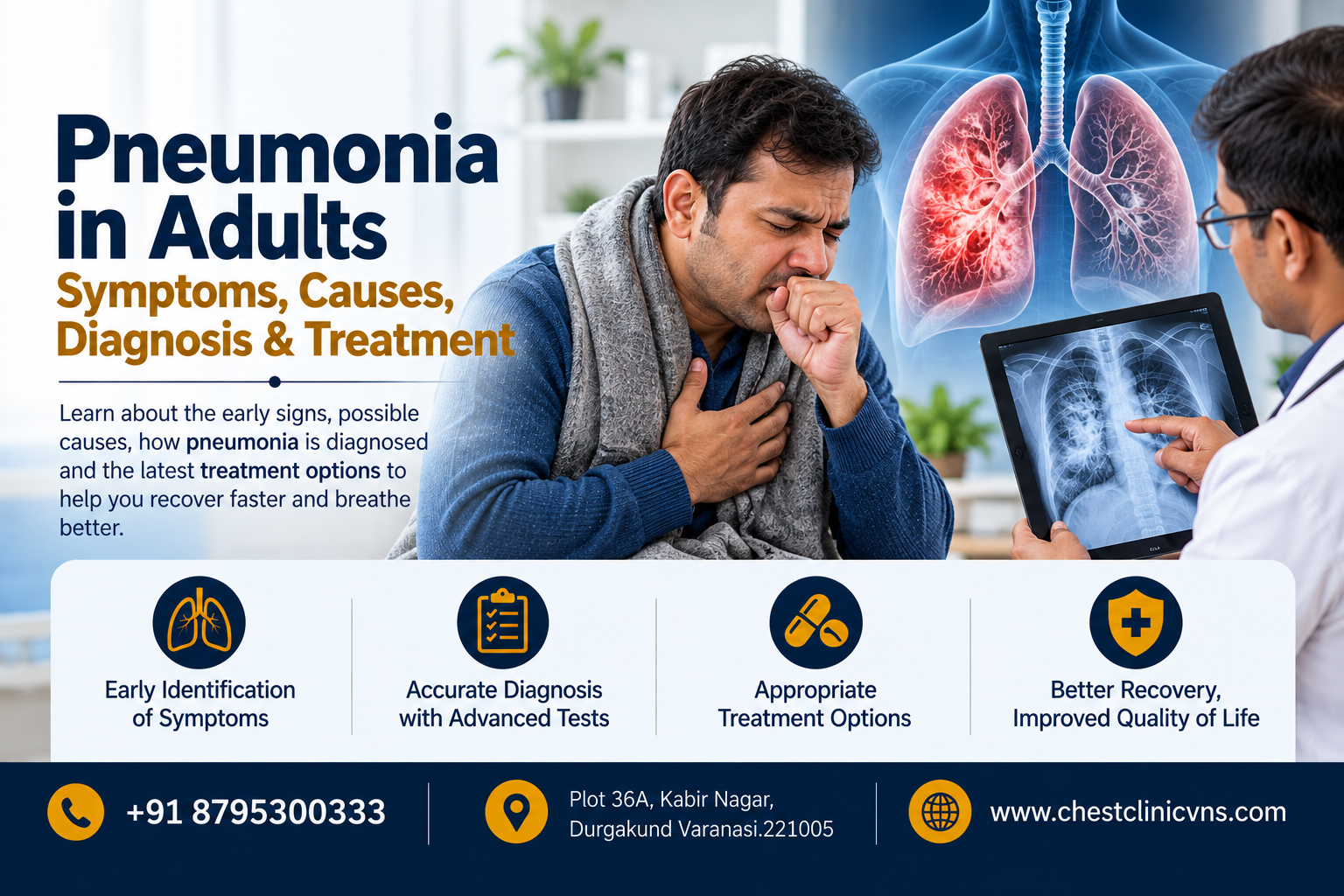
Pneumonia in Adults: Symptoms, Causes, Diagnosis & Treatment
Pneumonia is an infection that affects the lungs and can cause inflammation in the air sacs. The air sacs may fill with fluid or inflammatory material, which can make breathing difficult.
Pneumonia can affect people of different ages. In adults, symptoms may range from mild to more serious depending on the cause of infection, overall health and presence of other medical conditions.
If you have persistent cough, fever, chest discomfort or breathing difficulty, timely medical evaluation is important. If you are looking for pneumonia treatment in Varanasi , a chest specialist can assess your symptoms and recommend appropriate investigations and treatment.
What Is Pneumonia?
Pneumonia is an infection or inflammation of the lung tissue. It can affect one or both lungs and may be caused by different types of microorganisms.
The severity of pneumonia varies from one person to another. Some people recover with appropriate treatment at home, while others may require hospital care.
What Are the Symptoms of Pneumonia?
Pneumonia symptoms can vary depending on the cause and the individual's health.
Common symptoms may include:
- Cough
- Fever
- Chills
- Shortness of breath
- Chest discomfort
- Tiredness or weakness
- Reduced appetite
Older adults and people with certain medical conditions may sometimes have less typical symptoms. Any significant or worsening breathing problem should be medically evaluated.
What Causes Pneumonia?
Pneumonia can be caused by different microorganisms. The cause may influence the symptoms, testing and treatment approach.
Bacterial Pneumonia
Certain bacteria can cause pneumonia and may require antibiotic treatment when a bacterial infection is suspected or confirmed.
Viral Pneumonia
Some respiratory viruses can cause pneumonia. Treatment depends on the specific infection and the patient's clinical condition.
Fungal Pneumonia
Fungal infections can cause pneumonia in certain people, particularly those with specific risk factors or weakened immune systems.
Who Is at Higher Risk of Pneumonia?
Some people may have a higher risk of developing pneumonia or experiencing complications.
- Older adults
- People with chronic lung diseases
- People with heart or other chronic medical conditions
- People with weakened immune systems
- People who smoke
- People with certain respiratory infections
How Is Pneumonia Diagnosed?
Pneumonia diagnosis usually begins with a medical history and physical examination. Depending on the symptoms, a doctor may recommend additional investigations.
Chest X-Ray
A chest X-ray may be used to look for changes in the lungs that can support the diagnosis of pneumonia.
Blood Tests
Blood tests may be recommended depending on the severity of symptoms and the suspected cause.
Oxygen Level Assessment
Oxygen saturation may be checked, particularly when a person has breathing difficulty or appears significantly unwell.
Other Tests
Additional investigations may be recommended depending on the patient's symptoms, medical history and clinical findings.
Pneumonia Treatment
Pneumonia treatment depends on the cause, severity of infection, age, overall health and other medical factors.
Treatment should be guided by a qualified healthcare professional after appropriate assessment.
Medicines
When bacterial pneumonia is suspected or confirmed, antibiotics may be prescribed by a doctor. Antibiotics do not treat viral infections unless a bacterial infection is also present.
Supportive Treatment
Depending on the patient's condition, treatment may include adequate fluids, rest, fever management and other supportive measures recommended by the doctor.
Oxygen Support
People with low oxygen levels may require supplemental oxygen. The need for oxygen therapy should be assessed by a healthcare professional.
Hospital Treatment
More severe pneumonia may require hospital monitoring and treatment, particularly when there is significant breathing difficulty, low oxygen levels or other complications.
Should You Take Antibiotics for Pneumonia?
Antibiotics are used to treat bacterial infections, not viral infections. Therefore, antibiotics should not be taken without appropriate medical advice.
Your doctor will consider your symptoms, examination and relevant investigations when deciding whether antibiotics are appropriate.
How Long Does It Take to Recover From Pneumonia?
Recovery from pneumonia varies between individuals.
Some people improve within a relatively short period, while cough, tiredness or reduced exercise tolerance may take longer to settle.
The recovery period can depend on the cause of pneumonia, severity of infection, age and other health conditions.
How Can Pneumonia Be Prevented?
Several measures can help reduce the risk of respiratory infections and pneumonia.
- Avoid smoking and tobacco exposure.
- Wash your hands regularly.
- Avoid close contact with people who have active respiratory infections when possible.
- Follow recommended vaccination advice from your healthcare professional.
- Manage existing chronic medical conditions properly.
- Seek medical advice when significant respiratory symptoms develop.
When Should You See a Chest Specialist?
You should seek medical evaluation if you develop persistent or worsening respiratory symptoms.
- Persistent cough
- High or persistent fever
- Shortness of breath
- Chest discomfort
- Significant weakness or fatigue
- Symptoms that are getting worse instead of improving
Severe breathing difficulty, bluish lips or face, confusion, fainting or other serious symptoms require urgent medical attention.
Pneumonia Treatment in Varanasi
If you are searching for pneumonia treatment in Varanasi , a proper clinical evaluation can help identify the possible cause of your symptoms and determine the appropriate investigations.
At Samaria Multi-Speciality & Chest Centre , patients can seek evaluation for respiratory and lung-related conditions.
Depending on the clinical requirement, respiratory diagnostic services may be recommended as part of the evaluation.
You can learn more about the centre's Respiratory Care and Pulmonary Function Testing services.
Need Evaluation for Pneumonia Symptoms?
Persistent cough, fever or breathing difficulty should not be ignored. Consult a chest specialist for appropriate evaluation.
📞 Call +91 8795300333 Book AppointmentFrequently Asked Questions About Pneumonia
1. What is pneumonia?
Pneumonia is an infection or inflammation of the lung tissue that can cause symptoms such as cough, fever and breathing difficulty.
2. What are the common symptoms of pneumonia?
Common symptoms can include cough, fever, chills, shortness of breath, chest discomfort and tiredness.
3. Can pneumonia be caused by a virus?
Yes. Viruses can cause pneumonia. The cause of pneumonia can influence the appropriate treatment.
4. Do all pneumonia patients need antibiotics?
No. Antibiotics treat bacterial infections and are not effective against viral infections. A doctor should determine whether antibiotics are appropriate.
5. Can pneumonia cause breathing problems?
Yes. Pneumonia can cause inflammation in the lungs and may result in shortness of breath or difficulty breathing.
6. How is pneumonia diagnosed?
Diagnosis may involve a clinical examination and tests such as a chest X-ray, blood tests and oxygen level assessment, depending on the patient's condition.
7. When should pneumonia symptoms be evaluated?
Persistent fever, cough, breathing difficulty or worsening symptoms should be evaluated by a healthcare professional.
Conclusion
Pneumonia is a common respiratory condition that can range from mild illness to a more serious infection requiring medical care.
Recognizing symptoms such as persistent cough, fever, shortness of breath and chest discomfort can help you seek timely medical evaluation.
If you are experiencing ongoing or worsening respiratory symptoms, consult a qualified chest specialist for appropriate diagnosis and treatment.

Dr. J.K. Samaria
Senior Consultant Pulmonologist | Professor & Head, Chest Diseases, IMS BHU.