
Bronchoscopy in Varanasi
Bronchoscopy is a specialized medical procedure used to examine the airways and lungs from the inside. It helps a pulmonologist evaluate the trachea, bronchi and other breathing passages and identify abnormalities that may not always be fully understood through imaging tests alone.
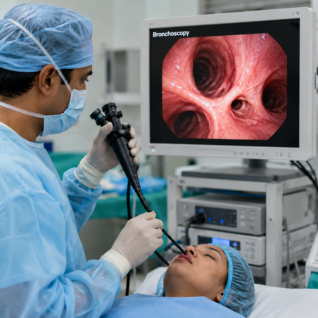
During the procedure, a thin instrument called a bronchoscope is carefully passed through the nose or mouth into the airways. The bronchoscope contains a light and camera that allow the doctor to view the air passages on a monitor. Depending on the patient's condition, bronchoscopy may also be used to collect mucus, fluid or tissue samples for further laboratory examination.
Why Is Bronchoscopy Performed?
A doctor may recommend bronchoscopy when symptoms, chest X-rays, CT scans or other investigations suggest that a closer examination of the airways is required. The procedure can provide valuable information for diagnosing and managing different respiratory conditions.
Bronchoscopy may be advised to investigate:
- Persistent or unexplained cough
- Recurrent or difficult-to-diagnose lung infections
- Abnormal findings on a chest X-ray or CT scan
- Coughing up blood
- Airway narrowing or obstruction
- Suspicious lung lesions, growths or tumors
- Excessive mucus or secretions in the airways
- Unexplained breathing difficulties
What Happens During a Bronchoscopy?
Before bronchoscopy begins, the medical team prepares the patient according to the type of procedure being performed. Medicine may be used to numb the nose and throat, and sedation may be given to help the patient remain comfortable and relaxed.
The bronchoscope is then gently introduced through the nose or mouth and guided through the throat into the airways. A small camera at the tip of the bronchoscope provides a clear view of the airway passages, helping the doctor identify inflammation, narrowing, bleeding, abnormal growths, excessive secretions or other changes.
If necessary, small instruments can also be passed through the bronchoscope to collect fluid, mucus or tissue samples. These samples may then be sent to a laboratory for microbiological, cytological or histopathological testing.
Types of Bronchoscopy
The type of bronchoscopy recommended depends on the patient's symptoms, medical history and the purpose of the examination.
Flexible Bronchoscopy
Flexible bronchoscopy is commonly performed using a thin and flexible bronchoscope. It allows the pulmonologist to examine different areas of the airways and collect samples when required.
Rigid Bronchoscopy
Rigid bronchoscopy uses a larger, straight bronchoscope and may be considered in selected situations, such as significant airway obstruction, certain foreign bodies or bleeding. The doctor decides whether rigid bronchoscopy is appropriate based on the individual clinical situation.
Bronchoscopy with Biopsy
During bronchoscopy, the doctor may obtain a small tissue sample from an abnormal area. A transbronchial lung biopsy or another bronchoscopic sampling technique may be recommended when further examination of lung tissue is needed.
What Can Bronchoscopy Help Diagnose?
Bronchoscopy can be an important diagnostic tool for several respiratory conditions. Depending on the clinical situation, it may help doctors investigate:
- Lung and airway infections
- Inflammation of the airways
- Airway obstruction or narrowing
- Unexplained bleeding from the respiratory tract
- Abnormal lung lesions
- Foreign bodies inside the airway
- Possible lung tumors or other abnormal growths
- Selected interstitial and other lung diseases
Bronchoscopy findings are usually considered together with the patient's symptoms, physical examination, imaging studies and laboratory test results before a final diagnosis or treatment plan is made.
Preparing for Bronchoscopy
Preparation may vary according to the patient's health and the type of bronchoscopy planned. Patients should follow the specific instructions provided by their doctor or hospital.
Before the procedure, your doctor may advise you about:
- When to stop eating and drinking before the procedure
- Regular medications that can or cannot be taken
- Blood-thinning medicines or medicines affecting clotting
- Existing medical conditions and allergies
- Arranging for someone to accompany you home if sedation is used
Do not stop any prescribed medication on your own. Medication changes before bronchoscopy should only be made according to your doctor's instructions.
After the Bronchoscopy Procedure
After bronchoscopy, the patient is usually observed for a period of time while the effects of sedation and local numbing medicine wear off. Mild throat discomfort, temporary hoarseness or coughing may occur following the procedure.
Patients should follow the discharge and recovery instructions provided by their medical team. If sedation has been administered, patients are generally advised not to drive themselves home.
Is Bronchoscopy Safe?
Bronchoscopy is generally considered a safe procedure when performed for an appropriate medical indication by trained healthcare professionals. As with any medical procedure, however, some risks can occur.
Possible complications may include:
- Temporary coughing or throat irritation
- Minor bleeding, particularly when a biopsy is taken
- Temporary reduction in oxygen levels
- Fever
- Infection
- Rarely, air leakage around the lung or pneumothorax
Your pulmonologist will assess your health, explain the expected benefits and possible risks, and determine whether bronchoscopy is appropriate for your individual condition.
When Should You Consult a Pulmonologist?
If you have persistent cough, recurrent chest infections, unexplained breathlessness, coughing up blood or an abnormal finding on a chest X-ray or CT scan, a consultation with a pulmonologist can help determine the next appropriate investigation.
Bronchoscopy is not required for every respiratory problem. The decision to perform the procedure should be based on a detailed medical evaluation and the patient's individual clinical needs.
Bronchoscopy Consultation in Varanasi
If your doctor has advised bronchoscopy or you need specialist evaluation for an ongoing respiratory problem, you can schedule a consultation to discuss your symptoms, previous reports and available diagnostic options.
A proper pulmonary evaluation can help determine whether bronchoscopy or another investigation is the most suitable next step for your condition.
Frequently Asked Questions About Bronchoscopy
What is bronchoscopy used for?
Bronchoscopy allows a doctor to examine the airways and may help diagnose infections, airway obstruction, abnormal lung findings, bleeding and other respiratory conditions. It can also be used to collect mucus, fluid or tissue samples for testing.
Is bronchoscopy painful?
Local numbing medicine and, in many cases, sedation are used to improve comfort during the procedure. Patients may experience some pressure, coughing or temporary discomfort rather than significant pain.
How long does bronchoscopy take?
The duration varies depending on why the procedure is being performed and whether additional sampling or treatment is required. Your medical team will explain the expected procedure and recovery time beforehand.
Can a biopsy be taken during bronchoscopy?
Yes. When medically necessary, small tissue samples or fluid samples can be collected through the bronchoscope and sent to a laboratory for further examination.
Can I go home after bronchoscopy?
Many bronchoscopies are performed as outpatient procedures. The decision depends on the patient's condition, the type of procedure and the medicines used. Patients who receive sedation should arrange transportation home and follow their doctor's discharge instructions.