Pulmonary Function Test in Varanasi: What It Is and When You Need It
A Pulmonary Function Test (PFT) is a group of breathing tests used to assess how well your lungs are working. These tests can provide useful information about airflow, lung capacity and how efficiently the lungs function.
If you experience persistent cough, wheezing, breathlessness or other ongoing respiratory symptoms, a doctor may recommend a pulmonary function test as part of your evaluation.
If you are looking for a pulmonary function test in Varanasi , understanding why the test is performed and what to expect can help you prepare for your appointment.
What Is a Pulmonary Function Test?
A pulmonary function test measures different aspects of lung function. Depending on the type of test, it can help assess how much air your lungs can hold and how effectively you can move air in and out of your lungs.
One of the most commonly used pulmonary function tests is spirometry. Other tests may be performed depending on the patient's symptoms and clinical needs.
Why Is a Pulmonary Function Test Done?
A doctor may recommend lung function testing for several reasons. It may help evaluate respiratory symptoms or monitor an already diagnosed lung condition.
A PFT may be recommended when a patient has:
- Persistent cough
- Shortness of breath
- Wheezing
- Reduced exercise tolerance
- Recurrent respiratory symptoms
- Suspected asthma or COPD
- Other conditions affecting lung function
Who May Need a Pulmonary Function Test?
PFT may be considered for people with symptoms suggesting a breathing or lung problem. It may also be useful for monitoring certain diagnosed respiratory conditions.
The decision to perform the test depends on the patient's symptoms, medical history and clinical examination.
What Is Spirometry?
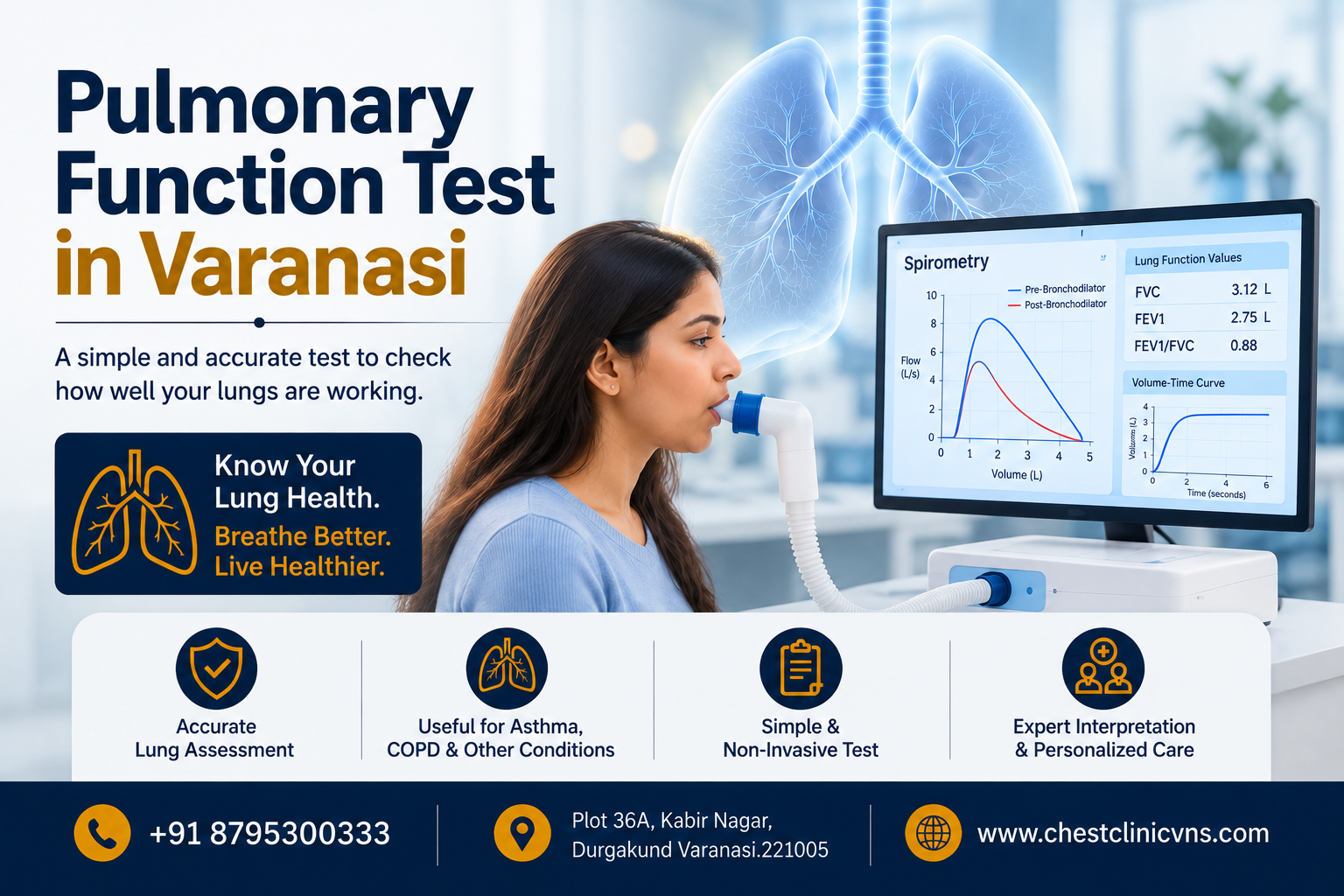
Spirometry is a common type of pulmonary function test. It measures how much air a person can breathe out and how quickly they can breathe it out.
During spirometry, you breathe into a mouthpiece connected to a specialized device called a spirometer. The results can provide information about airflow through the lungs.
Your doctor may interpret the results along with your symptoms, medical history and other clinical findings.
How Is a Pulmonary Function Test Performed?
The exact procedure can vary depending on which pulmonary function tests are being performed.
Step 1: Initial Assessment
The healthcare professional may review your symptoms, medical history and current medications before testing.
Step 2: Breathing Into the Equipment
For spirometry, you will normally be asked to breathe through a mouthpiece connected to the testing equipment.
Step 3: Following Breathing Instructions
You may be asked to take a deep breath and then breathe out as forcefully and completely as instructed by the technician.
Step 4: Repeated Measurements
The test may be repeated to obtain reliable measurements. Your healthcare professional will guide you throughout the procedure.
Types of Pulmonary Function Tests
Depending on the clinical requirement, different tests can be used to assess different aspects of lung function.
Spirometry
Spirometry evaluates airflow and is commonly used when assessing conditions such as asthma and COPD.
Lung Volume Testing
Lung volume measurements can provide information about how much air the lungs can hold.
Diffusion Capacity Testing
Diffusion testing can assess how efficiently gases move from the lungs into the bloodstream.
Your doctor will determine which tests are appropriate based on your symptoms and clinical situation.
What Conditions Can PFT Help Evaluate?
Pulmonary function testing may be useful when evaluating several respiratory conditions.
- Asthma
- Chronic Obstructive Pulmonary Disease (COPD)
- Certain restrictive lung disorders
- Some interstitial lung diseases
- Other conditions affecting breathing or lung function
PFT results are interpreted together with the patient's symptoms and other clinical information. A PFT alone does not provide a complete diagnosis for every respiratory condition.
PFT and Asthma
Pulmonary function testing can be an important part of evaluating patients with suspected or diagnosed asthma.
Depending on the situation, a doctor may perform spirometry and may assess how airflow changes after medication.
If you have recurring wheezing, cough or breathing difficulties, your doctor can determine whether lung function testing is appropriate.
PFT and COPD
Lung function testing is commonly used when evaluating patients who may have COPD.
It can provide information about airflow limitation and help doctors assess lung function alongside symptoms and medical history.
If you have long-term cough, mucus production or increasing breathlessness, consult a chest specialist for appropriate evaluation.
How Should You Prepare for a Pulmonary Function Test?
Your doctor or testing centre will provide specific instructions before the test.
Depending on the type of test, you may be advised to:
- Wear comfortable clothing.
- Avoid a heavy meal shortly before testing if instructed.
- Follow instructions regarding inhalers or other respiratory medicines.
- Avoid smoking before the test if advised by your doctor.
- Inform the healthcare professional about your current medicines and medical conditions.
Do not stop any prescribed medicine unless your doctor or testing professional specifically instructs you to do so.
How Long Does a PFT Take?
The duration depends on which pulmonary function tests are required.
A basic spirometry test may be relatively quick, while more comprehensive lung function testing can take longer.
The testing professional will explain the procedure and tell you how long the assessment is expected to take.
Is a Pulmonary Function Test Safe?
Pulmonary function testing is generally considered a non-invasive assessment. Some people may temporarily experience mild breathlessness, tiredness or light-headedness after performing forceful breathing manoeuvres.
Tell the healthcare professional if you feel unwell or uncomfortable during the test.
What Do Pulmonary Function Test Results Show?
PFT results contain several measurements that describe different aspects of lung function.
Depending on the test performed, your report may include measurements related to airflow, lung volumes and gas transfer.
The results should be interpreted by a qualified doctor in the context of your symptoms, examination and medical history.
When Should You See a Chest Specialist?
Consider consulting a chest specialist if you experience persistent or recurring respiratory symptoms such as:
- Long-lasting cough
- Breathlessness
- Wheezing
- Repeated chest infections
- Reduced ability to perform normal physical activities
- Unexplained changes in breathing
A doctor can determine whether a pulmonary function test or another diagnostic investigation is appropriate.
Pulmonary Function Test in Varanasi
If you are looking for a pulmonary function test in Varanasi , it is important to have the test performed in an appropriate clinical setting and interpreted by a qualified healthcare professional.
At Samaria Multi-Speciality & Chest Centre , pulmonary function testing is available as part of respiratory and lung evaluation.
The centre also provides respiratory care and other diagnostic services for patients with various lung and breathing conditions.
You can learn more about the centre's pulmonary function services here: Pulmonary Function Care .
Need a Pulmonary Function Test?
If you have persistent cough, breathlessness or other respiratory symptoms, consult a chest specialist for appropriate evaluation.
📞 Call +91 8795300333 Book AppointmentFrequently Asked Questions About Pulmonary Function Tests
1. What is a pulmonary function test?
A pulmonary function test is a group of breathing tests used to assess different aspects of lung function, including airflow and lung capacity.
2. Is spirometry the same as a PFT?
Spirometry is one type of pulmonary function test. Pulmonary function testing can include different tests depending on the patient's clinical requirements.
3. Why would a doctor recommend a PFT?
A doctor may recommend lung function testing when evaluating symptoms such as persistent cough, breathlessness or wheezing, or when monitoring certain diagnosed respiratory conditions.
4. Is a pulmonary function test painful?
PFT is generally non-invasive. Some breathing manoeuvres require forceful breathing, which may temporarily cause mild breathlessness or tiredness in some people.
5. How long does a PFT take?
The duration depends on the type and number of lung function tests being performed. Basic spirometry may be completed relatively quickly, while comprehensive testing may take longer.
6. Can PFT diagnose asthma?
Lung function testing can provide important information when evaluating suspected asthma. Your doctor will interpret the results together with your symptoms and other clinical findings.
7. Can PFT help evaluate COPD?
Yes. Pulmonary function testing is commonly used when evaluating airflow limitation in patients who may have COPD.
8. Should I stop my inhaler before a PFT?
Do not stop prescribed medicines on your own. Your doctor or testing professional will tell you whether any medication needs to be adjusted before the test.
Conclusion
A pulmonary function test can provide useful information about how the lungs work and how effectively air moves through the respiratory system.
It may be recommended for people experiencing persistent cough, wheezing, breathlessness or other respiratory symptoms, as well as for monitoring certain lung conditions.
If you are experiencing ongoing breathing problems, consult a qualified chest specialist to determine whether a pulmonary function test is appropriate for you.

Dr. J.K. Samaria
Senior Consultant Pulmonologist | Professor & Head, Chest Diseases, IMS BHU.