
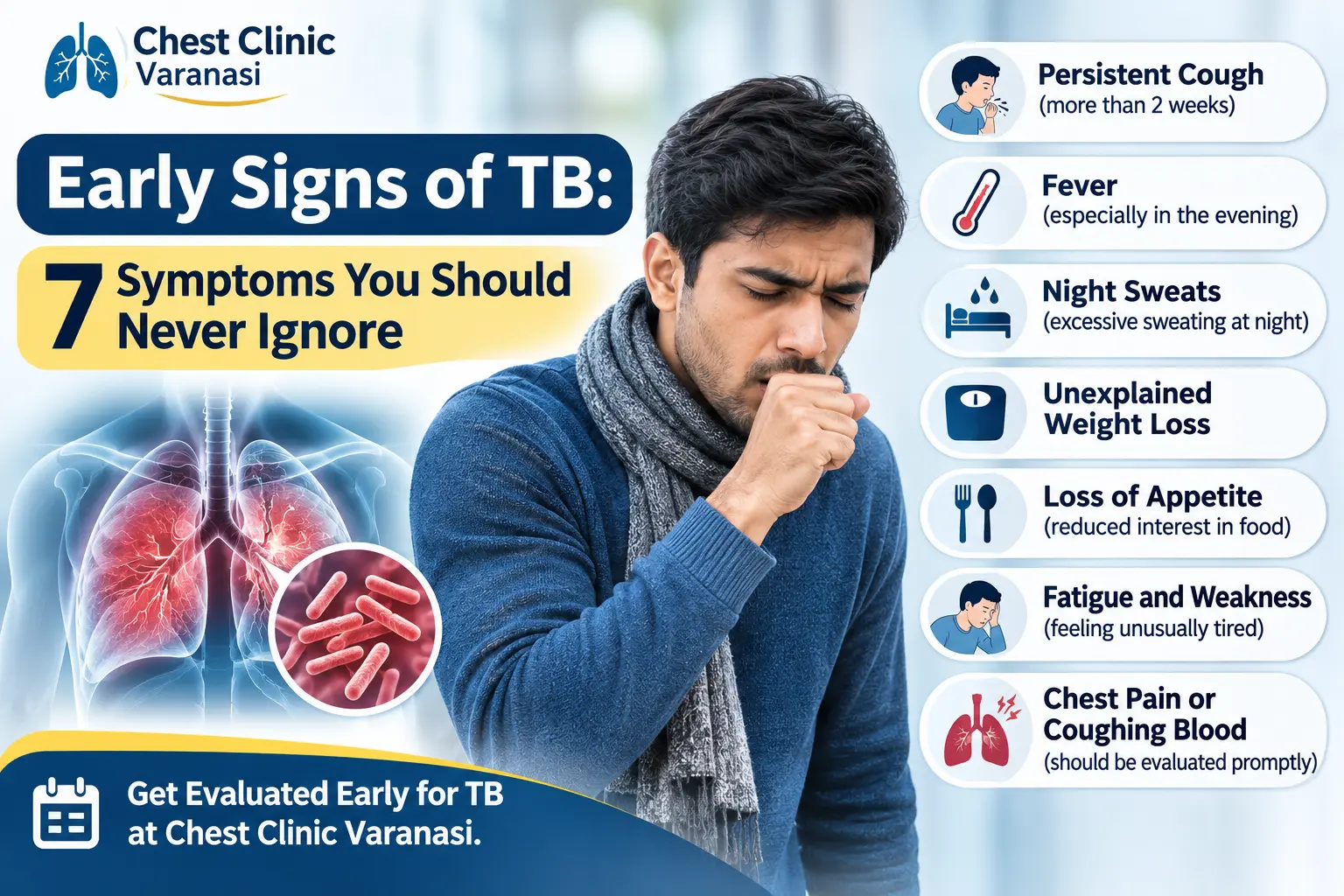
Early signs of TB can sometimes be mistaken for a routine cough, seasonal infection or general tiredness. However, tuberculosis can cause persistent respiratory and general health symptoms that should not be ignored.
Pulmonary TB primarily affects the lungs. Recognising symptoms early and getting appropriate medical evaluation can help identify the condition and guide further testing when needed.
Not everyone with these symptoms has TB. Several other respiratory conditions can cause similar problems, which is why proper medical assessment is important.
What Is Tuberculosis?
Tuberculosis, commonly known as TB, is an infectious disease caused by bacteria belonging to the Mycobacterium tuberculosis complex.
TB can affect different parts of the body, but the lungs are a common site of infection. When TB affects the lungs, it is called pulmonary tuberculosis.
Pulmonary TB can produce a combination of respiratory symptoms and general symptoms that develop over time.
Why Is Early Detection of TB Important?
Recognising persistent or unusual symptoms can help people seek medical advice sooner.
When TB is suspected, a healthcare professional can assess the patient's symptoms and decide whether TB-specific testing or other investigations are appropriate.
Early evaluation is also important because untreated infectious pulmonary TB can potentially spread to other people.
7 Early Signs of TB You Should Not Ignore
1. Persistent Cough
A cough that continues rather than gradually improving should be medically evaluated, especially when accompanied by other TB-related symptoms.
2. Fever
Persistent or recurring fever can occur with TB. Fever can also have many other causes, so it should be considered along with the overall clinical picture.
3. Night Sweats
Unusual sweating during the night can occur in people with tuberculosis and should be discussed with a doctor when it is persistent or associated with other symptoms.
4. Unexplained Weight Loss
Losing weight without deliberately changing diet or exercise can be a warning sign that requires medical evaluation.
5. Loss of Appetite
Reduced appetite may occur along with other systemic symptoms of TB.
6. Fatigue and Weakness
Persistent tiredness or weakness can occur with tuberculosis, although many other conditions can also cause fatigue.
7. Chest Pain or Coughing Blood
Chest discomfort or coughing blood can occur in pulmonary TB and requires proper medical assessment.
Important
Having one or more of these symptoms does not confirm tuberculosis. Other infections and medical conditions can produce similar symptoms. Testing and clinical evaluation are needed when TB is suspected.
TB Symptoms vs a Common Chest Infection
A cough, fever and tiredness can occur with many respiratory infections. This can make it difficult to distinguish TB from other illnesses based only on symptoms.
A routine respiratory infection may improve over time, whereas persistent or worsening symptoms deserve further evaluation.
The duration of symptoms, medical history, exposure history, physical examination and appropriate investigations help a doctor determine what may be causing the problem.
Do Not Diagnose TB Yourself
A persistent cough does not automatically mean tuberculosis. Likewise, the absence of one particular symptom does not completely rule it out. Consult a healthcare professional when TB is suspected.
When Should You Get Tested for TB?
Consider discussing TB testing with a healthcare professional when you have persistent respiratory symptoms or a combination of symptoms that raises concern for tuberculosis.
Medical evaluation is especially important when symptoms continue despite routine treatment or when there has been known exposure to someone with infectious TB.
The doctor will determine which tests are appropriate based on your symptoms and medical history.
How Is TB Diagnosed?
There is no single symptom that confirms TB. Diagnosis usually involves a combination of clinical assessment and appropriate investigations.
Medical History and Examination
The doctor may ask about symptoms, their duration, previous illnesses, TB exposure and other relevant risk factors.
Chest Imaging
A chest X-ray or other imaging may be recommended to look for changes in the lungs. Imaging alone does not always establish the diagnosis.
Sputum and Laboratory Testing
When pulmonary TB is suspected, sputum or other laboratory tests may be used to look for evidence of tuberculosis bacteria.
Additional Testing
Depending on the clinical situation, additional investigations may be required.
Can TB Be Cured?
Yes, tuberculosis can be treated with appropriate anti-TB medicines.
Treatment requires the correct medicines, doses and duration under medical supervision. Patients should follow the prescribed treatment plan and should not stop medicines on their own.
The exact treatment approach depends on the type of TB, drug susceptibility and individual medical circumstances.
How Does TB Spread?
Pulmonary TB can spread through the air when a person with infectious TB coughs, speaks or sneezes.
The risk of transmission depends on several factors, including the infectiousness of the person, duration of exposure and ventilation.
If infectious TB is suspected or confirmed, following medical advice about treatment and infection-control measures is important.
Learn more about how TB spreads and how transmission can be reduced.TB Evaluation in Varanasi
People experiencing persistent cough, fever, night sweats, unexplained weight loss or other concerning respiratory symptoms can seek evaluation from a chest specialist in Varanasi.
At Chest Clinic Varanasi, Dr. Kumar Utsav evaluates patients with respiratory symptoms and can recommend appropriate investigations when tuberculosis or another lung condition is suspected.
If you have previous chest X-rays, sputum reports, blood tests or prescriptions, carry them to your consultation whenever possible.
Persistent Cough or Other TB Symptoms?
Do not ignore persistent respiratory symptoms. Proper medical evaluation can help determine whether further TB testing is needed.
Book AppointmentRelated TB Resources
Frequently Asked Questions
What are the early signs of TB?
Common symptoms can include persistent cough, fever, night sweats, unexplained weight loss, reduced appetite, fatigue and other chest symptoms.
How long does a TB cough usually last?
A persistent cough can occur with pulmonary TB, but cough duration alone cannot confirm TB. A cough that does not improve should be medically evaluated.
Can TB cause weight loss?
Yes. Unexplained weight loss can occur with tuberculosis, particularly when the illness has been affecting the body for some time.
Can TB cause night sweats?
Yes. Night sweats can occur with TB, although they can also have several other causes.
Can TB occur without a cough?
Symptoms vary between individuals and depend on the site and type of TB. If there is concern about TB, medical evaluation rather than symptom-based self-diagnosis is recommended.
When should I get tested for TB?
If you have persistent respiratory symptoms, concerning associated symptoms or known exposure to infectious TB, discuss appropriate testing with a healthcare professional.
Can TB be cured?
TB can be treated with appropriate anti-TB medicines. Completing the prescribed treatment under medical supervision is important.
Where can I consult a TB doctor in Varanasi?
Patients in Varanasi can consult Dr. Kumar Utsav at Chest Clinic Varanasi for evaluation of persistent respiratory symptoms and suspected lung conditions.
Conclusion
The early signs of TB can sometimes look like other respiratory illnesses. Persistent cough, fever, night sweats, unexplained weight loss, loss of appetite, fatigue and other concerning symptoms should not be ignored.
These symptoms do not automatically mean that you have tuberculosis. However, if symptoms persist or several warning signs occur together, appropriate medical evaluation can help determine whether TB testing is necessary.
Early evaluation and appropriate treatment can make an important difference in managing tuberculosis and reducing the risk of transmission.