
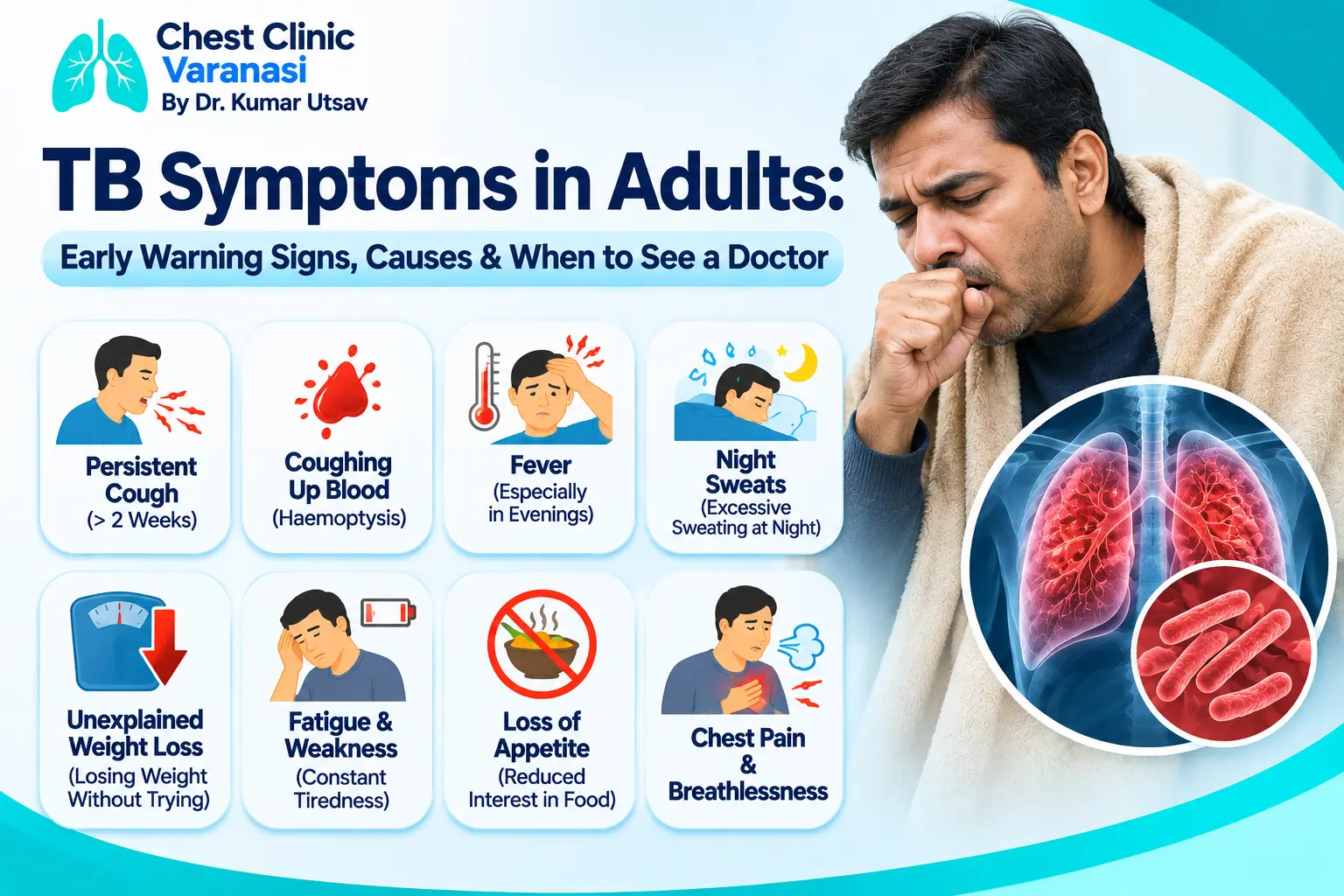
Tuberculosis, commonly known as TB, is an infectious disease that most often affects the lungs, although it can affect other parts of the body as well.
The symptoms of TB can develop gradually. Some people may initially mistake them for a routine respiratory infection, seasonal illness or general tiredness. Recognising persistent or unusual symptoms can help you understand when medical evaluation may be necessary.
This guide explains common TB symptoms in adults, the warning signs associated with pulmonary TB and when you should consult a qualified respiratory or TB specialist.
What Is Tuberculosis?
Tuberculosis is an infectious disease caused by bacteria from the Mycobacterium tuberculosis complex.
The lungs are the most commonly affected organs in pulmonary TB, but tuberculosis can also occur outside the lungs.
Because symptoms can vary depending on the part of the body affected, a proper medical assessment is important when TB is suspected.
What Are the Early Symptoms of TB in Adults?
The symptoms of tuberculosis can vary from person to person. Pulmonary TB may cause respiratory symptoms together with general symptoms of infection.
1. Persistent Cough
A cough that continues for a prolonged period can be an important respiratory warning sign and should be medically evaluated when persistent.
2. Coughing Up Blood
Blood in sputum can occur with several respiratory conditions, including tuberculosis, and requires medical attention.
3. Fever
Persistent or recurrent fever can occur with TB and should be considered alongside other symptoms.
4. Night Sweats
Unusual sweating at night can occur with tuberculosis, although it can also have other causes.
5. Unexplained Weight Loss
Unexpected weight loss can occur during prolonged illness and should be evaluated when it has no clear explanation.
6. Fatigue and Weakness
Persistent tiredness or weakness may occur with TB and other chronic illnesses.
7. Loss of Appetite
Reduced appetite can accompany tuberculosis and other infections or chronic conditions.
8. Chest Pain
Chest discomfort can occur with respiratory disease and should be assessed, particularly when associated with cough or breathing difficulty.
9. Breathlessness
Breathing difficulty may occur when lung involvement affects respiratory function.
10. Symptoms That Persist or Worsen
A combination of respiratory and general symptoms that persists or progressively worsens deserves medical evaluation.
1. Persistent Cough
A persistent cough is one of the important symptoms that can occur in pulmonary tuberculosis.
However, a long-lasting cough does not automatically mean that a person has TB. Asthma, COPD, infections, allergies and other respiratory conditions can also cause persistent coughing.
If your cough continues, becomes worse or is accompanied by fever, weight loss, night sweats, blood in sputum or breathing difficulty, seek medical evaluation.
2. Coughing Up Blood
Coughing up blood, also called haemoptysis, can occur in several lung conditions, including tuberculosis.
Do Not Ignore Blood in Sputum
Any unexplained blood in sputum should be discussed with a doctor. Significant or repeated bleeding requires prompt medical attention.
3. Fever and Night Sweats
Fever and night sweats can occur in people with tuberculosis.
These symptoms are not specific to TB. Other infections, inflammatory conditions and medical problems can also cause fever or night sweating.
When these symptoms occur together with a persistent cough, weight loss or other respiratory symptoms, medical evaluation may be appropriate.
4. Unexplained Weight Loss
Unintentional weight loss can be an important sign of an underlying health problem.
If you are losing weight without intentionally changing your diet or activity level, particularly when you also have persistent cough, fever or fatigue, consult a doctor.
5. Fatigue and Weakness
Tuberculosis can cause prolonged illness, and some people may experience tiredness, weakness or reduced energy.
Fatigue is a non-specific symptom and can have many causes, so it should be considered together with the person's complete clinical history.
6. Loss of Appetite
Reduced appetite can occur during tuberculosis and other infections.
When reduced appetite is accompanied by unexplained weight loss, fever, night sweats or persistent respiratory symptoms, medical assessment is recommended.
7. Chest Pain and Breathlessness
Some people with pulmonary TB may experience chest discomfort or breathing difficulty, depending on the extent and location of lung involvement.
Chest pain and breathlessness can also have many other causes. New, severe or rapidly worsening symptoms should receive appropriate medical attention.
Pulmonary TB Symptoms
Pulmonary TB affects the lungs and may produce a combination of respiratory and general symptoms.
- Persistent cough
- Sputum production
- Blood in sputum
- Chest discomfort
- Breathlessness
- Fever
- Night sweats
- Fatigue
- Loss of appetite
- Unexplained weight loss
Not every person with pulmonary TB will experience all of these symptoms.
TB Symptoms Can Overlap With Other Lung Conditions
Cough, fever, chest discomfort and breathing difficulty can occur with several respiratory diseases. Symptoms alone cannot confirm tuberculosis.
Read: TB vs Pneumonia – Symptoms and Key DifferencesHow Is Tuberculosis Diagnosed?
The diagnosis of TB depends on the patient's symptoms, examination, medical history and appropriate diagnostic investigations.
Depending on the clinical situation, a doctor may recommend tests such as sputum-based testing, molecular testing, chest imaging or other investigations.
The exact tests required depend on whether pulmonary or extrapulmonary TB is suspected and on the individual clinical circumstances.
Testing Matters
TB symptoms alone are not enough to establish a diagnosis. Appropriate testing helps determine whether tuberculosis is present and guides further management.
Read: Tuberculosis Tests and Diagnosis GuideWhen Should You See a TB Doctor?
You should consider medical evaluation if you have a persistent cough or a combination of respiratory and general symptoms that does not improve.
Symptoms That Should Not Be Ignored
- Persistent or worsening cough
- Coughing up blood
- Unexplained fever
- Repeated night sweats
- Unexplained weight loss
- Persistent fatigue or weakness
- Loss of appetite
- Chest pain or breathing difficulty
If symptoms are severe or rapidly worsening, seek urgent medical care.
TB Doctor in Varanasi
If you are searching for a TB doctor in Varanasi, a respiratory specialist can evaluate persistent cough, fever, weight loss, night sweats and other symptoms that may require investigation for tuberculosis.
At Chest Clinic Varanasi, Dr. Kumar Utsav provides respiratory consultation for patients with persistent cough, breathing problems and other chest-related symptoms.
During your consultation, provide details about how long your symptoms have been present, previous respiratory illnesses, medicines and any relevant medical reports.
Concerned About Persistent TB Symptoms?
Do not rely on symptoms alone for diagnosis. Professional evaluation and appropriate testing can help identify the cause of persistent respiratory symptoms.
Book AppointmentRelated TB & Respiratory Resources
Frequently Asked Questions
What are the early symptoms of TB in adults?
Common symptoms associated with pulmonary TB can include a persistent cough, fever, night sweats, fatigue, loss of appetite and unexplained weight loss.
Can a persistent cough be a symptom of TB?
Yes, a persistent cough can occur with pulmonary TB. However, many other respiratory conditions can also cause a prolonged cough, so medical evaluation is important.
Does TB cause night sweats?
Night sweats can occur with tuberculosis, particularly when associated with other symptoms such as fever, persistent cough or unexplained weight loss.
Can TB cause weight loss?
Unexplained weight loss can occur during tuberculosis. Weight loss can also have many other causes and should be evaluated when it is persistent or unexplained.
Can TB cause chest pain?
Chest discomfort can occur with pulmonary tuberculosis, but chest pain has many possible causes and should be assessed appropriately.
Can TB cause breathlessness?
Breathlessness can occur in some people with pulmonary TB, depending on the extent of lung involvement.
How is TB diagnosed?
TB diagnosis may involve clinical assessment together with appropriate laboratory tests, sputum-based testing, molecular testing, imaging or other investigations depending on the clinical situation.
When should I see a TB doctor?
Persistent cough, unexplained fever, night sweats, weight loss, blood in sputum or ongoing breathing problems should be discussed with a qualified healthcare professional.
Where can I consult a TB doctor in Varanasi?
Patients in Varanasi can consult Dr. Kumar Utsav at Chest Clinic Varanasi for evaluation of persistent respiratory symptoms and appropriate further investigation.
Conclusion
TB symptoms can develop gradually and may initially resemble other respiratory illnesses. Persistent cough, fever, night sweats, unexplained weight loss, fatigue, reduced appetite, chest discomfort or breathing difficulty should not be ignored when they persist or occur together.
Symptoms alone cannot confirm tuberculosis. Appropriate medical evaluation and diagnostic testing are important when TB is suspected.
If you have persistent respiratory symptoms or risk factors that concern you, consult a qualified doctor rather than self-diagnosing or delaying evaluation.
For patients searching for TB symptoms in Varanasi, a TB doctor in Varanasi or respiratory evaluation, Chest Clinic Varanasi provides specialized chest and respiratory consultation.