
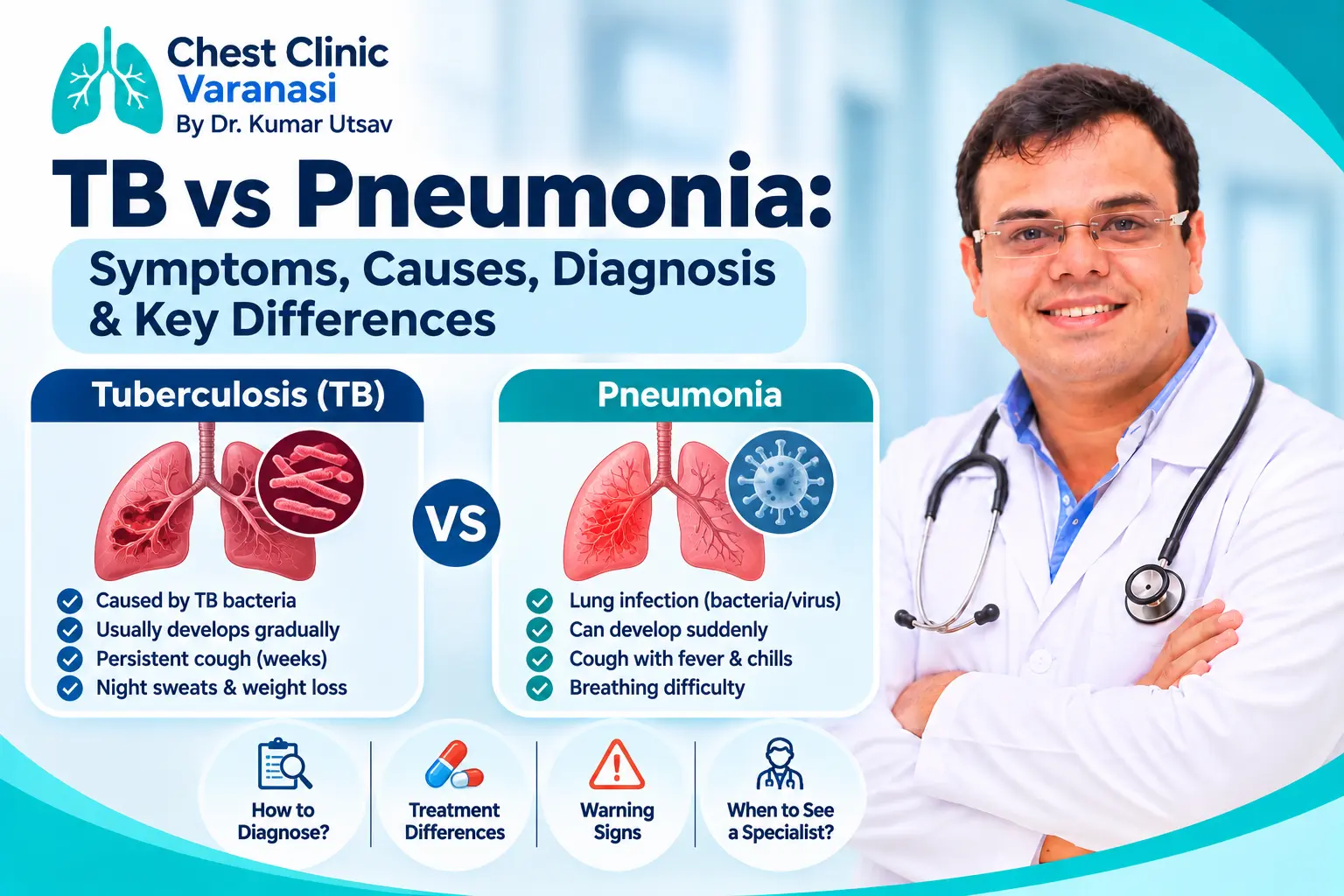
Tuberculosis (TB) and pneumonia are both conditions that can affect the lungs and cause symptoms such as cough, fever and breathing difficulty. Because some of their symptoms can look similar, patients may wonder whether they have TB or pneumonia.
However, tuberculosis and pneumonia are different conditions with different causes and treatment approaches. A proper medical evaluation is important when symptoms are persistent, severe or unusual.
This guide explains the important differences between tuberculosis and pneumonia, common symptoms, diagnosis and when you should consult a chest specialist.
TB vs Pneumonia: What Is the Main Difference?
The main difference is that tuberculosis is an infectious disease caused by bacteria from the Mycobacterium tuberculosis complex, while pneumonia is a lung infection or inflammatory condition that can have several different causes.
TB can develop gradually and may cause symptoms that continue for weeks. Pneumonia can also vary significantly depending on its cause, severity and the patient's overall health.
Because symptoms can overlap, a doctor may need to consider medical history, physical examination, imaging and appropriate laboratory tests.
Tuberculosis Symptoms
Pulmonary tuberculosis may develop gradually. Some patients have symptoms for a considerable period before seeking medical attention.
Possible TB Symptoms
- Persistent cough
- Fever
- Night sweats
- Unexplained weight loss
- Loss of appetite
- Tiredness or weakness
- Chest discomfort
- Blood in sputum in some cases
These symptoms are not specific to TB. Other respiratory conditions can cause similar complaints.
Pneumonia Symptoms
Pneumonia can cause symptoms that appear over a relatively short period, although the exact pattern depends on the cause and severity.
Common Pneumonia Symptoms
- Cough
- Fever
- Breathing difficulty
- Chest discomfort
- Chills
- Tiredness
- Reduced appetite
The severity of pneumonia can range from mild illness to a serious infection requiring urgent medical care.
Causes of TB and Pneumonia
What Causes Tuberculosis?
Tuberculosis is caused by bacteria from the Mycobacterium tuberculosis complex. Pulmonary TB primarily affects the lungs.
What Causes Pneumonia?
Pneumonia can have several causes. Infectious pneumonia may result from bacteria, viruses or other microorganisms.
Because the causes are different, treatment should be based on the diagnosis rather than assuming that every cough or fever requires the same treatment.
TB vs Pneumonia: Key Differences
| Feature | Tuberculosis | Pneumonia |
|---|---|---|
| Cause | Mycobacterium tuberculosis complex | Can have several infectious or other causes |
| Onset | Often gradual | Can be sudden or gradual depending on cause |
| Cough | May be persistent | Common symptom |
| Fever | May occur | Commonly occurs |
| Night sweats | Can occur | Not a defining symptom |
| Weight loss | Can occur | May occur with severe or prolonged illness |
| Diagnosis | May involve sputum, molecular tests, imaging and other evaluation | May involve examination, imaging and other investigations |
How Are TB and Pneumonia Diagnosed?
The diagnosis depends on the patient's symptoms, medical history, examination and appropriate investigations.
TB Diagnosis
When pulmonary TB is suspected, a doctor may recommend respiratory sample testing, molecular testing, chest imaging or other investigations.
For more information about TB testing, read our detailed guide:
Tuberculosis Tests: How TB Is Diagnosed & When to See a Doctor
Pneumonia Diagnosis
Evaluation of suspected pneumonia may include a clinical examination and chest imaging. Additional tests may be recommended depending on the patient's symptoms and condition.
A chest X-ray may help identify changes in the lungs, but the overall clinical picture is important when making a diagnosis.
TB vs Pneumonia: Treatment Differences
TB and pneumonia should not be treated as if they are the same condition.
Tuberculosis Treatment
Tuberculosis requires an appropriate anti-tuberculosis treatment regimen prescribed and monitored by qualified healthcare professionals.
Treatment should be followed exactly as advised, and patients should not stop prescribed medicines without discussing it with their doctor.
For detailed information about TB care, visit:
TB Doctor in Varanasi & Tuberculosis Treatment
Pneumonia Treatment
Treatment depends on the cause and severity of pneumonia. Some cases may require specific medicines, while severe illness may require hospital-based care.
The appropriate treatment should be determined after evaluation rather than self-medicating.
When Should You Seek Medical Attention?
Persistent respiratory symptoms should not be ignored, particularly when they are worsening or interfering with normal daily activities.
Seek Prompt Medical Evaluation If You Have:
- Persistent or worsening cough
- Difficulty breathing
- Chest pain or significant chest discomfort
- Persistent fever
- Blood in sputum
- Unexplained weight loss
- Repeated night sweats
- An abnormal chest X-ray
Severe breathing difficulty, significant bleeding or a rapidly worsening condition requires urgent medical attention.
TB and Pneumonia Care in Varanasi
If you are experiencing persistent cough, fever, breathing difficulty or other chest symptoms in Varanasi, specialist evaluation can help identify the underlying cause.
Dr. Kumar Utsav at Chest Clinic Varanasi provides chest and respiratory consultation for patients with lung-related symptoms and conditions.
Patients who already have chest X-rays, CT scans, sputum reports, previous prescriptions or other medical records should bring them during consultation whenever possible.
Need a Chest Specialist in Varanasi?
Persistent cough, fever or breathing difficulty should be properly evaluated instead of assuming whether it is TB, pneumonia or another respiratory condition.
Book AppointmentRelated TB & Respiratory Resources
- TB Doctor in Varanasi & Tuberculosis Treatment
- Tuberculosis Tests & Diagnosis
- Lung Specialist in Varanasi
- Respiratory Care
- Pulmonary Function Test
Frequently Asked Questions
What is the difference between TB and pneumonia?
Tuberculosis is caused by bacteria from the Mycobacterium tuberculosis complex, while pneumonia can have different infectious and non-infectious causes. Their symptoms may overlap, so proper medical evaluation can be important.
Can TB look like pneumonia?
Yes. Some symptoms and chest imaging findings can overlap. When TB is suspected, additional testing may be required.
Which is more serious, TB or pneumonia?
Both conditions can become serious depending on the individual patient, underlying health and severity of disease. The appropriate diagnosis and treatment should be determined by a doctor.
Can a chest X-ray differentiate TB from pneumonia?
Chest imaging can provide important information, but an X-ray alone may not always establish the exact cause of lung changes. Additional evaluation may be required.
What are the common symptoms of TB?
Possible symptoms include persistent cough, fever, night sweats, unexplained weight loss, tiredness and sometimes blood in sputum.
What are common symptoms of pneumonia?
Pneumonia may cause cough, fever, breathing difficulty, chest discomfort, chills and tiredness.
When should I see a chest specialist?
Persistent cough, breathing difficulty, recurring fever, blood in sputum, significant chest symptoms or abnormal chest imaging should be medically evaluated.
Where can I consult a chest specialist in Varanasi?
Patients in Varanasi can consult Dr. Kumar Utsav at Chest Clinic Varanasi for appropriate chest and respiratory evaluation.
Conclusion
TB and pneumonia can share symptoms such as cough, fever and breathing difficulty, but they are different conditions and may require different diagnostic approaches and treatments.
If symptoms are persistent, severe or associated with an abnormal chest report, it is better to seek medical evaluation rather than trying to determine the cause based only on symptoms.
For patients searching for information about TB vs pneumonia, TB symptoms, pneumonia symptoms, a TB doctor in Varanasi or a chest specialist in Varanasi, appropriate specialist assessment can help determine the next step.