
Tuberculosis, commonly called TB, is an infectious disease that most commonly affects the lungs. Understanding how TB spreads is important because early recognition, appropriate treatment and preventive measures can help reduce transmission.
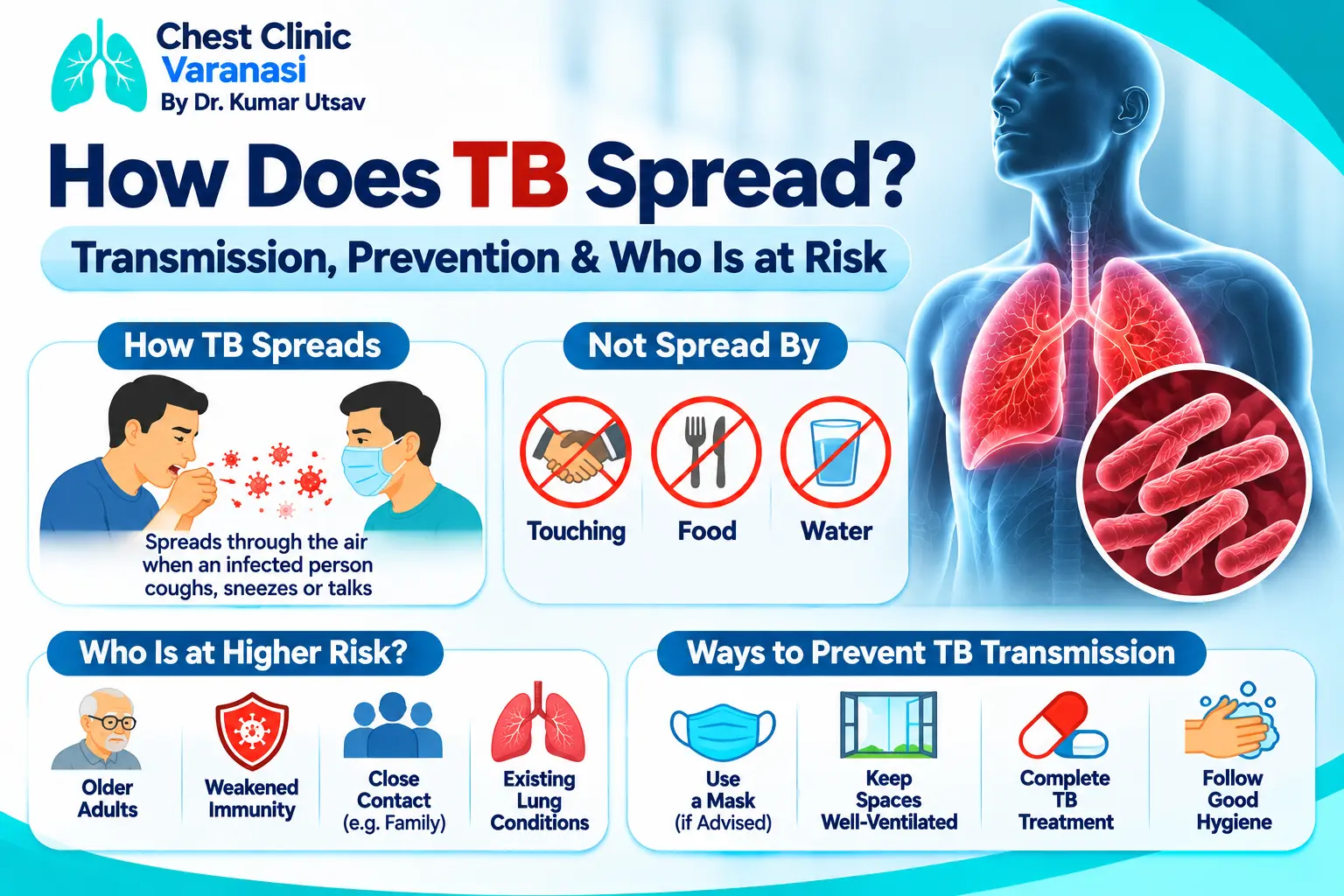
TB transmission is different from many common infections. Tuberculosis is mainly spread through the air when a person with infectious pulmonary or laryngeal TB releases bacteria-containing particles while coughing, speaking, singing or sneezing.
This guide explains TB transmission, whether TB is contagious, who may be at higher risk and practical ways to reduce the risk of spreading infection.
- What Is Tuberculosis?
- How Does TB Spread?
- Is TB Contagious?
- How Pulmonary TB Spreads Through the Air
- Can TB Spread Through Touching?
- Can TB Spread Through Food or Water?
- Who Is at Higher Risk of TB?
- How Long Can TB Be Infectious?
- How Can TB Transmission Be Reduced?
- Latent TB vs Active TB
- When Should You Get Evaluated?
- Frequently Asked Questions
What Is Tuberculosis?
Tuberculosis is an infectious disease caused by bacteria from the Mycobacterium tuberculosis complex.
Although TB can affect different organs, pulmonary TB is the form most commonly associated with person-to-person airborne transmission.
A person with TB may have symptoms such as persistent cough, fever, night sweats, fatigue, reduced appetite or unexplained weight loss. However, symptoms vary and cannot confirm TB on their own.
How Does TB Spread?
The main route of transmission for infectious pulmonary or laryngeal TB is through the air.
When a person with infectious TB coughs, speaks, sings or sneezes, very small particles containing TB bacteria can be released into the surrounding air.
Another person may inhale these particles and become infected. The likelihood of transmission can depend on factors such as the infectiousness of the person with TB, ventilation, duration of exposure and the environment.
Airborne Transmission
Infectious pulmonary or laryngeal TB can spread through airborne particles released during coughing, speaking or sneezing.
Close or Prolonged Exposure
People who spend considerable time around someone with infectious TB may have a greater opportunity for exposure.
Poor Ventilation
Poorly ventilated indoor environments can allow infectious airborne particles to remain concentrated for longer.
Early Diagnosis Matters
Prompt identification and appropriate treatment of infectious TB can help reduce the risk of transmission.
Is TB Contagious?
Active pulmonary or laryngeal TB can be contagious. However, not every person who has been infected with TB bacteria has contagious disease.
TB affecting organs outside the lungs generally does not spread through the air in the same way as infectious pulmonary or laryngeal TB.
If you have been diagnosed with TB, follow the treatment and infection-control advice provided by your healthcare team.
How Does Pulmonary TB Spread Through the Air?
Pulmonary TB can spread when bacteria-containing particles are released into the air by a person with infectious disease.
Activities such as coughing, speaking or singing can release airborne particles.
Transmission is more likely in environments where infectious exposure occurs repeatedly, particularly when ventilation is poor.
Why Ventilation Matters
Fresh air and good ventilation can help reduce the concentration of infectious airborne particles in indoor spaces. If someone has suspected or confirmed infectious TB, follow the specific infection-control advice given by their doctor or local health authorities.
Can TB Spread Through Touching Someone?
TB is not normally spread through ordinary physical contact.
Shaking hands, touching someone's skin or sitting next to a person does not normally transmit TB through physical contact alone.
The important concern with infectious pulmonary or laryngeal TB is exposure to bacteria-containing airborne particles.
Can TB Spread Through Food or Water?
TB is primarily associated with airborne transmission from infectious pulmonary or laryngeal disease rather than ordinary food or drinking water.
People should therefore focus on appropriate diagnosis, treatment, ventilation and medical advice rather than avoiding ordinary contact with food or household surfaces because of fear of TB transmission.
Who Is at Higher Risk of TB?
The risk of developing TB disease can be higher in people who have certain medical, environmental or social risk factors.
- People who have close or prolonged exposure to someone with infectious TB.
- People with weakened immune systems.
- People living or working in settings where TB transmission is more likely.
- People with certain medical conditions that increase the risk of TB disease.
- People who have previously been infected with TB bacteria.
Having a risk factor does not mean that a person definitely has TB. Appropriate evaluation and testing should be based on the individual situation.
How Long Can a Person With TB Be Infectious?
The period during which a person with pulmonary or laryngeal TB can spread infection varies.
Infectiousness can depend on factors such as whether effective treatment has started, the response to treatment and the presence of infectious disease in the lungs or airways.
A person diagnosed with infectious TB should follow the instructions of their treating healthcare professional about treatment, precautions and returning to normal activities.
Do Not Stop TB Treatment on Your Own
If you are receiving treatment for TB, take medicines exactly as prescribed. Stopping treatment without medical guidance can create serious health problems and may contribute to drug resistance.
How Can TB Transmission Be Reduced?
Reducing TB transmission involves identifying infectious cases early, treating them appropriately and reducing exposure to infectious airborne particles.
1. Get Persistent Symptoms Evaluated
A persistent cough, unexplained fever, night sweats, weight loss or other concerning symptoms should be medically evaluated.
2. Follow Prescribed TB Treatment
People diagnosed with TB should follow their prescribed treatment plan and medical instructions carefully.
3. Improve Indoor Ventilation
Good airflow and ventilation can help reduce the concentration of airborne particles indoors.
4. Follow Respiratory Hygiene Advice
Covering coughs and following appropriate respiratory hygiene practices can help reduce the spread of respiratory infections.
5. Follow Medical Infection-Control Advice
If a healthcare professional advises specific precautions, follow them until they confirm that restrictions can be changed.
Latent TB vs Active TB
TB infection does not always mean that a person has active TB disease.
Latent TB infection means TB bacteria are present in the body but the person does not have active TB disease. People with latent TB generally do not have symptoms and do not spread TB to others in the same way as people with infectious pulmonary TB.
Active TB disease can cause symptoms and, when it affects the lungs or larynx, may be infectious.
A healthcare professional can determine which tests and evaluation are appropriate.
When Should You Get Evaluated for TB?
Consider medical evaluation if you have persistent respiratory or general symptoms, especially when there has been known exposure to someone with infectious TB.
Symptoms That Need Medical Attention
- Persistent cough
- Coughing up blood
- Persistent or recurrent fever
- Night sweats
- Unexplained weight loss
- Persistent fatigue
- Loss of appetite
- Chest pain or breathing difficulty
These symptoms can occur with several conditions and do not prove that a person has TB. Proper clinical evaluation and appropriate testing are important.
TB Evaluation in Varanasi
If you are looking for a TB doctor in Varanasi, persistent cough, fever, night sweats, unexplained weight loss or breathing problems can be evaluated by a qualified respiratory specialist.
Dr. Kumar Utsav at Chest Clinic Varanasi provides respiratory consultation for patients with persistent chest and breathing symptoms.
During your appointment, share your symptom history, previous TB exposure if known, medical reports and any medicines you are currently taking.
Concerned About TB Exposure or Symptoms?
Do not rely on symptoms alone. Appropriate medical evaluation and testing can help determine whether further TB assessment is needed.
Book AppointmentRelated TB Resources
Frequently Asked Questions
How does TB spread?
Infectious pulmonary or laryngeal TB can spread through the air when a person releases bacteria-containing particles while coughing, speaking, singing or sneezing.
Is TB contagious?
Active pulmonary or laryngeal TB can be contagious. TB affecting other parts of the body generally does not spread through the air in the same way.
Can TB spread through touching?
TB is not normally transmitted through ordinary physical touching such as shaking hands. Airborne exposure is the main concern with infectious pulmonary or laryngeal TB.
Can TB spread through food or water?
TB is primarily transmitted through the air from infectious pulmonary or laryngeal TB rather than through ordinary food or drinking water.
Who is at higher risk of TB?
People with close exposure to infectious TB, weakened immune systems, certain medical conditions and those living or working in higher-risk settings may have an increased risk.
How can TB transmission be prevented?
Early diagnosis, appropriate treatment, good ventilation, respiratory hygiene and following medical infection-control advice can help reduce transmission.
When should I see a TB doctor?
Persistent cough, fever, night sweats, unexplained weight loss, blood in sputum or breathing problems should be discussed with a qualified healthcare professional.
Where can I consult a TB doctor in Varanasi?
Patients in Varanasi can consult Dr. Kumar Utsav at Chest Clinic Varanasi for evaluation of persistent respiratory symptoms and appropriate further investigation.
Conclusion
Understanding how TB spreads is an important part of preventing transmission. Infectious pulmonary or laryngeal TB can spread through the air, particularly when people are exposed to infectious particles in poorly ventilated indoor environments.
TB is not normally spread through ordinary touching, shaking hands or routine physical contact. Early diagnosis, appropriate treatment, ventilation and following medical advice are important parts of TB prevention.
If you have persistent cough, fever, night sweats, unexplained weight loss or known exposure to infectious TB, consult a qualified healthcare professional for appropriate evaluation.