
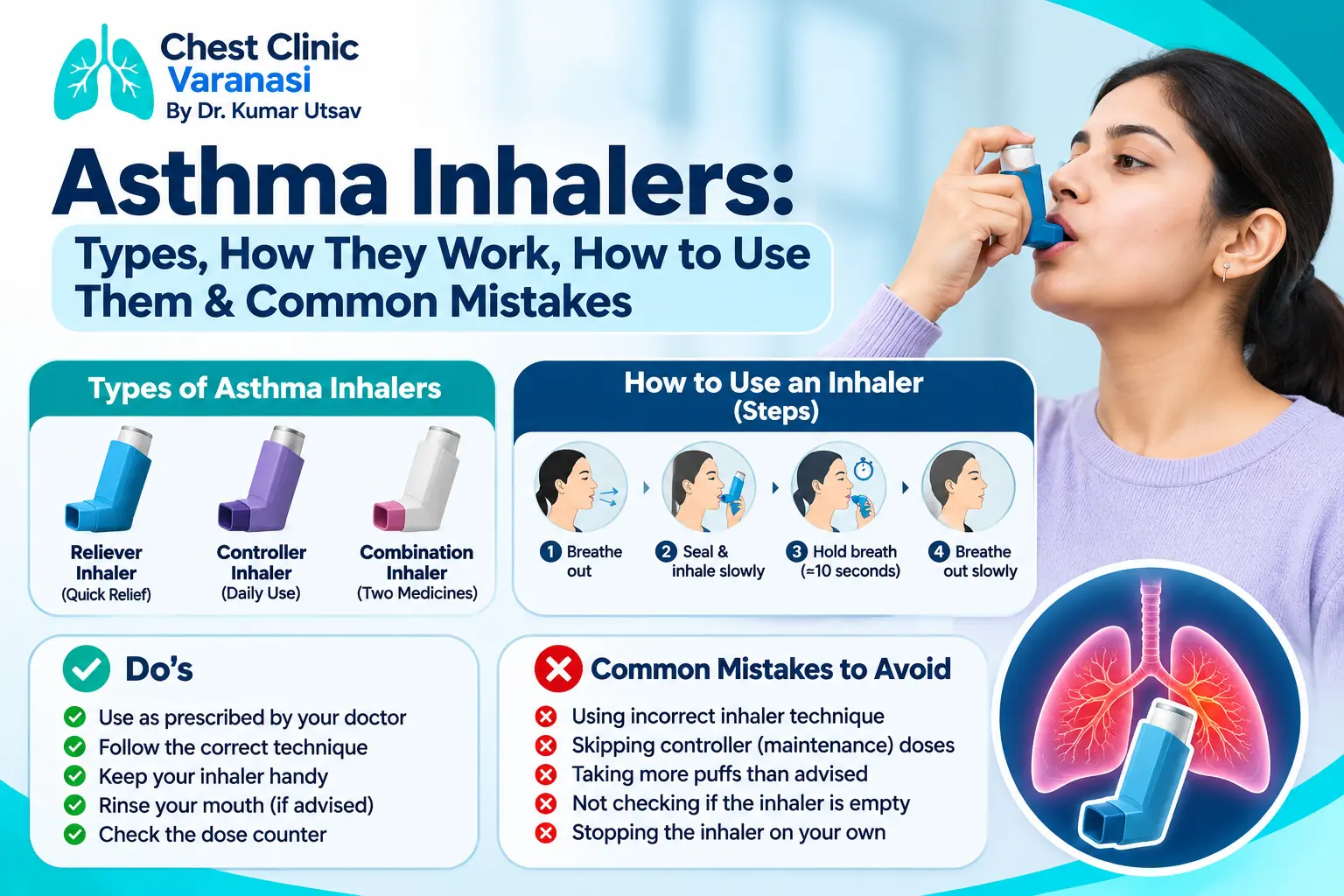
For many people with asthma, inhalers are an important part of managing respiratory symptoms. An inhaler delivers medicine directly into the airways, but different inhalers are designed for different purposes.
Understanding the difference between quick-relief and controller inhalers, learning the correct technique and following the prescribed treatment plan can help patients use their medication safely and effectively.
This guide explains the common types of asthma inhalers, how they are generally used, common technique mistakes and when you should consult an asthma doctor.
What Is an Asthma Inhaler?
An asthma inhaler is a device that delivers medication into the respiratory tract. Depending on the medicine and device, an inhaler may be used for quick relief of symptoms or as part of regular long-term asthma management.
There are different inhaler devices and medicines. The right choice depends on factors such as the type and severity of asthma, symptoms, age, inhaler technique and the treatment plan recommended by a doctor.
Important
Do not start, stop or change an asthma medicine on your own. Your doctor should determine which medicine and inhaler device is appropriate for you.
Types of Asthma Inhalers
Asthma inhalers can broadly be discussed according to the purpose of the medicine they deliver.
Reliever Inhalers
These are intended to provide relatively quick relief from acute asthma symptoms when prescribed for that purpose.
Controller Inhalers
These medicines are used as part of regular asthma management to help reduce airway inflammation and control symptoms.
Combination Inhalers
Some inhalers contain more than one medicine and may be prescribed as part of an individual's asthma management plan.
Different Device Types
Metered-dose inhalers, dry-powder inhalers and other devices have different operating techniques.
What Are Reliever Inhalers?
Reliever medicines are intended to provide quick improvement in asthma symptoms when used according to the prescribed treatment plan.
Depending on the medicine prescribed, they may help relax tightened airway muscles and improve airflow.
If you are repeatedly needing your quick-relief medicine, this can be a sign that your asthma may not be adequately controlled and should be discussed with your doctor.
What Are Controller Inhalers?
Controller or maintenance medicines are used regularly as directed to help manage the underlying airway inflammation and reduce the frequency or severity of asthma symptoms.
Some controller medicines may not provide immediate relief during an asthma attack. Their purpose is ongoing asthma management.
Do Not Stop Prescribed Controller Medicine Without Advice
Even when you feel better, do not stop or change prescribed asthma treatment without speaking with your doctor. Your treatment plan may need adjustment based on your symptoms and asthma control.
How to Use an Asthma Inhaler Correctly
The exact technique depends on the type of inhaler you use. Different devices require different steps.
For this reason, it is important to have your inhaler technique checked by a healthcare professional rather than assuming that all inhalers are used in exactly the same way.
General Technique Principles
- Read and follow the instructions supplied with your inhaler.
- Prepare the device exactly as instructed.
- Breathe out before taking the medication when the device instructions call for it.
- Position the inhaler correctly.
- Take the medicine using the breathing technique appropriate for your inhaler.
- Hold your breath for the recommended period if instructed.
- Follow any mouth-rinsing instructions associated with your prescribed medicine.
If you are unsure whether you are using your inhaler correctly, ask your doctor or healthcare professional to demonstrate and check your technique.
Common Asthma Inhaler Mistakes
Even when the correct medicine has been prescribed, incorrect inhaler technique can reduce how effectively the medicine is delivered.
1. Incorrect Breathing Technique
Some inhaler devices require a slow, controlled inhalation, while others require a different technique. Using the wrong breathing pattern can affect medicine delivery.
2. Not Following Device Instructions
Different inhalers work differently. Patients should follow the instructions for their specific device.
3. Skipping Prescribed Controller Medicine
Controller medicines are generally intended to be used according to the treatment plan. Skipping doses without medical advice may affect asthma control.
4. Not Checking Inhaler Technique
Technique can change over time. A healthcare professional can help identify problems and demonstrate the correct method.
5. Using an Empty or Expired Device
Patients should monitor their inhaler supply and follow the storage and replacement instructions provided with the medicine.
When Is a Spacer Used With an Inhaler?
A spacer or valved holding chamber may be recommended with certain pressurised metered-dose inhalers.
It can make coordination between inhaler activation and breathing easier for some patients and may improve medication delivery.
Whether a spacer is appropriate depends on the inhaler and the individual patient. Ask your healthcare professional if you would benefit from one.
How Do You Know Your Asthma May Not Be Well Controlled?
Asthma control can change over time. Symptoms that are becoming more frequent may indicate that your current treatment plan needs review.
Possible Warning Signs
- Frequent coughing or wheezing
- Repeated chest tightness
- Breathing difficulty during normal activities
- Asthma symptoms that disturb sleep
- Repeated flare-ups
- Increasing use of quick-relief medication
- Difficulty exercising because of breathing symptoms
If these problems are occurring regularly, arrange a medical review rather than simply increasing or changing medication on your own.
Know Your Asthma Triggers
Dust, smoke, pollution, respiratory infections, strong fragrances, cold air, exercise and other factors can worsen asthma symptoms in some people.
Read: Asthma Triggers – 10 Common Things That Can Make Symptoms WorseWhat If Asthma Symptoms Get Worse at Night?
Some people experience coughing, wheezing or breathing difficulty at night.
Frequent nighttime symptoms can be a sign that asthma needs further assessment and treatment review.
For more information, read our detailed article:
Asthma at Night: Symptoms, Causes & Treatment
When Should You See an Asthma Doctor?
You should consider medical evaluation if asthma symptoms are frequent, worsening or affecting your sleep, exercise or normal daily activities.
Seek Prompt Medical Attention If You Have:
- Severe or rapidly worsening breathing difficulty
- Difficulty speaking because of breathlessness
- Severe chest tightness
- Symptoms that are not improving as expected
- Repeated asthma flare-ups
- Increasing dependence on quick-relief medication
If breathing difficulty is severe or rapidly worsening, seek urgent medical care.
Asthma Doctor in Varanasi
If you are looking for an asthma doctor in Varanasi, a respiratory specialist can assess your symptoms, review your treatment history and check whether your inhaler technique is appropriate.
Dr. Kumar Utsav at Chest Clinic Varanasi provides respiratory consultation for patients experiencing asthma, wheezing, persistent cough and other breathing-related symptoms.
Bring your current inhalers, previous prescriptions and relevant respiratory reports during consultation whenever possible.
Need Asthma Consultation in Varanasi?
If your asthma symptoms are recurring or difficult to control, professional evaluation can help determine the next step.
Book AppointmentRelated Respiratory Resources
- Asthma Triggers: 10 Common Causes
- Asthma at Night: Symptoms & Treatment
- Respiratory Care
- Pulmonary Function Test
- Lung Specialist in Varanasi
Frequently Asked Questions
What is an asthma inhaler?
An asthma inhaler is a device used to deliver prescribed medicine directly into the airways.
What are the main types of asthma inhalers?
Asthma inhalers can include quick-relief inhalers, controller or maintenance inhalers and combination inhalers. The right medicine depends on the individual's asthma and treatment plan.
How do I use an asthma inhaler correctly?
The correct technique depends on the type of inhaler. Follow the instructions for your specific device and ask a healthcare professional to check your technique if you are unsure.
Can I stop my asthma inhaler when I feel better?
Do not stop or change prescribed asthma medicine without speaking with your doctor. Some medicines are intended to be used regularly to maintain asthma control.
Why is my inhaler not helping my asthma symptoms?
Several factors can contribute, including incorrect technique, an unsuitable treatment plan, severe symptoms or another respiratory condition. Persistent symptoms should be reviewed by a qualified healthcare professional.
Can I use someone else's asthma inhaler?
Asthma medicines should not be shared. Different patients may require different medicines and doses. Seek medical advice for your own symptoms.
When should I see an asthma specialist?
Frequent symptoms, nighttime asthma, repeated flare-ups, difficulty controlling symptoms or increasing need for quick-relief medication should be discussed with a qualified doctor.
Where can I consult an asthma doctor in Varanasi?
Patients in Varanasi can consult Dr. Kumar Utsav at Chest Clinic Varanasi for evaluation of asthma and other respiratory symptoms.
Conclusion
Asthma inhalers can play an important role in managing asthma, but the type of inhaler, medicine and technique should match the individual's treatment plan.
Understanding your inhaler, using it correctly and attending regular medical reviews can help identify problems with asthma control.
If you have frequent coughing, wheezing, chest tightness, nighttime symptoms or repeated asthma flare-ups, consult a qualified respiratory specialist rather than changing your medication on your own.
For patients searching for an asthma doctor in Varanasi, asthma specialist in Varanasi or information about asthma inhalers, Chest Clinic Varanasi can provide appropriate respiratory consultation.