
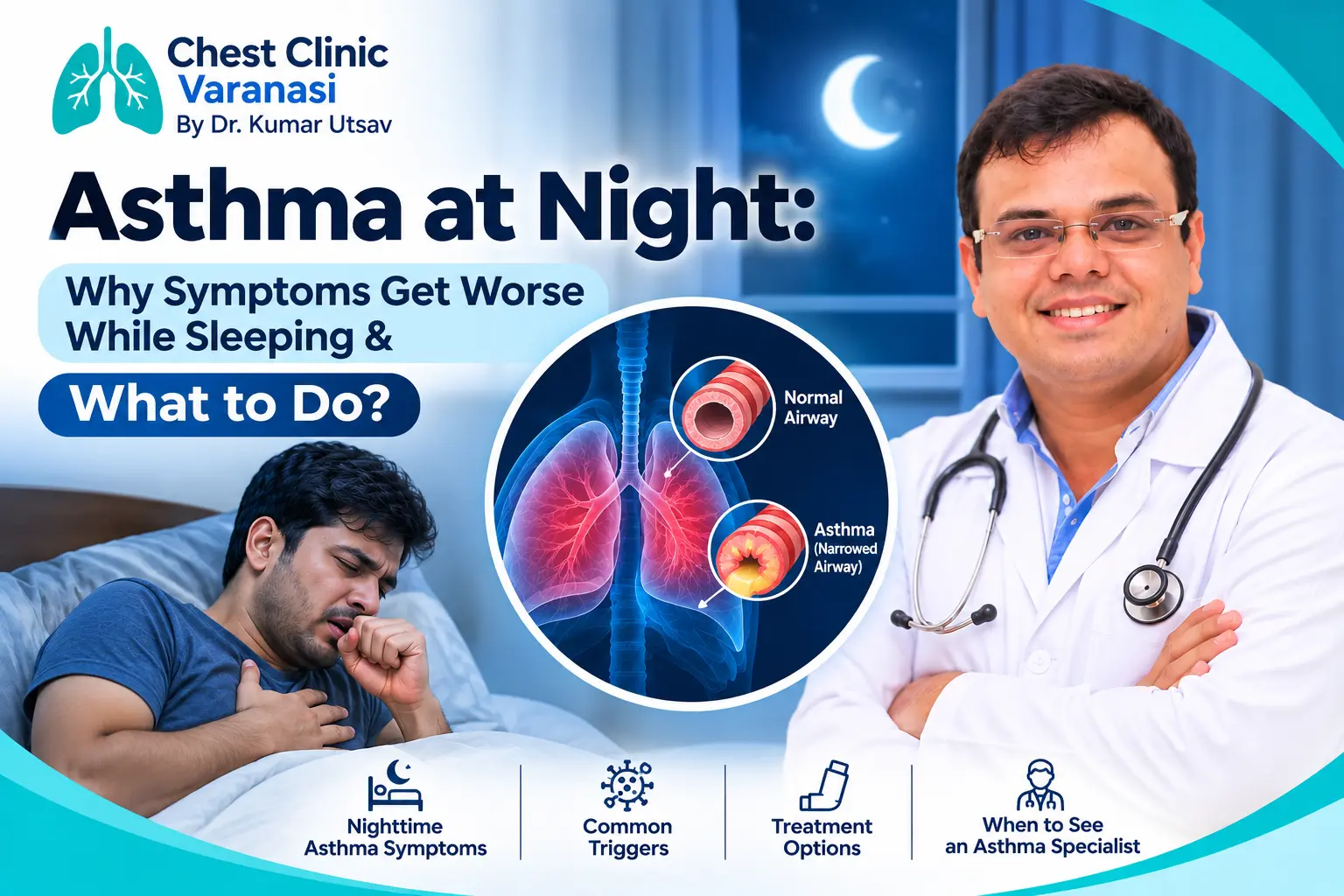
Asthma symptoms can sometimes become more noticeable at night. A person who feels relatively comfortable during the day may experience coughing, wheezing, chest tightness or breathing difficulty after going to bed.
When these symptoms repeatedly disturb sleep, it may indicate that asthma is not adequately controlled or that certain nighttime triggers are affecting the airways.
Understanding the possible reasons behind nighttime asthma symptoms can help patients recognise when they should discuss their symptoms with a qualified respiratory specialist.
Why Does Asthma Get Worse at Night?
There is no single reason why asthma symptoms become worse at night. Different people may have different triggers.
Changes in airway inflammation, exposure to allergens in the bedroom, cooler air, sleeping position and other individual factors may contribute to nighttime symptoms.
If nighttime symptoms happen repeatedly, it is important to discuss the pattern with a doctor rather than simply treating the cough or breathing difficulty as an isolated problem.
Asthma Symptoms at Night
Common asthma symptoms at night can include:
Common Nighttime Symptoms
- Dry or persistent cough
- Wheezing
- Chest tightness
- Shortness of breath
- Difficulty breathing while lying down
- Waking repeatedly because of breathing symptoms
- Reduced sleep quality
The frequency and severity of symptoms can vary between patients.
Common Nighttime Asthma Triggers
Identifying possible triggers can be useful when asthma symptoms repeatedly appear during the night.
Dust Mites and Bedroom Allergens
Bedding, mattresses, pillows and carpets can collect dust and allergens. In sensitive individuals, exposure to these allergens may contribute to respiratory symptoms.
Cold Air
Cooler nighttime air may trigger symptoms in some people with asthma.
Smoke and Strong Odours
Tobacco smoke, incense, perfumes, room fresheners and other strong odours may trigger symptoms in sensitive individuals.
Respiratory Infections
A cold or respiratory infection can temporarily worsen asthma symptoms and may lead to more coughing or wheezing at night.
Acid Reflux
Some people with asthma also experience acid reflux. Reflux symptoms may become more noticeable after lying down and can contribute to nighttime respiratory symptoms in some patients.
Asthma Cough at Night
A recurring cough at night can be one of the symptoms of asthma.
Some people may mainly experience coughing rather than obvious wheezing. A persistent nighttime cough should not automatically be assumed to be asthma, however, because several other conditions can cause nighttime coughing.
If the cough repeatedly wakes you from sleep or continues for a prolonged period, medical evaluation can help identify the underlying cause.
How Can Asthma Affect Sleep?
Repeated nighttime symptoms can interfere with normal sleep.
Poor sleep may result in:
- Daytime tiredness
- Difficulty concentrating
- Reduced productivity
- Poor overall sleep quality
- Increased concern about nighttime breathing
If asthma symptoms repeatedly disturb your sleep, it is worth discussing them with your doctor.
Warning Signs You Should Not Ignore
Occasional mild symptoms may not indicate an emergency, but severe or rapidly worsening breathing difficulty should be taken seriously.
Seek Urgent Medical Attention If You Have:
- Severe difficulty breathing
- Rapidly worsening breathlessness
- Difficulty speaking because of breathlessness
- Severe chest tightness
- Bluish or grey lips or skin
- Extreme weakness or confusion
Severe breathing difficulty requires urgent medical attention rather than waiting for a routine appointment.
How Is Nighttime Asthma Evaluated?
A doctor may begin by asking about the pattern, frequency and severity of symptoms.
Important information may include:
- When symptoms occur
- How often you wake at night
- Whether symptoms occur after exposure to dust or smoke
- Whether you experience wheezing
- Whether physical activity causes symptoms
- Previous asthma diagnosis
- Current medications
Depending on the situation, pulmonary function testing or other investigations may be recommended.
You can learn more about our Pulmonary Function Testing services.
Asthma Treatment
Asthma treatment is individualised according to symptoms, severity, triggers and response to treatment.
Avoiding Known Triggers
If a specific trigger contributes to nighttime symptoms, reducing exposure may help.
Prescribed Asthma Medicines
Doctors may recommend inhaled medicines or other treatments depending on the patient's condition.
Medicines should be used according to the treatment plan provided by the treating doctor.
Regular Follow-Up
Patients with recurring symptoms may benefit from regular follow-up to assess asthma control and review their treatment plan.
Asthma Treatment in Varanasi
If you are experiencing repeated asthma symptoms or nighttime breathing problems, consult a qualified respiratory specialist for appropriate evaluation.
Best Asthma Doctor in VaranasiAsthma Care in Varanasi
Patients experiencing recurring asthma symptoms in Varanasi may benefit from specialist respiratory evaluation, especially when symptoms repeatedly disturb sleep.
If you are searching for an asthma specialist in Varanasi, the evaluation should focus not only on the symptoms but also on possible triggers, asthma control and the patient's overall respiratory health.
Dr. Kumar Utsav at Chest Clinic Varanasi provides chest and respiratory consultation for patients with asthma and other lung-related conditions.
Patients should bring their previous prescriptions, reports and details of current inhalers or other medicines when available.
Need Asthma Consultation in Varanasi?
If asthma symptoms are repeatedly disturbing your sleep or affecting your daily activities, seek appropriate medical evaluation.
Book AppointmentRelated Asthma & Respiratory Care
- Best Asthma Doctor in Varanasi
- Respiratory Care
- Pulmonary Function Test
- Lung Specialist in Varanasi
- Bronchoscopy
Frequently Asked Questions
Why does asthma get worse at night?
Nighttime asthma symptoms can be influenced by airway inflammation, bedroom allergens, temperature changes, sleeping position and individual triggers.
What are common asthma symptoms at night?
Common symptoms include coughing, wheezing, chest tightness and breathing difficulty.
Can asthma cause coughing at night?
Yes. Nighttime coughing can be associated with asthma, particularly when asthma is not adequately controlled.
Why do I wake up coughing every night?
Repeated nighttime coughing can have several causes, including asthma, allergies, reflux and respiratory infections. Persistent symptoms should be medically evaluated.
Can dust trigger asthma at night?
Dust and dust-mite allergens can trigger respiratory symptoms in susceptible individuals. Bedding, mattresses and carpets can be common sources of exposure.
When should I see an asthma specialist?
Frequent nighttime symptoms, repeated wheezing, breathing difficulty or symptoms that interfere with sleep should be discussed with a qualified respiratory specialist.
Where can I consult an asthma doctor in Varanasi?
Patients in Varanasi can consult Dr. Kumar Utsav at Chest Clinic Varanasi for appropriate chest and respiratory evaluation.
Conclusion
Asthma at night can interfere with sleep and daily life. Repeated coughing, wheezing, chest tightness or breathing difficulty during the night should not be ignored.
Identifying possible triggers and ensuring that asthma is properly evaluated and managed can help patients work toward better symptom control.
If you are looking for an asthma specialist in Varanasi or the best asthma doctor in Varanasi, appropriate specialist evaluation can help determine the next step based on your symptoms and medical history.