
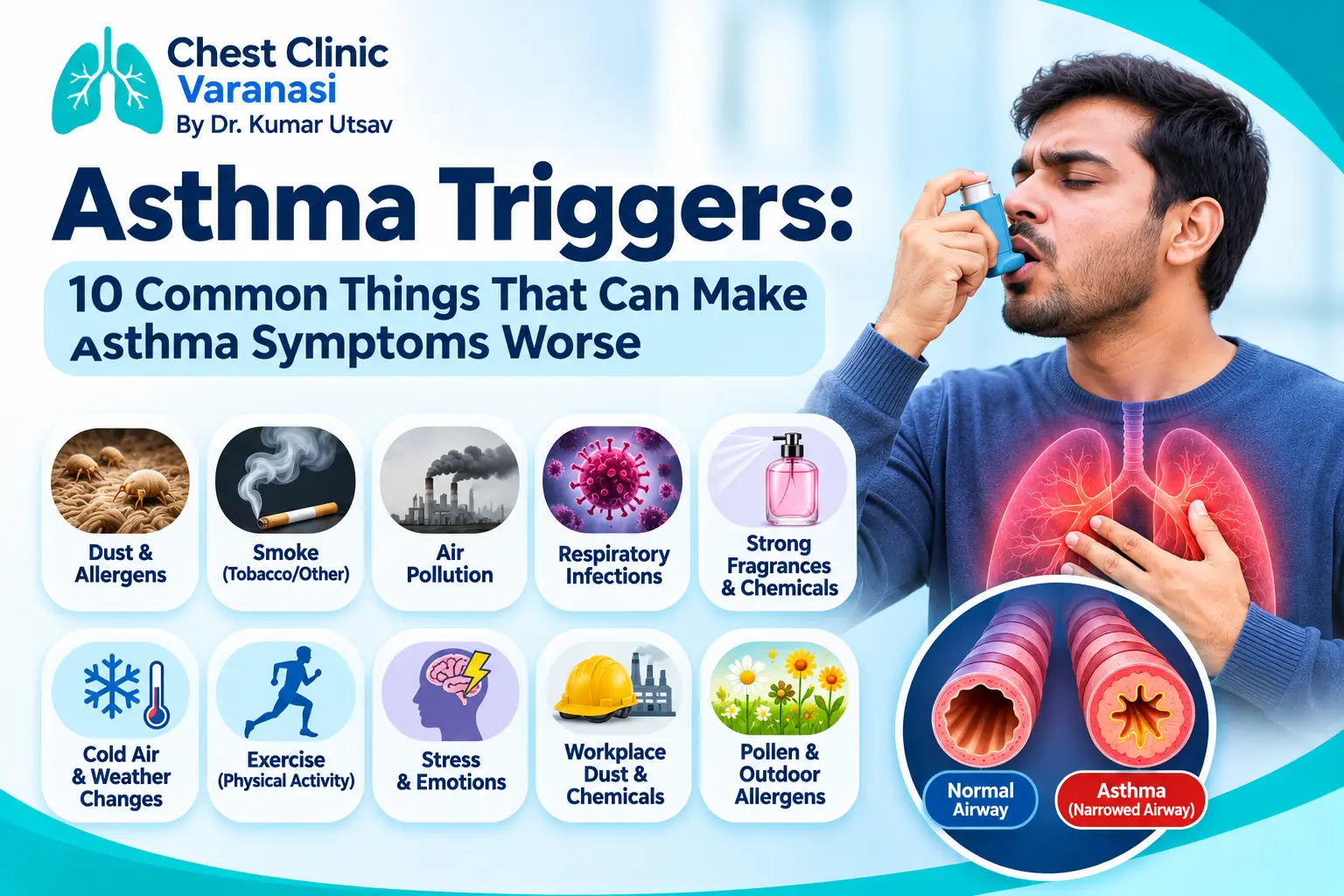
Asthma is a chronic respiratory condition in which the airways can become inflamed and narrowed, leading to symptoms such as coughing, wheezing, chest tightness and difficulty breathing.
Asthma symptoms can vary from person to person. Some people notice symptoms after exposure to dust or smoke, while others may experience problems with cold air, respiratory infections, exercise, strong smells or air pollution.
Understanding your individual asthma triggers can be an important part of managing symptoms and reducing avoidable exposure.
- What Are Asthma Triggers?
- Dust and Indoor Allergens
- Cigarette Smoke and Secondhand Smoke
- Air Pollution
- Respiratory Infections
- Strong Fragrances and Chemical Irritants
- Cold Air and Weather Changes
- Exercise
- Stress and Strong Emotions
- Workplace Dust and Chemicals
- Pollen and Outdoor Allergens
- When to See an Asthma Doctor
- Frequently Asked Questions
What Are Asthma Triggers?
An asthma trigger is something that can cause or worsen airway symptoms in a person with asthma.
Triggers are not the same for everyone. A person may react to one particular irritant while another person may have no symptoms from the same exposure.
Keeping track of when symptoms occur can help identify patterns and allow you to discuss possible triggers with your doctor.
Common Asthma Triggers Include
- Dust and indoor allergens
- Smoke
- Air pollution
- Respiratory infections
- Strong fragrances
- Cold air
- Exercise
- Stress
- Workplace irritants
- Pollen and outdoor allergens
1. Dust and Indoor Allergens
Dust can contain different particles and allergens that may irritate the airways or trigger symptoms in susceptible people.
Dust accumulation can occur in mattresses, carpets, curtains, soft furniture and other areas of the home.
How to Reduce Exposure
- Keep living areas clean and well ventilated.
- Wash bedding regularly.
- Reduce unnecessary dust-collecting items.
- Use appropriate cleaning methods to minimise airborne dust.
2. Cigarette Smoke and Secondhand Smoke
Tobacco smoke can irritate the respiratory tract and may worsen asthma symptoms.
Secondhand smoke can also expose non-smokers to respiratory irritants.
Avoid Smoke Exposure
People with asthma should avoid smoking and try to minimise exposure to tobacco smoke and other forms of irritating smoke.
3. Air Pollution
Outdoor air pollution can contain particles and gases that irritate the respiratory system.
People whose asthma is sensitive to pollution may notice increased coughing, wheezing or breathing difficulty during periods of poor air quality.
Reducing Pollution Exposure
- Check local air-quality conditions when possible.
- Avoid unnecessary exposure to heavy traffic pollution.
- Keep indoor air as clean as practical.
- Follow your doctor's asthma management plan.
4. Respiratory Infections
Respiratory infections can worsen asthma symptoms in some people.
A viral respiratory infection may be followed by increased coughing, wheezing or breathing difficulty.
If respiratory symptoms are unusually severe or continue after an infection, medical evaluation may be appropriate.
5. Strong Fragrances and Chemical Irritants
Perfumes, sprays, cleaning chemicals and other strong-smelling products can irritate the airways in some people with asthma.
If you repeatedly notice symptoms after exposure to a specific product, discuss the pattern with your doctor.
Common Irritants May Include
- Strong perfumes
- Room fresheners
- Aerosol sprays
- Paint fumes
- Cleaning chemicals
6. Cold Air and Weather Changes
Cold or dry air can trigger respiratory symptoms in some people with asthma.
Sudden weather changes may also coincide with worsening symptoms in some individuals.
If cold air repeatedly causes coughing or wheezing, discuss this pattern with your respiratory specialist.
7. Exercise
Physical activity is important for overall health, but some people with asthma experience symptoms during or after exercise.
Exercise-related symptoms can include coughing, wheezing, chest tightness or shortness of breath.
This does not necessarily mean that a person with asthma should avoid physical activity. A doctor can help determine how asthma can be managed around exercise.
8. Stress and Strong Emotions
Stress and strong emotional responses can sometimes coincide with worsening asthma symptoms.
Stress itself may not be the underlying cause of asthma, but changes in breathing patterns and other physiological responses may contribute to symptoms in some people.
If you notice a consistent connection between stress and breathing symptoms, mention it during your medical consultation.
9. Workplace Dust and Chemical Exposure
Some occupations involve exposure to dust, fumes, chemicals or other substances that may irritate the respiratory system.
People who repeatedly develop coughing, wheezing or breathing difficulty during working hours or improve when away from work should discuss the pattern with a doctor.
Possible Workplace Irritants
- Industrial dust
- Chemical fumes
- Cleaning products
- Paint and solvent fumes
- Other airborne irritants
10. Pollen and Outdoor Allergens
Pollen and other outdoor allergens can trigger respiratory symptoms in people who are sensitive to them.
Symptoms may be more noticeable during particular seasons or after spending time in environments with higher levels of specific allergens.
If symptoms appear repeatedly in a particular environment or season, keeping a symptom diary may help identify patterns.
What Can Trigger an Asthma Attack?
An asthma flare-up can have different triggers. A person may also have more than one trigger.
Dust
Indoor dust and allergens may worsen symptoms in susceptible people.
Smoke
Tobacco smoke and other respiratory irritants can aggravate airways.
Pollution
Air pollution may worsen coughing and breathing symptoms.
Infections
Respiratory infections can be associated with asthma flare-ups.
Cold Air
Cold or dry air can trigger symptoms in some people.
Exercise
Some people experience symptoms during or after physical activity.
Asthma Symptoms at Night
If your asthma symptoms become worse while sleeping or you regularly wake up coughing or wheezing at night, read our detailed guide on nighttime asthma symptoms.
Asthma at Night: Symptoms, Causes & TreatmentHow Can You Reduce Exposure to Asthma Triggers?
Not every trigger can be completely avoided, and different people have different sensitivities. However, identifying patterns can help you make practical changes.
- Keep a record of when symptoms occur.
- Note where you were and what you were exposed to.
- Avoid tobacco smoke.
- Reduce exposure to known irritants.
- Keep indoor areas reasonably clean and ventilated.
- Follow the asthma management plan given by your doctor.
- Take prescribed medicines exactly as advised.
When Should You See an Asthma Doctor?
Asthma symptoms should be evaluated when they are frequent, persistent, worsening or affecting normal daily activities.
Seek Medical Evaluation If You Have:
- Frequent wheezing
- Repeated coughing
- Breathing difficulty
- Chest tightness
- Symptoms that disturb sleep
- Repeated asthma flare-ups
- Symptoms that interfere with exercise or daily activities
- Increasing dependence on quick-relief medication
Severe breathing difficulty, inability to speak normally because of breathlessness, bluish lips or rapidly worsening symptoms require urgent medical attention.
Asthma Doctor in Varanasi
If you are searching for an asthma doctor in Varanasi, a respiratory specialist can help assess your symptoms, identify possible triggers and determine an appropriate asthma management approach.
Dr. Kumar Utsav at Chest Clinic Varanasi provides consultation for patients experiencing asthma, wheezing, persistent cough and other respiratory symptoms.
During consultation, share information about when symptoms start, possible environmental triggers, nighttime symptoms, exercise-related symptoms and any previous respiratory reports.
Need Asthma Evaluation in Varanasi?
Recurring wheezing, cough or breathing difficulty should not be ignored. Proper evaluation can help identify possible triggers and guide appropriate management.
Book AppointmentRelated Respiratory Services
- Respiratory Care
- Pulmonary Function Test
- Asthma at Night: Symptoms & Treatment
- Lung Specialist in Varanasi
Frequently Asked Questions
What are the most common asthma triggers?
Common triggers can include dust, smoke, air pollution, respiratory infections, strong fragrances, cold air, exercise, stress and certain workplace irritants.
Can dust trigger asthma?
Yes. Dust and indoor allergens can worsen symptoms in people who are sensitive to them.
Can air pollution make asthma worse?
Air pollution can irritate the respiratory system and may worsen asthma symptoms in some people.
Can exercise trigger asthma?
Some people experience coughing, wheezing or breathing difficulty during or after exercise. Proper asthma management can help many people remain physically active.
Can cold weather trigger asthma?
Cold or dry air can trigger symptoms in some people with asthma.
Why does my asthma get worse at night?
Nighttime asthma symptoms can have different causes and triggers. If you regularly wake up coughing, wheezing or short of breath, discuss the symptoms with your doctor.
When should I see an asthma doctor?
You should consider medical evaluation if asthma symptoms are frequent, worsening, disturbing sleep or interfering with normal activities.
Where can I consult an asthma specialist in Varanasi?
Patients in Varanasi can consult Dr. Kumar Utsav at Chest Clinic Varanasi for evaluation of asthma and other respiratory symptoms.
Conclusion
Asthma triggers vary from person to person. Dust, smoke, air pollution, respiratory infections, strong fragrances, cold air, exercise, stress, workplace irritants and outdoor allergens can all be relevant triggers for different individuals.
Identifying your personal triggers, reducing avoidable exposure and following an appropriate asthma management plan can help you manage symptoms more effectively.
If you have recurring cough, wheezing, chest tightness, breathing difficulty or nighttime asthma symptoms, consult a qualified respiratory specialist for proper evaluation.
For patients searching for an asthma doctor in Varanasi, asthma specialist in Varanasi or information about asthma triggers, Chest Clinic Varanasi can provide appropriate respiratory consultation.