
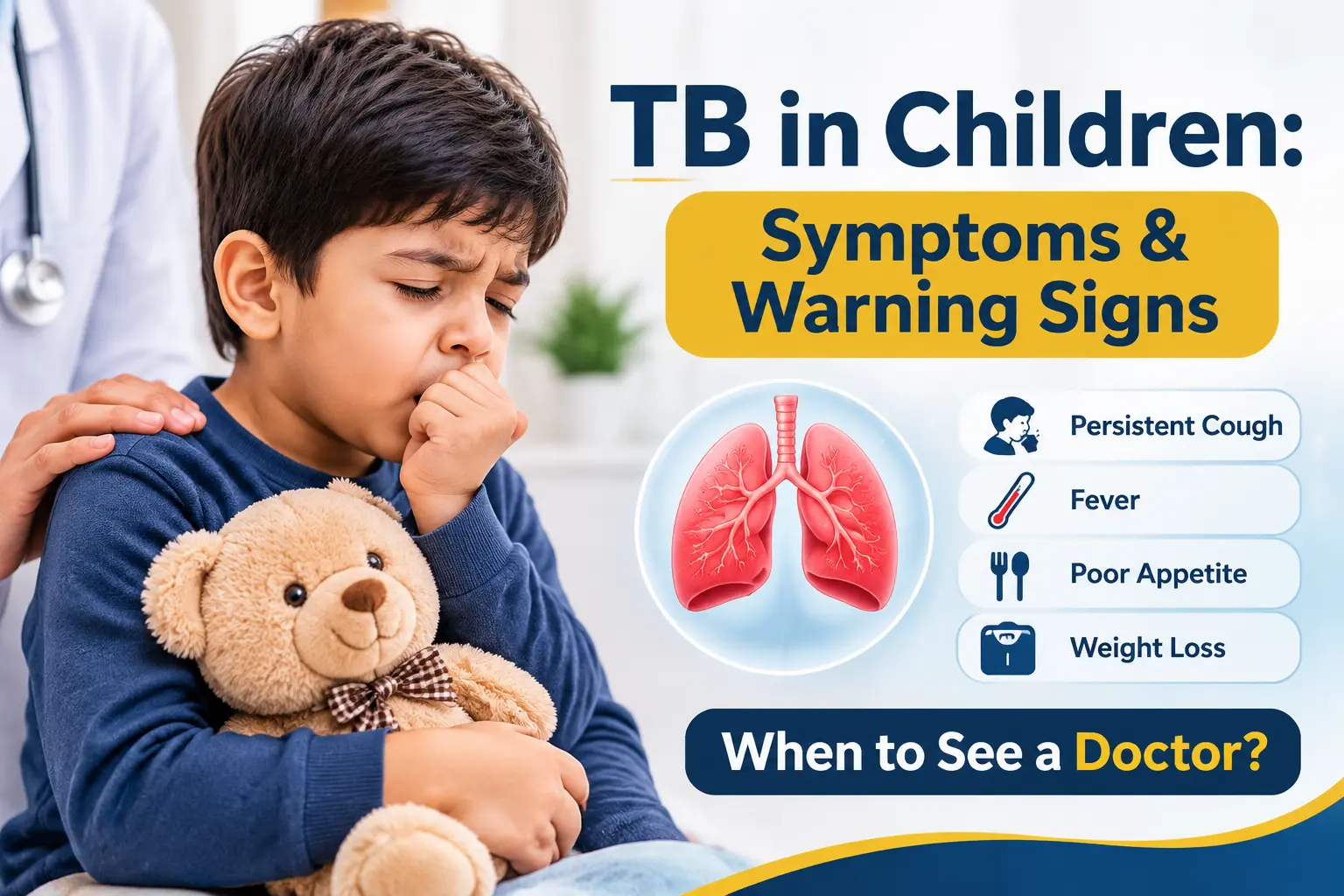
TB in children can sometimes be difficult to recognise because symptoms may be less specific than those seen in adults. A child may have persistent cough, fever, reduced appetite, tiredness or poor weight gain.
Tuberculosis can affect different parts of the body. When the lungs are involved, respiratory symptoms may become more noticeable.
If a child has symptoms that persist or has been exposed to someone with tuberculosis, medical evaluation is important.
What Is TB in Children?
Tuberculosis is an infectious disease caused by bacteria from the Mycobacterium tuberculosis complex.
Children can develop TB after exposure to the bacteria, particularly when they have close or prolonged contact with a person who has infectious tuberculosis.
TB may affect the lungs or other parts of the body. The symptoms depend partly on where the infection is located.
Symptoms of TB in Children
The symptoms of tuberculosis in children can vary with age, immune status and the part of the body affected.
Persistent Cough
A cough that continues for an extended period and does not improve should be evaluated, especially when other symptoms are also present.
Fever
Persistent or recurring fever can occur with TB, although fever has many other possible causes in children.
Poor Appetite
A noticeable reduction in appetite may occur alongside other symptoms of tuberculosis.
Weight Loss or Poor Weight Gain
Unexplained weight loss or failure to gain weight appropriately may require medical evaluation.
Tiredness or Weakness
Some children may become unusually tired, less active or less interested in their usual activities.
Breathing Symptoms
When TB affects the lungs, children may develop cough or other respiratory symptoms.
Important Warning Signs Parents Should Not Ignore
Parents should pay attention to symptoms that persist, repeatedly return or occur together.
- Persistent cough
- Unexplained fever
- Night sweating
- Unexplained weight loss
- Poor weight gain
- Reduced appetite
- Persistent tiredness
- Breathing difficulties
- Swollen lymph nodes or other unusual swelling
Important
These symptoms do not automatically mean a child has tuberculosis. Many childhood infections and other medical conditions can cause similar symptoms. Proper medical evaluation is needed when TB is suspected.
How Can Children Be Exposed to TB?
TB bacteria can spread through the air when a person with infectious pulmonary TB coughs, speaks or sneezes.
Children who live with or spend significant time around someone with infectious TB may need assessment according to medical guidance.
If a family member has been diagnosed with infectious TB, parents should inform the child's healthcare professional about the exposure.
Known TB Exposure?
Do not wait for symptoms to become severe. If a child has had significant exposure to someone with infectious TB, discuss appropriate evaluation with a healthcare professional.
How Is TB Diagnosed in Children?
Diagnosing TB in children can require a combination of clinical information and appropriate tests.
Medical History
The doctor may ask about symptoms, duration of symptoms, contact with someone who has TB and the child's previous medical history.
Physical Examination
A physical examination can help identify findings that may require further investigation.
TB-Specific Testing
Depending on the child's age, symptoms and exposure history, appropriate TB tests may be recommended.
Chest Imaging
If pulmonary TB is suspected, chest imaging may be used as part of the evaluation.
Laboratory Testing
Additional laboratory or microbiological tests may be needed depending on the clinical situation.
The exact diagnostic approach varies between children and should be decided by a qualified healthcare professional.
Treatment of TB in Children
Childhood tuberculosis can be treated with appropriate anti-TB medicines under medical supervision.
The medicines, doses and duration depend on factors such as the type of TB, the child's age and weight, disease location and drug susceptibility.
Parents should follow the prescribed treatment schedule carefully.
Do Not Stop TB Medicines on Your Own
Stopping or changing TB medicines without medical advice can affect treatment effectiveness and may contribute to drug resistance.
How Can TB Be Prevented in Children?
Reducing children's exposure to infectious TB and following appropriate public-health and medical guidance can help reduce the risk of transmission.
- Ensure children are evaluated after significant TB exposure.
- Follow medical advice regarding preventive treatment when recommended.
- Keep children away from untreated infectious TB exposure when advised by healthcare professionals.
- Follow prescribed treatment if the child is diagnosed with TB.
- Attend recommended follow-up appointments.
When Should Parents See a Doctor?
Parents should seek medical evaluation when a child has persistent cough, unexplained fever, poor weight gain, unexplained weight loss or other concerning symptoms.
Medical evaluation is particularly important if the child has been in close contact with someone diagnosed with infectious TB.
A doctor can determine whether TB testing or evaluation for another condition is appropriate.
TB Evaluation for Children in Varanasi
Parents in Varanasi who are concerned about persistent respiratory symptoms or possible TB exposure in a child can seek professional medical evaluation.
At Chest Clinic Varanasi, Dr. Kumar Utsav evaluates respiratory symptoms and can recommend appropriate investigations when tuberculosis or another chest condition is suspected.
Parents should bring previous prescriptions, reports, chest X-rays or details of any known TB exposure to the consultation when available.
Concerned About TB Symptoms in Your Child?
Persistent cough, fever, poor weight gain or known TB exposure should be discussed with a qualified healthcare professional.
Book AppointmentRelated TB & Respiratory Resources
Frequently Asked Questions
What are the symptoms of TB in children?
Symptoms can include persistent cough, fever, poor appetite, weight loss or poor weight gain, tiredness and respiratory symptoms. Symptoms vary depending on the type and location of TB.
Can children get tuberculosis?
Yes. Children can develop tuberculosis after exposure to Mycobacterium tuberculosis.
Can TB in children be cured?
Yes. Childhood TB can be treated with appropriate anti-TB medicines under medical supervision.
How is TB diagnosed in children?
Diagnosis depends on the child's symptoms, exposure history, physical examination and appropriate tests. The exact approach varies according to age and clinical circumstances.
What should parents do if a child has been exposed to TB?
Parents should inform a healthcare professional about the exposure. The doctor can determine whether the child needs evaluation or preventive treatment.
When should I take my child to a doctor for possible TB?
Seek medical evaluation if the child has persistent cough, unexplained fever, poor weight gain, weight loss, persistent tiredness or known exposure to infectious TB.
Conclusion
TB in children can sometimes present with subtle or non-specific symptoms. Persistent cough, fever, reduced appetite, poor weight gain, weight loss and unusual tiredness should not be ignored when they persist.
Known exposure to infectious TB is another important reason to seek medical advice, even if the child does not appear seriously ill.
Early evaluation can help determine whether tuberculosis or another condition is responsible for the child's symptoms and whether further testing or treatment is needed.