ILD Doctor in Varanasi: Interstitial Lung Disease Symptoms, Causes & Treatment (2026)
Interstitial Lung Disease (ILD) is one of the most under-recognised yet serious lung conditions affecting Indians today. Patients are often misdiagnosed for years — treated for asthma, COPD, or simple chest infections — while the actual disease silently progresses. If you or a family member is searching for a qualified ILD doctor in Varanasi, this complete guide will help you understand the disease, recognise its warning signs, and access the right specialist care at the earliest stage.
At Samaria Multi-Speciality & Chest Centre, we run one of the few dedicated ILD programmes in Eastern UP — offering HRCT-based diagnosis, modern anti-fibrotic therapy, and pulmonary rehabilitation under one roof. This guide covers ILD types, symptoms, causes, diagnostic tests, treatment options, and what to expect when you visit our clinic at Durgakund.
What is Interstitial Lung Disease (ILD)?
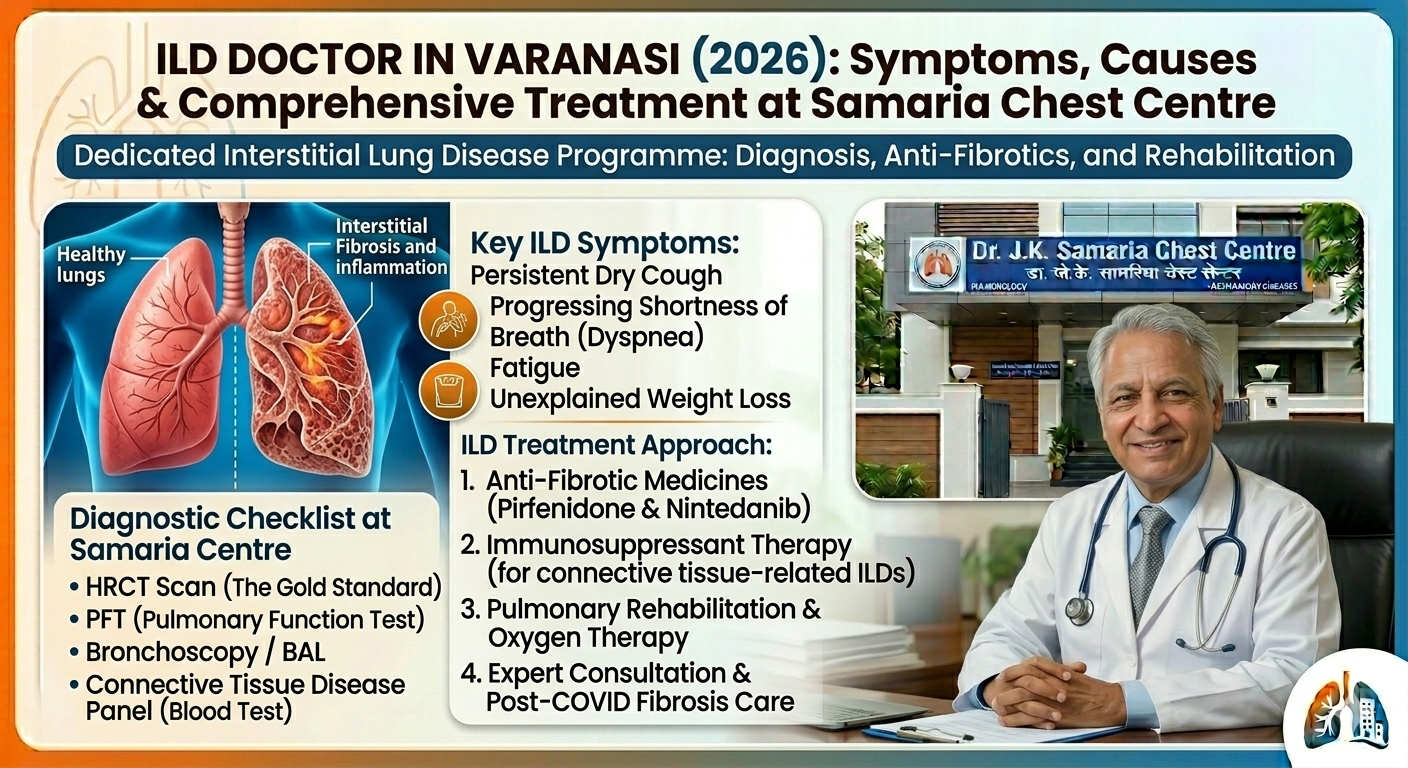
Interstitial Lung Disease (ILD) is not a single disease — it is a group of more than 200 different conditions that cause inflammation and progressive scarring (fibrosis) of the lung tissue. The word “interstitium” refers to the delicate tissue that surrounds the air sacs (alveoli) of the lungs. When this tissue gets inflamed and thickened with scar tissue, it loses its ability to transfer oxygen efficiently from air into the blood.
In simple terms, healthy lungs are soft, elastic, and stretchy — like a sponge. In ILD, the lungs become stiff, hardened, and scarred — like leather. This makes breathing harder and reduces oxygen supply to the body.
ILD is a serious condition, but it is not always fatal. Many forms of ILD respond very well to treatment if diagnosed early. The key is to consult a qualified ILD doctor in Varanasi as soon as warning signs appear — not after months of misdiagnosis with asthma or COPD.
How Common is ILD in Varanasi?
ILD is more common in Eastern UP than most people realise. We see new ILD patients almost every week at our Durgakund clinic. The high prevalence is linked to:
- Occupational dust exposure (silk weaving, brick kilns, stone cutting)
- Biomass fuel (chulha) smoke exposure in rural areas
- Untreated chronic infections like TB, leading to post-TB lung damage
- Autoimmune conditions like rheumatoid arthritis and scleroderma
- Post-COVID lung fibrosis (a growing concern since 2021)
Common Types of ILD
Identifying the specific type of ILD is critical because each type has different causes, prognoses, and treatments. Here are the most common types we treat:
1. Idiopathic Pulmonary Fibrosis (IPF)
The most common and most serious form of ILD. “Idiopathic” means the cause is unknown. IPF mostly affects adults above 60 years and progresses gradually. Modern anti-fibrotic medicines like Pirfenidone and Nintedanib have transformed IPF outcomes.
2. Hypersensitivity Pneumonitis (HP)
Caused by repeated inhalation of organic dust, mould, or bird droppings. Common in farmers, bird keepers, and people exposed to damp environments. The good news — if caught early and exposure stopped, HP can improve significantly.
3. Sarcoidosis
An inflammatory disease where tiny clumps of immune cells (granulomas) form in the lungs and other organs. Often affects young adults. Many sarcoidosis patients improve without treatment, but some need steroids and immunosuppressants.
4. Connective Tissue Disease-Associated ILD (CTD-ILD)
ILD that occurs as part of autoimmune diseases like rheumatoid arthritis, scleroderma, lupus, polymyositis, and Sjogren’s syndrome. Treatment requires a coordinated approach with rheumatology specialists.
5. Non-Specific Interstitial Pneumonia (NSIP)
A form of ILD often associated with autoimmune diseases or unknown causes. Generally has a better prognosis than IPF and responds well to steroids.
6. Drug-Induced ILD
Some medicines can cause lung scarring — including amiodarone, methotrexate, nitrofurantoin, and certain chemotherapy drugs. Stopping the offending medicine often reverses the damage.
7. Post-COVID Pulmonary Fibrosis
A newer category that emerged after the COVID-19 pandemic. Severe COVID infections, especially those needing hospitalisation or ventilator support, can leave behind permanent lung scarring.
8. Pneumoconioses (Occupational Lung Diseases)
Caused by long-term inhalation of inorganic dust:
- Silicosis: Stone cutters, sandblasters
- Asbestosis: Asbestos-exposed workers
- Byssinosis: Cotton textile workers
- Coal worker’s pneumoconiosis: Coal miners
9. Post-TB Lung Damage
Common in India. Even after successful TB treatment, the resulting scarring can present as ILD-like changes — needing long-term respiratory care.
10. Cryptogenic Organising Pneumonia (COP)
Inflammation of the small airways and air sacs. Generally responds very well to steroid therapy.
ILD Symptoms — Why Early Detection Matters
One of the biggest challenges with ILD is that symptoms develop gradually over months to years — and are often dismissed as normal ageing, asthma, or post-infection weakness. Here are the warning signs that should prompt an immediate visit to an ILD specialist in Varanasi:
Early Symptoms
- Gradual breathlessness — especially during exertion (climbing stairs, walking on Assi Ghat, carrying bags)
- Persistent dry cough — mostly without mucus, lasting more than 8 weeks
- Fatigue and reduced stamina — getting tired faster than before
- Unexplained weight loss — sometimes accompanies advanced ILD
Advanced Symptoms
- Breathlessness even at rest — not just during activity
- Clubbing of fingers — rounded, bulbous fingertips
- Bluish discoloration of lips and fingernails (cyanosis)
- Chest discomfort — especially with deep breathing
- Joint pain & muscle weakness — in autoimmune-related ILD
- Skin rashes — in cases linked to scleroderma or dermatomyositis
The Velcro Sound — A Key Clinical Sign
One of the most distinctive findings in ILD is a characteristic crackling sound (called “Velcro crackles”) heard through a stethoscope — similar to the sound of opening a Velcro strap. An experienced chest physician can suspect ILD just from this sound during examination, even before any tests are done.
If you are experiencing any of these symptoms — especially gradual breathlessness with a dry cough — do not delay. Early ILD is far more treatable than advanced ILD. Visit a qualified ILD specialist at Samaria Chest Centre for proper evaluation.
Common Causes of ILD
ILD has many causes — identifying the underlying trigger is essential for proper treatment. Here are the major categories of causes we see in Varanasi:
1. Occupational Exposure
Long-term inhalation of dust, fumes, or chemicals at the workplace is a major cause of ILD in Varanasi:
- Silk weaving units (silk dust)
- Brick kilns and stone cutting
- Chemical and pesticide industries
- Construction and cement work
- Welding and metal work
2. Environmental Exposure
- Biomass fuel smoke (chulha cooking) — common in rural Varanasi
- Indoor mould (especially in old, damp houses during monsoon)
- Bird droppings (pigeon fancier’s lung)
- Mosquito coils, agarbatti, and indoor pollutants over years
3. Autoimmune Diseases
The body’s immune system attacks lung tissue:
- Rheumatoid arthritis
- Scleroderma (Systemic Sclerosis)
- Systemic Lupus Erythematosus (SLE)
- Polymyositis & Dermatomyositis
- Sjogren’s syndrome
- Mixed Connective Tissue Disease
4. Medications
- Amiodarone (heart medicine)
- Methotrexate (rheumatoid arthritis)
- Nitrofurantoin (urinary infections)
- Bleomycin and other chemotherapy drugs
- Some psychiatric medications
5. Radiation Exposure
Patients who have undergone chest radiation therapy (for breast cancer, lymphoma, etc.) may develop radiation-induced ILD years later.
6. Infections
- Severe COVID-19 with lung scarring
- Untreated or partially treated tuberculosis
- Severe viral or bacterial pneumonia
- Fungal lung infections
7. Genetic Factors
Some forms of ILD have a familial pattern. If multiple family members have lung fibrosis, genetic counselling and screening may be recommended.
8. Idiopathic (Unknown Cause)
In many cases, despite thorough investigation, no specific cause is found. This is called idiopathic ILD — with IPF being the most common form.
Diagnostic Tests for ILD at Samaria Chest Centre
Diagnosing ILD accurately requires a combination of clinical evaluation, imaging, lung function testing, and sometimes biopsy. At our Durgakund clinic, we offer comprehensive ILD evaluation following the latest ATS/ERS international guidelines:
1. Detailed Clinical History & Examination
Our ILD doctor in Varanasi takes a detailed history covering occupation, environment, medications, family history, and autoimmune symptoms. Physical examination focuses on listening for Velcro crackles, checking for finger clubbing, and looking for skin/joint signs of autoimmune disease.
2. HRCT Chest (High-Resolution CT)
The single most important test for ILD diagnosis. HRCT shows the pattern of lung scarring in detail — helping identify specific types like Usual Interstitial Pneumonia (UIP), NSIP, or HP. We coordinate with the best HRCT facilities in Varanasi for accurate imaging.
3. Pulmonary Function Test (PFT) with DLCO
Standard PFT/Spirometry measures lung volumes and airflow. The DLCO (Diffusion Capacity) test specifically measures how well oxygen passes from your lungs into your blood — usually significantly reduced in ILD.
4. 6-Minute Walk Test
A simple test where we measure how far you can walk in 6 minutes and check oxygen levels before, during, and after. Falling oxygen levels during walking strongly suggest ILD severity.
5. Blood Tests
- Complete blood count, ESR, CRP
- Antinuclear Antibody (ANA) and other autoimmune markers
- Rheumatoid factor (RF) and anti-CCP
- Specific antibodies for scleroderma, polymyositis
- Specific IgG antibodies for hypersensitivity pneumonitis
- ACE levels (for sarcoidosis)
6. Bronchoscopy with BAL
Our interventional pulmonologist Dr. Kumar Utsav performs flexible bronchoscopy with bronchoalveolar lavage (BAL) when needed. The fluid analysis helps distinguish between different ILD types.
7. Lung Biopsy (Selected Cases)
In cases where HRCT and other tests are inconclusive, a lung biopsy may be needed. Options include transbronchial cryobiopsy or surgical biopsy — performed at tertiary centres with our coordination.
8. ECG & Echocardiogram
To check the heart, especially for pulmonary hypertension — a common complication of advanced ILD that needs separate management.
9. Multidisciplinary Discussion (MDD)
For complex cases, we collaborate with radiologists and rheumatologists in a Multidisciplinary Discussion to reach the most accurate diagnosis — the gold-standard approach recommended by international ILD guidelines.
ILD Treatment Options in Varanasi
ILD treatment depends on the specific type, cause, and severity. There is no single approach — treatment must be highly individualised. At Samaria Chest Centre, we offer the complete spectrum of ILD therapies:
1. Removal of the Trigger
For occupational, environmental, or drug-induced ILD — identifying and stopping the cause is the most important first step. Workers may need to change jobs or use proper protection. Patients on medication-induced ILD must stop the offending drug under guidance.
2. Steroids (Corticosteroids)
Oral steroids like Prednisolone are the cornerstone of treatment for many ILD types — especially:
- Hypersensitivity Pneumonitis
- NSIP
- Sarcoidosis
- COP (Cryptogenic Organising Pneumonia)
- Connective tissue disease-related ILD
Steroids are NOT effective for IPF — an important distinction.
3. Immunosuppressants
For autoimmune-related ILD that needs long-term immune suppression:
- Mycophenolate mofetil (MMF)
- Azathioprine
- Cyclophosphamide
- Rituximab (in severe cases)
- Tofacitinib (in selected cases)
4. Anti-Fibrotic Medicines (For IPF and Progressive Fibrotic ILD)
The biggest revolution in ILD treatment in the past decade. We discuss this in detail in the next section.
5. Oxygen Therapy
For patients with low blood oxygen, long-term home oxygen therapy can dramatically improve quality of life, exercise tolerance, and survival. We arrange home oxygen concentrators and portable oxygen for our patients.
6. Pulmonary Rehabilitation
A structured exercise and education programme — arguably the most underutilised but highly effective non-medication treatment for ILD. Improves stamina, reduces breathlessness, and enhances quality of life.
7. Vaccinations
- Annual influenza vaccine
- Pneumococcal vaccines
- COVID-19 vaccines and boosters
Critical to prevent infections that can be life-threatening in ILD patients.
8. Lung Transplantation
For end-stage ILD in selected younger patients, lung transplantation can be life-saving. We provide referrals to leading transplant centres in India when appropriate.
9. Treatment of Complications
- Pulmonary hypertension management
- GERD treatment (acid reflux worsens many ILDs)
- Anxiety and depression support
- Nutrition counselling
Anti-Fibrotic Medicines (Pirfenidone & Nintedanib) Availability
The biggest breakthrough in ILD treatment in the last decade has been the introduction of anti-fibrotic medicines. These do not reverse existing scarring, but they significantly slow down the progression of fibrosis — effectively buying patients many more years of better lung function and quality of life.
1. Pirfenidone
- Approved for IPF and progressive fibrotic ILD
- Taken three times daily as a tablet
- Common side effects: nausea, skin rash, sun sensitivity
- Available in India under multiple brand names — affordable generic versions exist
- Approximate monthly cost: Rs. 5,000–15,000
2. Nintedanib
- Approved for IPF, scleroderma-associated ILD, and progressive fibrotic ILD
- Taken twice daily as a capsule
- Common side effects: diarrhoea, nausea, liver enzyme changes
- Recently launched generics have made it more accessible in India
- Approximate monthly cost: Rs. 8,000–20,000
Both Medicines:
- Slow disease progression by approximately 50%
- Reduce the risk of acute exacerbations
- Improve survival in IPF
- Need regular liver function monitoring
- Should be started early for maximum benefit
At Samaria Chest Centre, we have extensive experience prescribing and monitoring these anti-fibrotic medicines. We help patients access affordable generic versions and assist with insurance/Ayushman Bharat coverage where applicable.
Living with ILD — Pulmonary Rehabilitation
An ILD diagnosis can feel overwhelming. But with the right care, support, and lifestyle changes, many patients live active, meaningful lives for years. Pulmonary rehabilitation is one of the most empowering tools in ILD management.
What is Pulmonary Rehabilitation?
It is a structured programme that combines:
- Supervised exercise training — cardiovascular and strength training tailored to your capacity
- Breathing exercises — pursed-lip breathing, diaphragmatic breathing
- Education — understanding your condition, medication use, oxygen use
- Nutritional counselling — maintaining muscle mass and weight
- Psychological support — managing anxiety and depression
- Energy conservation — daily activity planning
Daily Living Tips for ILD Patients
- Stay physically active within your capacity — daily walking helps
- Eat small, frequent meals — large meals can worsen breathlessness
- Stay hydrated — thins mucus and helps breathing
- Use prescribed inhalers/oxygen consistently as advised
- Avoid pollutants — wear N95 mask in dusty environments and high AQI days
- Quit smoking immediately and avoid second-hand smoke
- Get vaccinated against flu, pneumonia, and COVID-19
- Treat acid reflux — GERD worsens many ILDs
- Maintain emotional health — join support groups, talk to family
- Plan travel carefully — high altitudes and air travel may need oxygen support
- Get enough sleep — rest is healing
- Stay connected with your ILD doctor for regular monitoring
Family Support is Critical
ILD is a long journey. We strongly encourage family members to attend at least the initial consultations — understanding the disease helps the entire household provide better support. Many of our families have grown stronger through this shared experience.
Why Samaria Chest Centre is the Best ILD Doctor in Varanasi
ILD is a complex disease that requires specialist expertise — not every chest doctor has experience managing it. Here’s why families across Eastern UP trust Samaria for ILD care:
- 30+ Years of ILD Expertise: Dr. J.K. Samaria has managed thousands of complex ILD cases.
- Academic Authority: Former Professor & Head, Department of Chest Diseases, IMS BHU.
- Dedicated ILD Programme: One of the few specialised ILD clinics in Eastern UP.
- Complete Diagnostic Workup: PFT with DLCO, HRCT coordination, autoimmune testing, bronchoscopy.
- Anti-Fibrotic Therapy Experience: Years of experience prescribing Pirfenidone and Nintedanib.
- Multidisciplinary Approach: Coordination with rheumatologists, radiologists, and transplant centres.
- Pulmonary Rehabilitation Guidance: Structured programmes for ILD patients.
- Home Oxygen Therapy Support: We help arrange home oxygen concentrators for patients who need it.
- Long-Term Follow-Up: ILD needs lifetime care — we provide consistent, structured follow-up.
- Affordable Care: Help accessing generic anti-fibrotics and government schemes.
- Family-Inclusive Approach: We educate families to provide better daily support.
- Convenient Durgakund Location: Easily accessible from BHU, Lanka, Sigra, Bhelupur, and surrounding areas.
Visit our dedicated ILD treatment service page for more information about our specialised programme.
Cost of ILD Treatment in Varanasi (2026)
ILD treatment costs vary widely based on the type, severity, and required medications. Here’s an approximate breakdown to help you plan:
| Service / Medicine | Approximate Cost (INR) |
|---|---|
| Initial Consultation (ILD Specialist) | 500 – 1,500 |
| Follow-up Consultation | 300 – 800 |
| HRCT Chest | 3,000 – 5,000 |
| PFT with DLCO | 1,500 – 3,000 |
| Autoimmune Blood Panel (ANA, RF, anti-CCP) | 3,000 – 8,000 |
| Bronchoscopy with BAL | 8,000 – 15,000 |
| 6-Minute Walk Test | 500 – 800 |
| Pirfenidone (Monthly) | 5,000 – 15,000 |
| Nintedanib (Monthly) | 8,000 – 20,000 |
| Home Oxygen Concentrator (One-time) | 30,000 – 60,000 |
| Steroids & Immunosuppressants (Monthly) | 500 – 3,000 |
Note: Many ILD patients are eligible for Ayushman Bharat coverage. We help patients explore all available financial assistance options. Call +91 8795300333 for a personalised cost estimate.
Frequently Asked Questions about ILD Doctor in Varanasi
Q1. Who is the best ILD doctor in Varanasi?
Dr. J.K. Samaria, Senior Consultant Pulmonologist at Samaria Multi-Speciality & Chest Centre, Durgakund, runs one of the few dedicated ILD programmes in Eastern UP. With 30+ years of experience and former Head of Chest Diseases at IMS BHU, he is widely regarded as the best ILD doctor in Varanasi.
Q2. Is ILD curable?
ILD is generally not curable, but it is highly treatable. Some forms (like hypersensitivity pneumonitis caught early or drug-induced ILD) can improve significantly. For IPF and progressive fibrotic ILDs, modern anti-fibrotic medicines slow the disease and improve quality of life.
Q3. How long does an ILD patient live?
Survival depends on the type of ILD, severity at diagnosis, and treatment response. With early diagnosis and modern anti-fibrotic therapy, many ILD patients live 5–10+ years with good quality of life. Some forms of ILD (like sarcoidosis or COP) have excellent prognosis.
Q4. What is the difference between ILD and pulmonary fibrosis?
Pulmonary fibrosis is a type of ILD where lung scarring is the main feature. ILD is a broader umbrella term that includes pulmonary fibrosis as well as other inflammatory lung conditions. All pulmonary fibrosis is ILD, but not all ILD is pulmonary fibrosis.
Q5. Are anti-fibrotic medicines available in Varanasi?
Yes. Pirfenidone and Nintedanib are widely available in Varanasi. Generic versions have made these medicines significantly more affordable. We help our patients identify quality generics and access them at the best prices.
Q6. Can ILD be diagnosed without a lung biopsy?
Yes, in most cases ILD can be diagnosed using HRCT chest, lung function tests, and blood tests — without needing a biopsy. Biopsy is only needed in selected cases where the diagnosis remains unclear after non-invasive testing.
Q7. Can ILD patients exercise?
Yes, and they should. Pulmonary rehabilitation with structured exercise is one of the most beneficial treatments for ILD. We tailor exercise programmes to your capacity — even short daily walks help maintain stamina.
Q8. Is ILD hereditary?
Most ILD cases are not hereditary. However, some forms (especially familial pulmonary fibrosis) can run in families. If multiple family members have lung fibrosis, genetic counselling and screening of close relatives may be recommended.
Q9. Can COVID-19 cause ILD?
Yes. Severe COVID-19 infections, especially those needing hospitalisation, ICU care, or ventilator support, can leave behind permanent lung scarring — called post-COVID pulmonary fibrosis. We have seen significant numbers of such cases since 2021 in Varanasi.
Q10. How often should an ILD patient visit the doctor?
For stable patients on treatment, every 3–4 months is typical. During treatment initiation or flare-ups, more frequent visits are needed. Regular monitoring of lung function and HRCT (every 6–12 months) helps track disease progression.
Don’t Let ILD Steal Years from Your Life
Interstitial Lung Disease is a serious condition, but it does not have to be a death sentence. Patients diagnosed early, treated with modern anti-fibrotic therapy, and supported by pulmonary rehabilitation can live many active, meaningful years — spending time with their families, pursuing their work, and enjoying life’s small pleasures.
The biggest mistake we see in our Varanasi clinic is delayed diagnosis — patients spending months treated for asthma, COPD, or simple infections while their actual ILD silently progresses. If you have unexplained breathlessness, persistent dry cough, or finger clubbing, please get evaluated by a qualified ILD doctor in Varanasi at the earliest.
At Samaria Multi-Speciality & Chest Centre, we combine 30+ years of ILD expertise with modern diagnostic tools and a deeply patient-centric approach. Book your consultation today — and give your lungs the specialist care they deserve.