
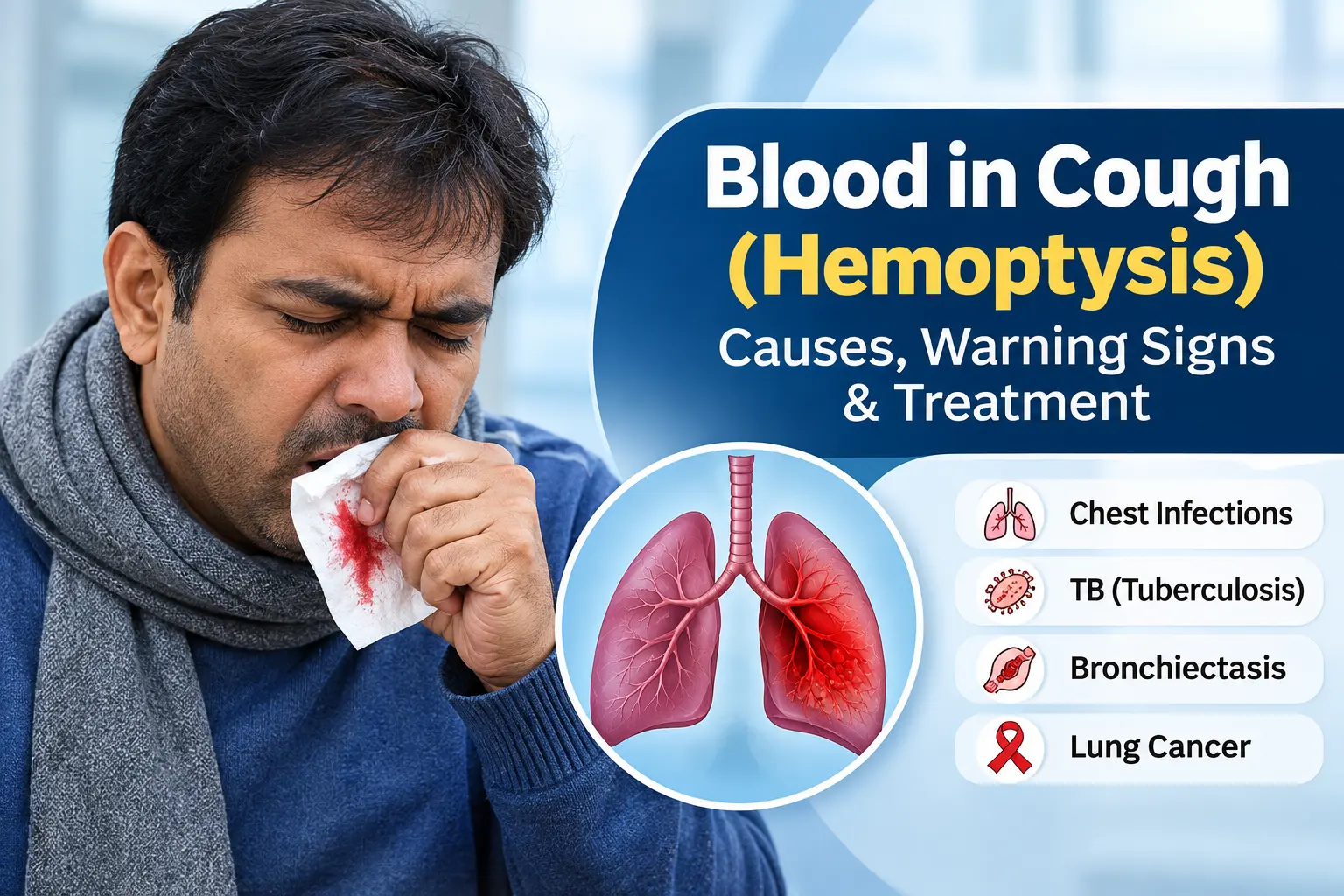
Blood in cough, medically known as hemoptysis, refers to coughing up blood originating from the respiratory tract. It may appear as small streaks of blood mixed with mucus or as a more noticeable amount of fresh blood.
Coughing up blood can occur for several reasons, including respiratory infections, tuberculosis, bronchiectasis, lung cancer and other medical conditions. Sometimes, irritation caused by repeated coughing may also contribute to minor bleeding.
However, the amount or colour of blood alone cannot determine the seriousness of the underlying condition. Even a small amount of unexplained blood in sputum deserves prompt medical evaluation.
For people experiencing blood in cough in Varanasi, identifying the source of bleeding and obtaining an appropriate diagnosis are important first steps towards treatment.
What Does Blood in Cough Mean?
Blood in cough may indicate bleeding from the airways or lungs. Possible causes include chest infections, tuberculosis, bronchiectasis and pulmonary embolism. It does not automatically mean a person has tuberculosis or cancer, but it should not be ignored.
When Is Coughing Up Blood an Emergency?
Seek emergency medical care immediately if you cough up more than a few spots or streaks of blood, have ongoing or rapidly increasing bleeding, or experience any of the following:
- Severe breathing difficulty
- Sudden or severe chest pain
- Very fast heartbeat
- Dizziness, fainting or confusion
- Bluish lips or skin
- Difficulty clearing blood from the airway
Call 112 in India or seek immediate emergency assistance. Do not drive yourself or wait for a routine clinic appointment.
Even a few spots or streaks of unexplained blood require urgent medical advice.
- What Is Hemoptysis?
- What Does Blood in Sputum Look Like?
- Common Causes of Blood in Cough
- Blood in Cough and Tuberculosis
- Blood in Cough Without Fever
- Coughing Blood vs Vomiting Blood
- Chest Infections and Hemoptysis
- Can Blood in Cough Indicate Lung Cancer?
- Emergency Warning Signs
- How Is Hemoptysis Diagnosed?
- Role of Bronchoscopy
- Hemoptysis Treatment Options
- What Should You Do?
- Chest Specialist Consultation in Varanasi
- Frequently Asked Questions
What Is Hemoptysis?
Hemoptysis is the medical term used when blood is expelled through coughing and originates from the lower respiratory tract, including the trachea, bronchial tubes or lungs.
The respiratory system contains a network of blood vessels that supplies oxygen and nutrients to lung tissues. Infection, inflammation, abnormal blood vessels or injury can sometimes cause these vessels to bleed.
Hemoptysis can range from blood-streaked sputum to severe bleeding that interferes with breathing.
Doctors assess not only the estimated amount of blood but also the patient's breathing, oxygen levels, blood pressure, medical history and the rate of bleeding.
The distinction between minor and life-threatening hemoptysis depends on the effect of bleeding on the airway and circulation, rather than a single universal volume measurement.
What Does Blood in Sputum Look Like?
Blood originating from the respiratory tract may have different appearances depending on its source and how it mixes with mucus.
- Small red streaks mixed with sputum
- Pink or reddish mucus
- Fresh red blood during coughing
- Blood mixed with thick respiratory secretions
- Blood clots in some cases
The colour or consistency of sputum cannot reliably establish the exact cause. For example, bright red blood does not automatically indicate tuberculosis, while dark blood does not necessarily confirm bleeding from the stomach.
A doctor may ask about the appearance, frequency and approximate quantity of blood to guide further assessment.
Common Causes of Blood in Cough
Several respiratory and non-respiratory conditions can cause blood to appear during coughing. Identifying the underlying cause helps determine whether medication, additional investigation or emergency treatment is required.
1. Acute Bronchitis
Acute bronchitis involves inflammation of the bronchial airways. Repeated coughing and airway irritation may sometimes cause small blood streaks in sputum.
However, bronchitis should not be assumed to be the cause of bleeding without medical evaluation, particularly when bleeding recurs.
2. Pneumonia
Pneumonia is an infection affecting the lungs. Inflammation associated with pneumonia can sometimes cause blood-stained mucus.
Other symptoms may include fever, chills, chest pain, weakness and difficulty breathing.
3. Tuberculosis
Pulmonary tuberculosis can damage lung tissues and surrounding blood vessels, potentially causing hemoptysis.
People with persistent cough, night sweats, weight loss or unexplained fever should discuss these symptoms with a doctor.
Learn more about investigations and care in our tuberculosis treatment guide in Varanasi.
4. Bronchiectasis
Bronchiectasis is a condition characterised by permanent widening and damage to certain bronchial airways.
This damage can make it difficult to clear mucus, increasing the likelihood of recurrent infections and inflammation. Some patients with bronchiectasis may experience repeated episodes of blood in sputum.
5. Pulmonary Embolism
Pulmonary embolism occurs when a blood clot blocks a blood vessel supplying the lungs.
Sudden breathlessness, chest pain, rapid heartbeat and coughing up blood may occur. Suspected pulmonary embolism requires emergency medical evaluation.
6. Lung Cancer
Certain lung tumours can irritate or damage surrounding blood vessels, leading to bleeding into the respiratory tract.
Persistent or recurrent hemoptysis requires investigation, particularly in individuals with a smoking history or other risk factors.
7. Fungal Infections
Some fungal lung conditions can cause bleeding, especially in people with existing lung cavities, previous tuberculosis or weakened immune systems.
The diagnosis may require imaging and appropriate laboratory investigations.
8. Blood-Thinning Medicines
Medicines that reduce blood clotting can increase the risk or severity of bleeding.
Patients taking anticoagulant or antiplatelet medicines should seek medical advice if they notice unexplained blood in sputum. Do not independently stop prescribed medication without medical guidance.
9. Previous Lung Damage
Scarring or structural changes following previous lung infections may contribute to recurrent respiratory symptoms and bleeding.
A history of successfully treated tuberculosis does not exclude other causes of new hemoptysis.
Blood in Cough and Tuberculosis (TB)
Tuberculosis is one of the important conditions doctors consider when evaluating hemoptysis in India.
Pulmonary tuberculosis is caused by bacteria that primarily affect the lungs. Active infection can damage lung tissues, sometimes resulting in cavities or bleeding from nearby blood vessels.
Common symptoms associated with pulmonary tuberculosis include:
- Persistent cough lasting two weeks or longer
- Blood in sputum
- Unexplained weight loss
- Reduced appetite
- Night sweats
- Persistent fever
- Chest discomfort
- Fatigue and weakness
Not everyone with tuberculosis experiences all these symptoms. Similarly, coughing up blood does not necessarily confirm a diagnosis of tuberculosis.
Depending on the clinical findings, a doctor may recommend sputum testing, molecular tests, chest imaging or additional investigations.
Does Blood in Cough Always Mean TB?
No. Tuberculosis is one possible cause of hemoptysis, but other conditions such as pneumonia, bronchiectasis, airway inflammation and lung cancer can also produce blood in sputum.
Patients concerned about tuberculosis can read our detailed guide to TB diagnosis and treatment in Varanasi.
Can You Have Blood in Cough Without Fever?
Yes. Hemoptysis can occur even when a person does not have a fever.
Some causes of respiratory bleeding are not associated with infection. For example, bronchiectasis between infections, pulmonary embolism, lung tumours and medication-related bleeding may occur without fever.
Additionally, some respiratory infections may not produce a noticeable fever, particularly in older adults or individuals with altered immune responses.
The absence of fever should not be considered proof that the bleeding is harmless.
Seek prompt medical advice if blood in sputum occurs, even when you otherwise feel well.
Coughing Up Blood vs Vomiting Blood: Key Differences
Blood appearing from the mouth may originate from the lungs, digestive tract, nose, throat or gums.
Identifying its source is an important part of the medical assessment.
| Feature | Hemoptysis | Hematemesis |
|---|---|---|
| Source | Respiratory tract or lungs | Upper digestive tract |
| Associated action | Usually expelled through coughing | Usually expelled through vomiting |
| Appearance | May be bright red or mixed with frothy sputum | May be fresh red, dark or coffee-ground-like |
| Associated symptoms | Cough, chest discomfort or breathing difficulty | Nausea, abdominal discomfort or black stools |
| Medical assessment | Respiratory evaluation | Gastrointestinal evaluation |
These are general differences and are not reliable enough for self-diagnosis. Vomiting blood and significant respiratory bleeding both require urgent medical care.
Can a Nosebleed Cause Blood in Cough?
Yes. Blood from the nose may drain into the throat and subsequently be coughed or spat out.
Bleeding from the gums, mouth or throat can also resemble hemoptysis. Doctors may examine these areas when establishing the source of bleeding.
Can Chest Infections Cause Blood in Cough?
Respiratory infections can cause inflammation and irritation of the bronchial tubes or lung tissue. In some cases, this inflammation may contribute to bleeding.
Symptoms associated with respiratory infections may include:
- Persistent cough
- Fever and chills
- Increased mucus production
- Chest discomfort
- Weakness and fatigue
- Shortness of breath
The presence of blood does not automatically indicate a bacterial infection. Antibiotics should only be used when recommended by a qualified healthcare professional.
For information about ongoing breathing problems and respiratory conditions, visit our respiratory care services in Varanasi.
Can Blood in Cough Indicate Lung Cancer?
Coughing up blood can be a symptom of lung cancer, but it is also associated with many non-cancerous conditions.
A doctor may consider several factors when assessing the possibility of an underlying tumour, including age, smoking history, duration of symptoms and previous imaging results.
Other symptoms that may require investigation include:
- A new or changing persistent cough
- Unexplained weight loss
- Persistent chest pain
- Repeated respiratory infections
- Unexplained fatigue
- Progressively worsening breathlessness
These symptoms are not exclusive to cancer, and their presence does not confirm a diagnosis.
Appropriate imaging and, in selected cases, tissue sampling may be recommended to identify the cause.
When Is Blood in Cough a Serious Warning Sign?
Hemoptysis requires medical evaluation because its severity can change and its underlying cause may require specific treatment.
The immediate concern in severe hemoptysis is that blood can interfere with normal breathing and oxygen delivery.
Seek Emergency Care Immediately If:
- You are coughing up more than a few spots or streaks of blood.
- The bleeding is continuing or increasing.
- You experience sudden breathlessness.
- You have severe chest or upper back pain.
- You feel faint, confused or unusually weak.
- Your heartbeat becomes very fast.
- You have difficulty keeping your airway clear.
Do not wait for bleeding to reach a particular quantity before seeking help if breathing or circulation is affected.
A small amount of blood without emergency symptoms still warrants urgent medical advice. A healthcare professional can determine the appropriate next step.
How Is Hemoptysis Diagnosed?
The diagnostic process aims to establish whether blood originates from the respiratory tract, assess the severity of bleeding and identify its underlying cause.
1. Medical History
A doctor may ask questions about:
- When the bleeding started
- How frequently blood appears
- The approximate amount of blood
- Associated cough, fever or chest pain
- Previous tuberculosis or lung infections
- Smoking history
- Current medications
- Existing heart or lung conditions
2. Physical Examination
The clinical examination may include assessment of respiratory rate, heart rate, blood pressure, oxygen saturation and lung sounds.
The mouth, throat and nose may also be examined when the source of blood is uncertain.
3. Chest X-Ray
A chest X-ray can provide initial information about lung infections, certain structural abnormalities and other possible causes.
However, a normal chest X-ray does not exclude every cause of hemoptysis. Additional tests may be needed when bleeding persists or risk factors are present.
4. CT Scan and CT Angiography
A CT scan can provide detailed images of the lungs and surrounding structures.
CT angiography may be recommended in selected patients to evaluate blood vessels and help identify a possible source of bleeding.
5. Sputum Investigations
Laboratory examination of sputum may help detect respiratory infections or tuberculosis.
The specific tests depend on the patient's symptoms, medical history and suspected diagnosis.
6. Blood Tests
Blood investigations may help assess haemoglobin levels, platelet counts, clotting function and other clinical factors.
7. Bronchoscopy
Bronchoscopy may be recommended to examine the airways, collect samples or locate a bleeding source in selected patients.
Read more about bronchoscopy in Varanasi and its role in diagnosing respiratory conditions.
What Is the Role of Bronchoscopy in Hemoptysis?
Bronchoscopy is a medical procedure that allows a specialist to examine the inside of the airways using a thin instrument equipped with a camera.
In patients with hemoptysis, bronchoscopy may provide information that cannot always be obtained from symptoms or routine imaging alone.
Why Might Bronchoscopy Be Recommended?
- To examine the bronchial airways
- To investigate an unexplained bleeding source
- To collect respiratory samples
- To assess suspicious airway abnormalities
- To obtain tissue samples when appropriate
- To assist in selected bleeding-control procedures
Not every patient with blood in sputum requires bronchoscopy. The decision depends on the severity of symptoms, imaging findings and overall clinical condition.
The specialist will also assess the potential benefits, risks and appropriate timing of the procedure.
Bronchoscopy and Respiratory Evaluation
Patients who have unexplained or recurrent respiratory bleeding may benefit from specialist assessment to determine whether imaging, bronchoscopy or other investigations are appropriate.
Learn more about our bronchoscopy service.
Hemoptysis Treatment Options
The treatment of hemoptysis depends on the underlying cause, severity of bleeding and the patient's overall health.
Treatment may involve stabilising the patient, controlling active bleeding and managing the condition responsible for it.
1. Treatment of Respiratory Infections
When a bacterial respiratory infection is identified, a doctor may prescribe appropriate antibiotics.
Viral infections and other respiratory conditions require different management approaches. Antibiotics should not be started solely because blood appears in sputum.
2. Tuberculosis Treatment
Confirmed tuberculosis requires an appropriate anti-tuberculosis treatment regimen based on the type of disease and relevant drug-resistance investigations.
Treatment should be supervised by qualified healthcare professionals. Completing the prescribed course is essential.
3. Bronchiectasis Management
Management may include infection treatment, an individualised airway-clearance plan and specialised assessment for recurrent bleeding.
During active hemoptysis, airway-clearance techniques may need adjustment under professional guidance.
4. Bronchoscopic Treatment
In selected cases, specialised bronchoscopic techniques may be used to help identify or control airway bleeding.
Such treatment requires appropriately trained professionals and suitable clinical facilities.
5. Bronchial Artery Embolisation
Bronchial artery embolisation is an image-guided medical procedure that may be considered for significant or recurrent hemoptysis.
An interventional radiology team identifies and treats selected blood vessels responsible for bleeding.
The suitability of this procedure depends on the underlying cause, imaging results and clinical assessment.
6. Surgery
Surgical treatment may be considered in selected patients when bleeding cannot be adequately controlled through other approaches or when a particular underlying condition requires surgery.
The decision is made by the treating specialists after evaluating the benefits and risks.
7. Emergency Stabilisation
Patients with life-threatening hemoptysis may require urgent airway management, oxygen support, monitoring and interventions to control bleeding.
Emergency care takes priority over routine outpatient investigations.
What Should You Do If You Notice Blood in Your Cough?
If you notice blood in your sputum, the appropriate response depends on the amount of bleeding and associated symptoms.
- Seek urgent medical advice even for a small amount of unexplained blood.
- Seek emergency assistance if bleeding is significant, ongoing or associated with breathing difficulty.
- Avoid smoking and exposure to respiratory irritants.
- Do not attempt to treat unexplained bleeding with home remedies alone.
- Inform the doctor about any blood-thinning medicines you take.
- Bring previous chest imaging and investigation reports if available.
- Do not delay emergency care to collect documents or record symptoms.
If tuberculosis is suspected, follow appropriate respiratory hygiene and medical advice to reduce the risk of transmitting infection.
When Should You Consult a Chest Specialist in Varanasi?
A respiratory specialist can assess symptoms originating from the lungs and airways, including persistent coughing, unexplained breathlessness, recurrent infections and blood in sputum.
A chest consultation may include a review of medical history, clinical examination, existing investigation reports and recommendations for additional tests where necessary.
Patients living in Durgakund, Bhelupur, Lanka, Sigra, BHU and surrounding areas of Varanasi can contact Chest Clinic for information about respiratory consultation.
Samaria Multi-Speciality & Chest Centre is located at Plot 36A, Kabir Nagar, Durgakund, Varanasi.
Explore the clinic's respiratory care services or visit the about the clinic page for further information.
Concerned About Blood in Your Cough?
Unexplained blood in sputum requires prompt medical attention. Contact Chest Clinic Varanasi for information about respiratory consultation when emergency care is not required.
Contact: +91 8795300333
Address: Plot 36A, Kabir Nagar, Durgakund, Varanasi - 221005
Book an AppointmentFor significant or ongoing bleeding, breathing difficulty or severe chest pain, seek emergency care immediately instead of waiting for an appointment.
Frequently Asked Questions About Blood in Cough
1. What causes blood in cough?
Blood in cough can occur due to bronchitis, pneumonia, tuberculosis, bronchiectasis, pulmonary embolism, lung cancer or other conditions affecting the respiratory tract.
2. Is a small amount of blood in mucus dangerous?
A small amount of blood may occur due to airway irritation, but it can also be associated with an underlying medical condition. Unexplained blood in mucus requires urgent medical advice.
3. Does blood in cough always mean tuberculosis?
No. Tuberculosis is one possible cause, but other respiratory infections, bronchiectasis and several non-infectious conditions can also cause blood in sputum.
4. Can excessive coughing cause blood in sputum?
Repeated or forceful coughing may irritate the airways and sometimes cause minor bleeding. However, medical evaluation is necessary before attributing blood in sputum to coughing alone.
5. Can blood in cough occur without fever?
Yes. Hemoptysis may occur without fever in conditions such as bronchiectasis, pulmonary embolism, lung tumours or medication-related bleeding.
6. Can lung cancer cause coughing up blood?
Yes. Some lung cancers can cause bleeding into the airways. However, many other conditions can produce the same symptom, so investigations are required to establish the cause.
7. Is coughing up blood an emergency?
Coughing up more than a few spots or streaks of blood, ongoing bleeding or bleeding associated with breathing difficulty, chest pain or fainting requires emergency care.
8. Which doctor should I consult for blood in cough?
A chest specialist or pulmonologist can evaluate respiratory causes of hemoptysis. Emergency symptoms require immediate hospital-based emergency care.
9. Can an X-ray detect the cause of blood in cough?
A chest X-ray may help identify certain lung abnormalities, but it cannot detect every cause. CT imaging, sputum tests or bronchoscopy may be required.
10. Is bronchoscopy necessary for every case of hemoptysis?
No. Bronchoscopy is recommended according to the severity of bleeding, suspected cause, imaging results and clinical findings.
11. Can a nosebleed appear as blood in sputum?
Yes. Blood from the nose may drain into the throat and be expelled during coughing. Clinical examination can help determine the actual source.
12. Can blood-thinning medicines cause blood in cough?
Blood-thinning medicines can increase bleeding risk or severity. Patients should seek medical advice and should not independently stop prescribed medication.
13. What is the difference between hemoptysis and hematemesis?
Hemoptysis refers to coughing up blood from the respiratory tract, while hematemesis refers to vomiting blood from the upper digestive tract.
14. Can hemoptysis return after treatment?
Yes. Hemoptysis can recur if the underlying cause persists, if structural lung damage remains or if another condition develops. Recurrent bleeding requires reassessment.
15. Can blood in cough be treated permanently?
Treatment outcomes depend on the cause. Some conditions can be successfully treated, while chronic respiratory diseases may require ongoing management to reduce the risk of recurrence.
Conclusion
Blood in cough, or hemoptysis, is a symptom that can result from several different medical conditions. Although minor airway irritation may sometimes cause blood-streaked mucus, infections, tuberculosis, bronchiectasis and other serious conditions must also be considered.
Early assessment can help establish the source of bleeding, identify the underlying cause and determine whether further investigations or treatment are necessary.
Do not rely on the colour or quantity of blood alone to determine the seriousness of the problem. Seek urgent medical advice for unexplained blood in sputum and immediate emergency care for significant bleeding or breathing difficulty.
For appropriate outpatient respiratory consultation, contact Chest Clinic Varanasi.