
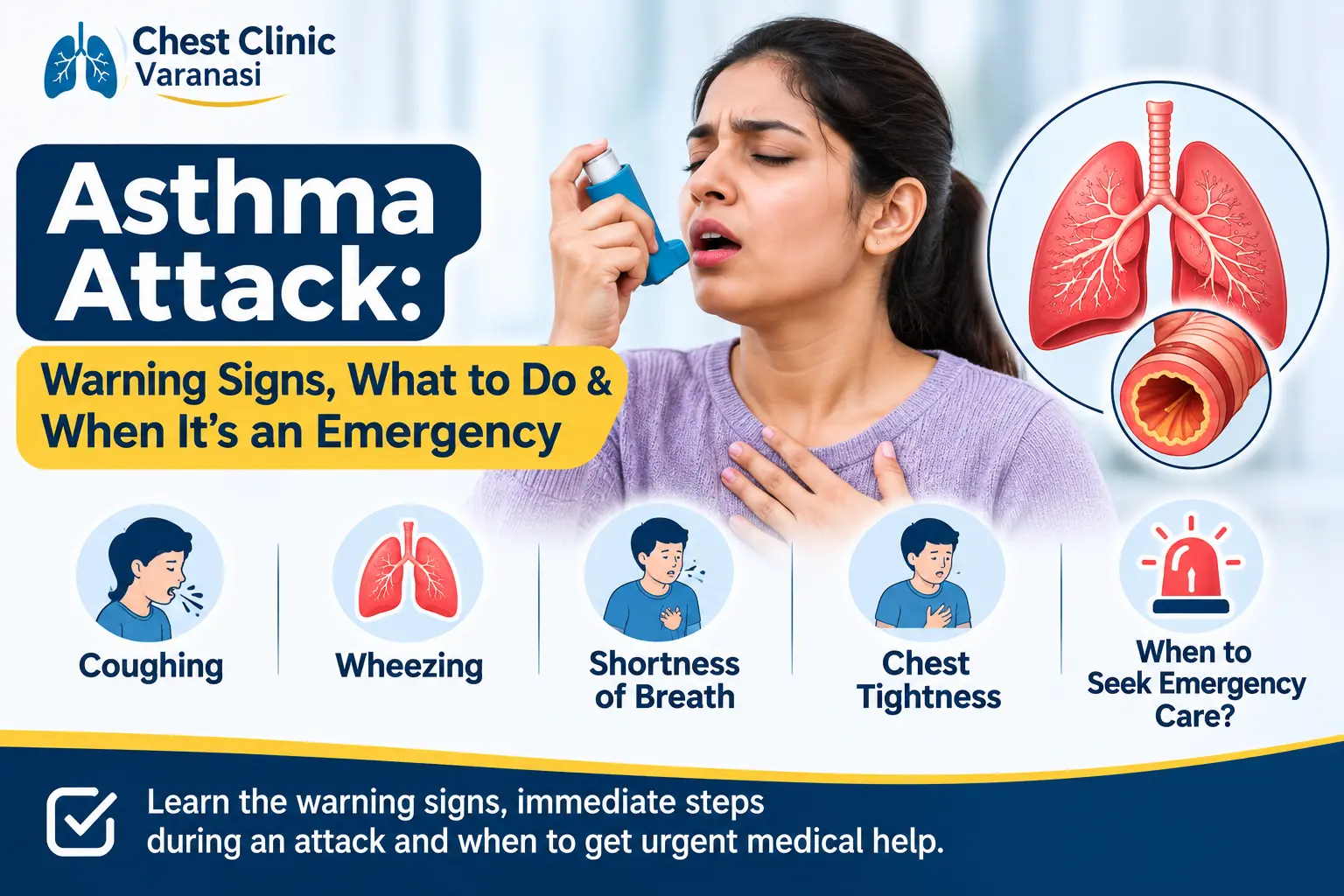
An asthma attack happens when asthma symptoms become worse because the airways become more narrowed and breathing becomes difficult.
Asthma attacks can vary from mild to severe. Knowing the early warning signs and understanding when urgent medical attention is needed can help patients and families respond appropriately.
If you or your child has been diagnosed with asthma, follow the individual asthma action plan provided by your healthcare professional.
- What Is an Asthma Attack?
- What Happens During an Asthma Attack?
- Warning Signs of an Asthma Attack
- Common Asthma Attack Triggers
- What to Do During an Asthma Attack
- When Is an Asthma Attack an Emergency?
- What About the Asthma Inhaler?
- How Can Future Attacks Be Reduced?
- Asthma Attacks in Children
- When Should You See a Specialist?
- Frequently Asked Questions
What Is an Asthma Attack?
An asthma attack, also called an asthma flare-up or exacerbation, occurs when asthma symptoms become significantly worse.
During an attack, the airways can become inflamed and narrowed, making it harder for air to move in and out of the lungs.
Symptoms can include coughing, wheezing, chest tightness and shortness of breath.
What Happens During an Asthma Attack?
Asthma affects the airways. During a flare-up, inflammation, airway narrowing and increased mucus can contribute to difficulty breathing.
As the narrowing becomes more significant, a person may notice increasing breathlessness, coughing or wheezing.
The severity can vary from person to person and from one attack to another.
Warning Signs of an Asthma Attack
Recognising a change from a person's usual asthma symptoms is important.
- Increasing cough, particularly at night or early morning
- Wheezing or noisy breathing
- Increasing shortness of breath
- Chest tightness
- Difficulty completing normal physical activities
- Needing prescribed reliever medicine more frequently than usual
- Symptoms that are becoming progressively worse
Do Not Ignore Severe Breathing Difficulty
If breathing becomes severely difficult, symptoms are rapidly worsening or the person appears seriously unwell, seek urgent medical attention rather than relying on home treatment alone.
Common Asthma Attack Triggers
Triggers vary between people. Some common factors that may worsen asthma symptoms include:
- Respiratory infections
- Tobacco smoke
- Air pollution
- Dust and environmental irritants
- Allergens in susceptible individuals
- Cold air
- Exercise in some people
- Strong smells or chemical irritants
Not every person with asthma reacts to the same trigger. Keeping track of symptoms can help identify patterns.
What to Do During an Asthma Attack
If you have asthma, follow the action plan provided by your healthcare professional.
During an Asthma Flare-Up
- Stay calm and try to sit upright rather than lying flat.
- Move away from a known trigger if it can be done safely.
- Use your prescribed reliever inhaler according to your asthma action plan.
- Monitor whether symptoms are improving or worsening.
- Seek urgent medical help if symptoms are severe, rapidly worsening or not responding to the prescribed treatment plan.
Do not take someone else's inhaler or change prescription doses without medical advice.
When Is an Asthma Attack an Emergency?
A severe asthma attack can become life-threatening and requires urgent medical attention.
Emergency warning signs can include:
- Severe difficulty breathing
- Inability to speak normally because of breathlessness
- Rapidly worsening symptoms
- Blue or grey lips or face
- Confusion or unusual drowsiness
- Extreme exhaustion
- Little or no improvement after prescribed rescue treatment
Call Emergency Medical Services
If someone is struggling severely to breathe, becoming confused, very drowsy, turning blue or grey, or rapidly deteriorating, seek emergency medical help immediately.
What About the Asthma Inhaler?
Inhalers are an important part of asthma management for many patients. Different inhalers have different purposes.
Some inhaled medicines are used for quick relief of symptoms, while others are used regularly to control airway inflammation.
The correct medicine, dose and technique depend on the individual patient's condition.
Patients should use their prescribed inhaler exactly as advised by their healthcare professional.
Read our guide to asthma inhalers and proper inhaler technique.How Can Future Asthma Attacks Be Reduced?
Preventing future attacks usually involves good long-term asthma management.
- Take prescribed controller medicines as directed.
- Use inhalers with the correct technique.
- Know your personal asthma triggers.
- Avoid tobacco smoke and other known irritants.
- Attend recommended follow-up appointments.
- Keep an updated asthma action plan.
- Know when symptoms require urgent medical attention.
If asthma symptoms continue frequently despite treatment, speak with your healthcare professional about reassessment.
Asthma Attacks in Children
Children may not always be able to describe chest tightness or breathing difficulty clearly.
Parents may instead notice persistent coughing, wheezing, faster breathing, reduced activity or difficulty keeping up with other children.
A child with severe breathing difficulty should receive urgent medical attention.
Read more about childhood asthma, symptoms and treatment.Asthma Attack Care in Varanasi
People experiencing repeated asthma attacks, frequent breathing symptoms or difficulty controlling asthma should consider a medical review.
At Chest Clinic Varanasi, Dr. Kumar Utsav evaluates patients with asthma and other respiratory conditions and can recommend appropriate assessment and management based on individual symptoms.
Bring your previous prescriptions, inhalers, test reports and details about recent asthma attacks to your consultation if available.
Recurring Asthma Attacks?
Frequent asthma symptoms or repeated attacks may require a review of your asthma management plan.
Book AppointmentRelated Asthma Resources
Frequently Asked Questions
What are the warning signs of an asthma attack?
Increasing cough, wheezing, chest tightness, shortness of breath, reduced ability to perform normal activities and worsening symptoms can be warning signs of an asthma attack.
What should I do during an asthma attack?
Follow your individual asthma action plan and use prescribed reliever medicine as directed. If symptoms are severe or worsening, seek urgent medical attention.
When is an asthma attack an emergency?
Severe breathing difficulty, inability to speak normally, rapidly worsening symptoms, blue or grey lips, confusion, extreme drowsiness or failure to improve with prescribed rescue treatment can indicate an emergency.
Can asthma attacks be prevented?
Good asthma control, correct inhaler technique, prescribed medicines, trigger avoidance and regular medical review can help reduce the risk of future attacks.
Can children have asthma attacks?
Yes. Children can experience asthma flare-ups and may show symptoms such as coughing, wheezing, shortness of breath or reduced activity.
When should I see an asthma doctor in Varanasi?
Consider medical evaluation when asthma symptoms are frequent, interfere with sleep or daily activities, require frequent reliever medicine or are becoming difficult to control.
Conclusion
An asthma attack can range from mild symptoms to a serious breathing emergency. Knowing the warning signs and following an individual asthma action plan are important parts of asthma management.
Do not ignore severe or rapidly worsening breathing difficulty. When emergency warning signs appear, seek urgent medical attention.
For recurring asthma symptoms or repeated attacks, a proper respiratory evaluation can help identify areas where asthma management may need to be reviewed.