
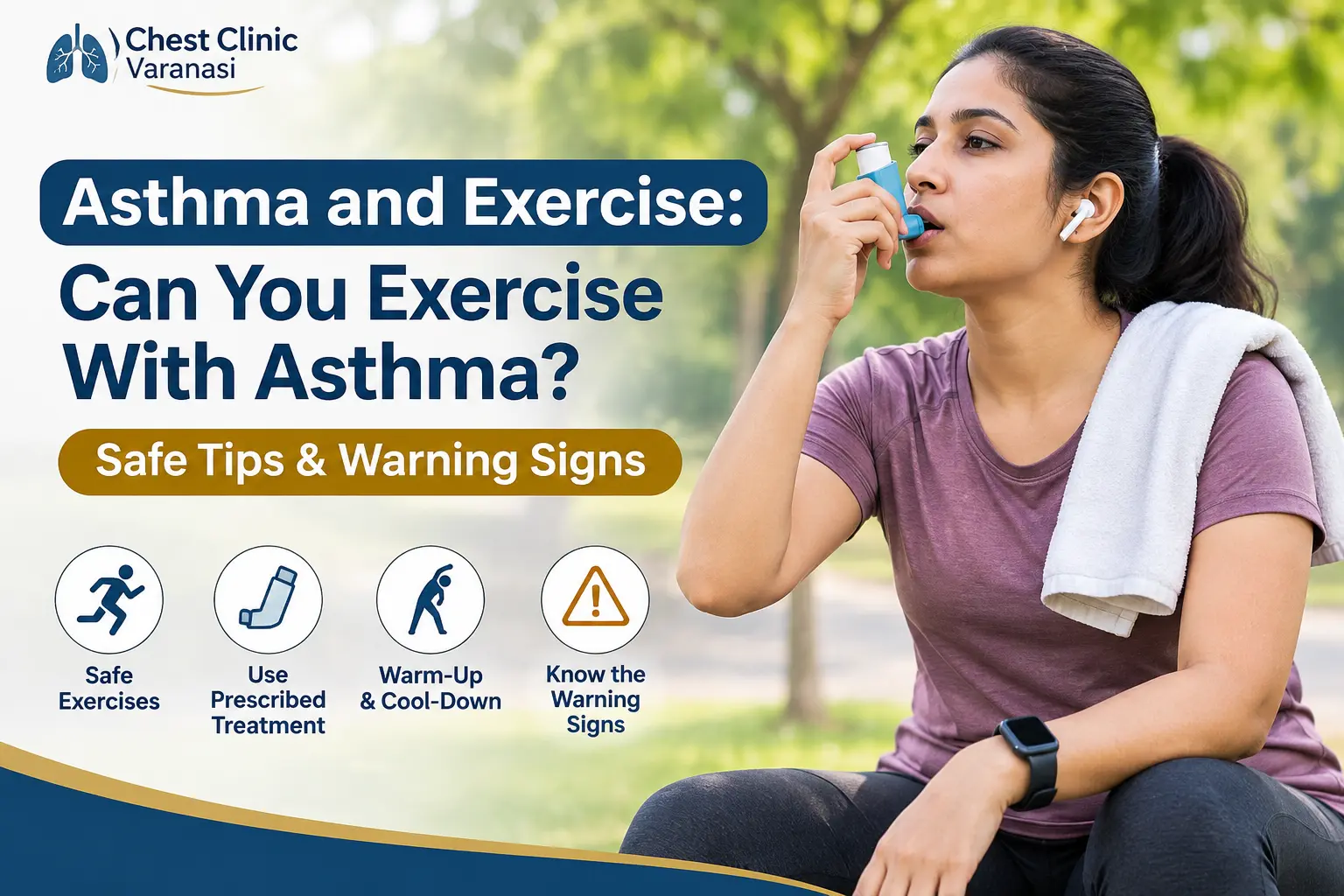
Many people with asthma wonder whether physical activity is safe for them. The good news is that asthma does not automatically mean that you need to avoid exercise.
With appropriate asthma management and guidance from a healthcare professional, many people with asthma can remain physically active and participate in regular exercise.
However, some people develop coughing, wheezing, chest tightness or shortness of breath during or after exercise. This can be associated with exercise-induced bronchoconstriction and should be discussed with a doctor when symptoms are frequent or significant.
- Can You Exercise With Asthma?
- What Is Exercise-Induced Bronchoconstriction?
- Asthma Symptoms During Exercise
- Which Exercises Can You Do With Asthma?
- Why Warm-Up Matters
- How to Exercise Safely With Asthma
- When Should You Stop Exercising?
- Asthma and Sports
- When to See an Asthma Doctor
- Frequently Asked Questions
Can You Exercise With Asthma?
Yes. Many people with asthma can exercise and remain physically active.
Regular physical activity can support overall fitness and well-being. The important point is to understand your asthma, recognise your symptoms and follow the treatment and activity plan recommended by your healthcare professional.
If exercise repeatedly causes breathing symptoms, it is better to discuss the problem with a doctor instead of simply avoiding all physical activity.
What Is Exercise-Induced Bronchoconstriction?
Exercise-induced bronchoconstriction, or EIB, refers to temporary narrowing of the airways that occurs during or after physical activity.
It can happen in people with asthma and can also occur in people who do not have chronic asthma.
Symptoms can begin during exercise or shortly after exercise and may include cough, wheezing, chest tightness and shortness of breath.
Exercise Symptoms Should Be Evaluated
If you regularly experience breathing difficulty, wheezing or coughing whenever you exercise, speak with a healthcare professional. Repeated symptoms may require assessment and appropriate management.
Asthma Symptoms During Exercise
Asthma or exercise-related airway narrowing may cause several symptoms during or after physical activity.
Coughing
Repeated coughing during or after exercise can be a sign that your airways are becoming irritated or narrowed.
Wheezing
A whistling sound while breathing may occur when the airways become narrowed.
Chest Tightness
Some people experience a feeling of pressure or tightness in the chest during physical activity.
Shortness of Breath
Breathing may feel unusually difficult compared with the intensity of the activity.
Which Exercises Can You Do With Asthma?
There is no single exercise that is suitable for every person with asthma. The best activity depends on your health, fitness, asthma control and individual response to exercise.
Activities that can be considered include walking, cycling, swimming and other forms of physical activity when tolerated and medically appropriate.
If a particular activity repeatedly causes symptoms, discuss the pattern with your doctor.
Why Is Warm-Up Important?
A gradual warm-up before more intense activity can help prepare your body for exercise.
Instead of moving immediately from rest to intense exercise, start at a lower intensity and gradually increase activity.
Your doctor may provide specific advice based on your asthma control and treatment plan.
How to Exercise Safely With Asthma
1. Know Your Symptoms
Understand the symptoms that usually occur when your asthma is not well controlled.
2. Follow Your Treatment Plan
Take prescribed asthma medicines according to your doctor's instructions.
3. Warm Up Gradually
Begin exercise gradually instead of starting immediately with high-intensity activity.
4. Pay Attention to the Environment
Cold air, pollution and other environmental conditions can affect some people with asthma.
5. Keep Your Medical Plan Available
If your doctor has provided an asthma action plan or specific instructions for exercise, follow them carefully.
6. Do Not Ignore Repeated Symptoms
If exercise repeatedly causes coughing, wheezing or breathlessness, arrange a medical assessment.
When Should You Stop Exercising?
If you develop significant breathing difficulty, chest tightness, wheezing or persistent coughing during exercise, stop the activity and follow the medical instructions provided for your asthma.
Seek Urgent Medical Help If:
- Breathing becomes severely difficult.
- Symptoms rapidly worsen.
- You are unable to speak normally because of breathlessness.
- You feel faint, confused or severely weak.
- Your prescribed rescue treatment is not providing the expected relief.
Asthma and Sports
Having asthma does not automatically prevent someone from participating in sports.
Many people with well-managed asthma participate in recreational and competitive physical activities.
The key is appropriate asthma management, recognising symptoms and discussing exercise-related problems with a healthcare professional.
Asthma, Fitness and Breathing
People sometimes reduce physical activity because they are afraid of becoming breathless. However, avoiding all activity without medical advice is not necessarily the best approach.
If breathing symptoms limit your daily activity or exercise, the underlying asthma control should be assessed.
When Should You See an Asthma Doctor?
You should consider a medical consultation if you regularly develop cough, wheezing, chest tightness or unusual breathlessness during or after exercise.
You should also seek evaluation if asthma symptoms are interfering with normal physical activity, sleep or daily life.
Need an Asthma Evaluation in Varanasi?
If exercise is repeatedly causing breathing problems, proper evaluation can help determine whether asthma or another respiratory condition is contributing to your symptoms.
Book AppointmentRelated Asthma Resources
Frequently Asked Questions
Can people with asthma exercise?
Yes. Many people with asthma can exercise safely when their condition is appropriately managed and they follow medical advice.
What is exercise-induced bronchoconstriction?
Exercise-induced bronchoconstriction is temporary narrowing of the airways during or after exercise that can cause coughing, wheezing, chest tightness or shortness of breath.
What are asthma symptoms during exercise?
Common symptoms can include coughing, wheezing, chest tightness and shortness of breath during or shortly after physical activity.
Should I stop exercising if I develop asthma symptoms?
Stop the activity and follow the asthma action plan or medical instructions provided by your healthcare professional.
Can exercise make asthma worse?
Exercise can trigger symptoms in some people, particularly when asthma is not well controlled or when environmental conditions contribute to airway irritation.
When should I see an asthma doctor?
Frequent exercise-related symptoms, worsening asthma or breathing difficulty that interferes with physical activity should be evaluated by a qualified doctor.
Where can I consult an asthma doctor in Varanasi?
Patients in Varanasi can consult Dr. Kumar Utsav at Chest Clinic Varanasi for evaluation of asthma and other respiratory symptoms.
Conclusion
Asthma does not automatically mean that you need to avoid exercise. Many people with asthma can remain active when their condition is appropriately managed.
However, repeated coughing, wheezing, chest tightness or shortness of breath during or after exercise should not be ignored. These symptoms can be associated with exercise-induced bronchoconstriction or other respiratory conditions.
If exercise is consistently causing breathing problems, speak with a qualified asthma or respiratory doctor to understand the cause and appropriate management.