
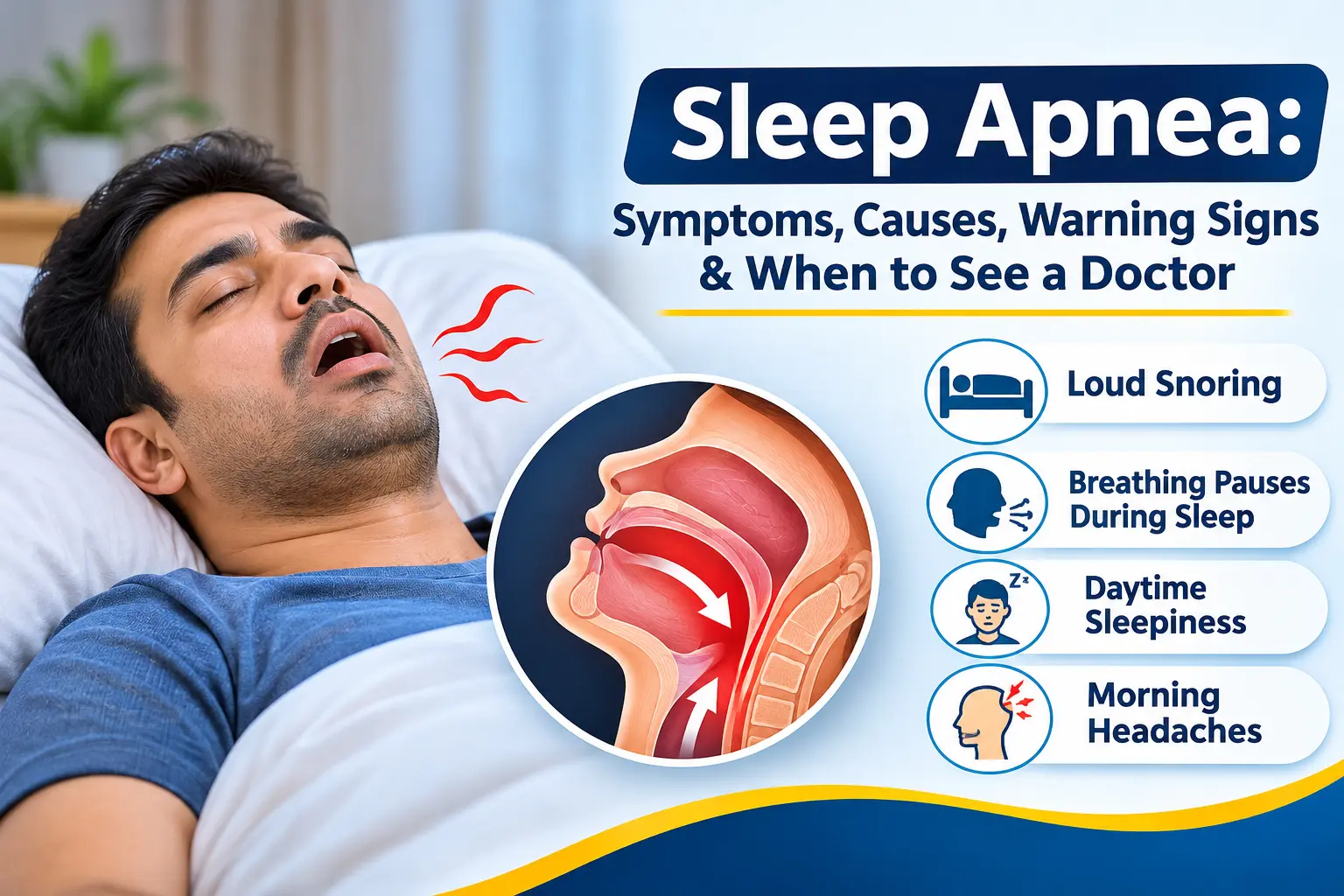
Sleep apnea is a sleep-related breathing disorder in which breathing repeatedly stops or becomes reduced during sleep. Because these breathing interruptions happen while a person is asleep, they may not always be aware that they are occurring.
Some people may notice symptoms such as loud snoring, disturbed sleep, morning headaches or excessive daytime sleepiness. When these symptoms repeatedly occur, appropriate medical evaluation may be helpful.
Sleep-related breathing problems can also overlap with other respiratory concerns. If you are experiencing breathing difficulty during the day as well, you can learn more about breathlessness and its possible causes.
- What Is Sleep Apnea?
- Common Symptoms of Sleep Apnea
- Is Loud Snoring a Sign of Sleep Apnea?
- Breathing Pauses During Sleep
- Daytime Sleepiness and Morning Headaches
- Common Causes and Risk Factors
- When Should Sleep Apnea Symptoms Be Taken Seriously?
- How Is Sleep Apnea Diagnosed?
- Sleep Apnea Treatment Options
- When Should You See a Doctor?
- Frequently Asked Questions
What Is Sleep Apnea?
Sleep apnea is a condition in which normal breathing is repeatedly interrupted or reduced during sleep.
These interruptions can affect sleep quality and may cause a person to wake briefly or move between different stages of sleep without remembering it the next morning.
There are different types of sleep apnea. The most commonly discussed form is obstructive sleep apnea, which is associated with repeated narrowing or blockage of the upper airway during sleep.
Sleep Apnea Can Go Unnoticed
A person may not realise that their breathing is repeatedly changing during sleep. Family members or partners may notice snoring, gasping or pauses in breathing before the person recognises the problem themselves.
Common Symptoms of Sleep Apnea
Sleep apnea symptoms can vary between individuals. Common signs may include:
- Loud or habitual snoring
- Gasping or choking sounds during sleep
- Observed pauses in breathing
- Repeated nighttime awakenings
- Morning headaches
- Dry mouth after waking
- Excessive daytime sleepiness
- Difficulty concentrating
- Feeling tired despite spending enough time in bed
Not everyone with these symptoms has sleep apnea. A proper clinical evaluation is needed to understand the underlying cause.
Is Loud Snoring a Sign of Sleep Apnea?
Snoring is common and does not automatically mean that a person has sleep apnea.
However, loud habitual snoring combined with breathing pauses, gasping during sleep, excessive daytime sleepiness or repeated nighttime disturbances may warrant further evaluation.
When Snoring Deserves Attention
Consider discussing persistent loud snoring with a healthcare professional when it is accompanied by breathing pauses, gasping, choking sensations, significant daytime sleepiness or other sleep-related breathing symptoms.
Breathing Pauses During Sleep
One of the important signs associated with sleep apnea is repeated interruption or reduction of breathing during sleep.
A sleeping partner may notice that the person appears to stop breathing briefly and then suddenly snorts, gasps or resumes breathing.
Because the person may not remember these events, reports from a partner or family member can sometimes provide useful information during a medical consultation.
Daytime Sleepiness and Morning Headaches
Poor-quality or repeatedly interrupted sleep can leave some people feeling tired during the day.
Possible daytime symptoms include:
- Excessive daytime sleepiness
- Difficulty concentrating
- Reduced alertness
- Morning headaches
- Low energy
- Feeling unrefreshed after sleep
Persistent daytime tiredness should not automatically be attributed to sleep apnea because many other conditions and lifestyle factors can also affect sleep and energy levels.
Common Causes and Risk Factors
Sleep apnea can have different contributing factors. For obstructive sleep apnea, factors that can increase the likelihood may include:
- Excess body weight
- Anatomical features that narrow the upper airway
- Increasing age
- Family history
- Certain medical conditions
- Alcohol or sedative use in some individuals
Having one or more risk factors does not mean that a person definitely has sleep apnea. Proper evaluation is still required.
When Should Sleep Apnea Symptoms Be Taken Seriously?
Consider seeking medical advice when sleep-related breathing symptoms are persistent or repeatedly affect sleep quality and daytime functioning.
Signs That Should Not Be Ignored
- Repeatedly observed pauses in breathing during sleep
- Frequent gasping or choking during sleep
- Very loud habitual snoring with other symptoms
- Excessive daytime sleepiness
- Persistent morning headaches
- Difficulty staying alert during normal daytime activities
If you also experience persistent or recurring daytime breathlessness, appropriate respiratory evaluation may be important. You can read more about breathlessness in Varanasi and when medical assessment may be appropriate.
How Is Sleep Apnea Diagnosed?
Diagnosis begins with a review of symptoms, medical history and sleep-related concerns.
A healthcare professional may ask about:
- Snoring patterns
- Observed breathing pauses
- Nighttime awakenings
- Daytime sleepiness
- Morning headaches
- Existing medical conditions
- Medication and lifestyle factors
Depending on the clinical situation, a doctor may recommend a sleep study or another appropriate investigation to evaluate breathing during sleep.
The appropriate test depends on the individual's symptoms, medical history and clinical assessment.
Sleep Apnea Treatment Options
Treatment depends on the type and severity of sleep apnea and the individual patient's clinical situation.
Depending on the diagnosis, management may involve lifestyle changes, treatment of contributing factors, positive airway pressure therapy or other approaches recommended by a qualified healthcare professional.
Treatment Should Be Individualised
There is no single treatment that is appropriate for everyone with sleep apnea. A healthcare professional should determine the appropriate management approach after evaluating the patient.
When Should You See a Doctor for Sleep Apnea Symptoms?
Consider medical evaluation if you or someone sleeping near you regularly notices loud snoring, breathing pauses, gasping, choking or other signs of disrupted breathing during sleep.
A respiratory or chest specialist can review the symptoms, medical history and clinical findings and determine whether further evaluation is appropriate.
If you are looking for a lung specialist in Varanasi, specialist respiratory consultation may help determine the next step based on your symptoms.
You can also learn more about chest specialist consultation in Varanasi and when specialist evaluation may be appropriate for recurring respiratory concerns.
Sleep Apnea and Respiratory Health
Sleep-related breathing problems should be considered separately from daytime respiratory symptoms, although some patients may experience both.
If you have persistent cough, wheezing, breathlessness or other recurring breathing problems, a broader respiratory evaluation may be appropriate.
Learn more about the clinic's respiratory care services for ongoing chest and breathing concerns.
Experiencing Sleep-Related Breathing Problems?
If loud snoring, breathing pauses, excessive daytime sleepiness or recurring breathing problems are affecting you, consider appropriate medical evaluation.
Book AppointmentFrequently Asked Questions
What is sleep apnea?
Sleep apnea is a sleep-related breathing disorder in which breathing repeatedly stops or becomes reduced during sleep.
What are the common symptoms of sleep apnea?
Common symptoms may include loud snoring, observed breathing pauses, gasping during sleep, morning headaches, daytime sleepiness and difficulty concentrating.
Is loud snoring always a sign of sleep apnea?
No. Snoring can have several causes. However, loud habitual snoring combined with breathing pauses, gasping or significant daytime sleepiness may warrant medical evaluation.
Can sleep apnea cause daytime tiredness?
Sleep disruption associated with sleep apnea can contribute to daytime sleepiness and feeling unrefreshed after sleep.
When should I see a doctor for sleep apnea symptoms?
Medical evaluation may be appropriate when loud snoring, witnessed breathing pauses, gasping during sleep, excessive daytime sleepiness or repeated nighttime breathing problems occur.
Conclusion
Sleep apnea can affect breathing during sleep and may go unnoticed for a long time.
Loud habitual snoring, observed breathing pauses, nighttime gasping, morning headaches and excessive daytime sleepiness can be important signs to discuss with a healthcare professional.
If these symptoms are persistent or affecting your daily life, appropriate evaluation can help determine whether further sleep or respiratory assessment is needed.
For ongoing respiratory concerns, you can contact Chest Clinic Varanasi for an appropriate consultation.