
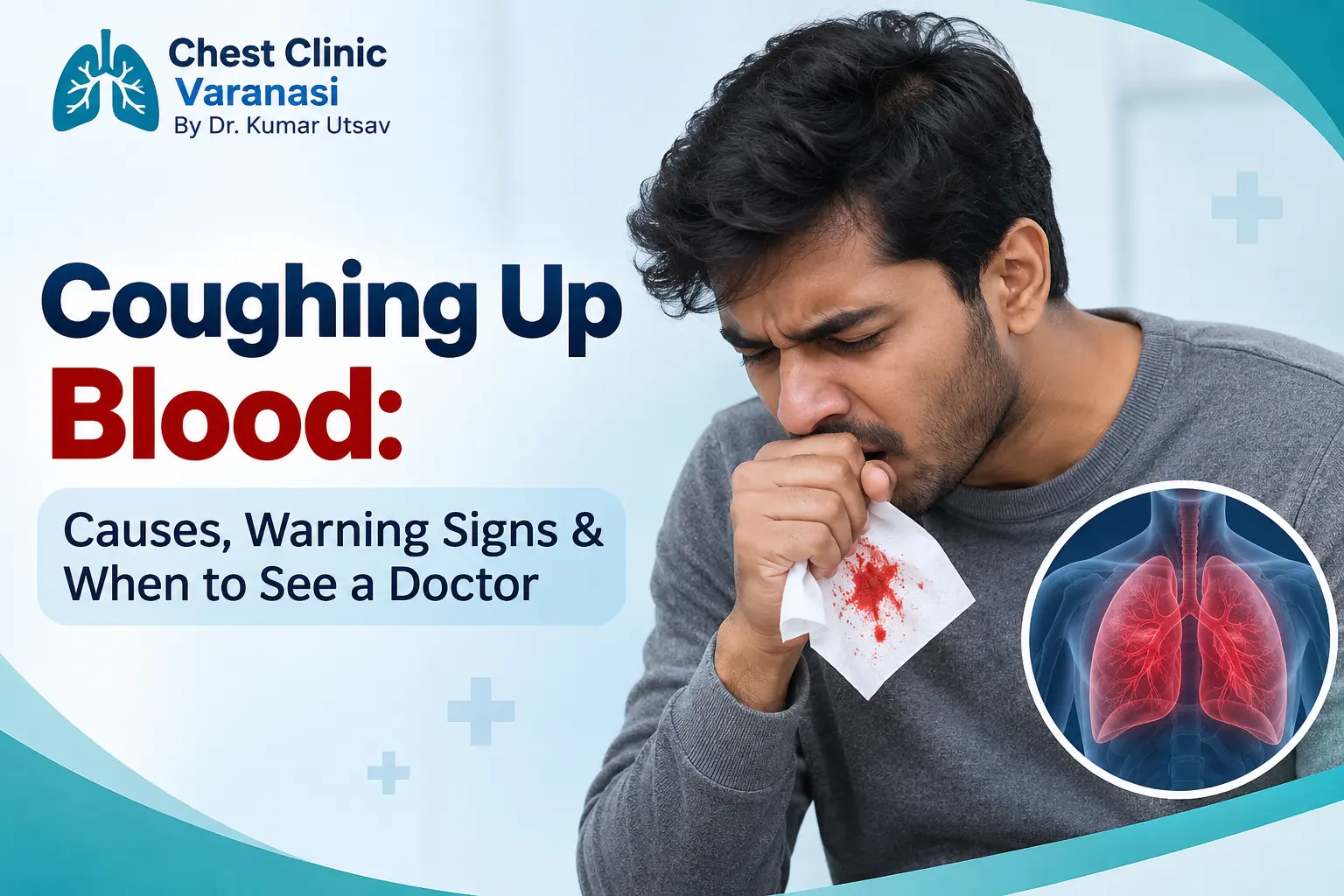
Seeing blood when you cough can be alarming. Sometimes the amount may be very small and mixed with mucus, while in other situations there may be more noticeable bleeding. Although coughing up blood does not always mean a serious disease, it should not be ignored.
The medical term for coughing up blood from the respiratory tract is hemoptysis. It can occur because of irritation or infection in the airways, but it may also be associated with other lung conditions that require medical evaluation.
If you notice blood in your sputum, especially when it keeps happening or occurs with breathing difficulty, chest pain, fever or unexplained weight loss, consult a qualified doctor to determine the cause.
- What Does Coughing Up Blood Mean?
- What Can Blood in Sputum Look Like?
- Common Causes of Coughing Up Blood
- Warning Signs You Should Not Ignore
- When Is Coughing Up Blood an Emergency?
- How Is Hemoptysis Evaluated?
- Tests a Doctor May Recommend
- Treatment Depends on the Cause
- When Should You See a Chest Specialist?
- Frequently Asked Questions
What Does Coughing Up Blood Mean?
Coughing up blood means that blood or blood-streaked mucus is coming from the respiratory tract and is being expelled during coughing.
The blood may originate from the nose, throat, airways or lungs, so the exact source needs to be determined during medical evaluation.
A small streak of blood after repeated forceful coughing can sometimes occur because the airway lining has become irritated. However, recurrent blood in sputum should be evaluated rather than assumed to be harmless.
What Can Blood in Sputum Look Like?
Blood in sputum can appear differently depending on the cause and the amount involved.
- Small red or pink streaks mixed with mucus
- Bright-red blood
- Dark or brownish blood mixed with sputum
- Blood appearing repeatedly during coughing
The appearance alone cannot determine the cause. Your doctor will consider the amount of blood, how often it occurs and whether other symptoms are present.
Common Causes of Coughing Up Blood
There are several possible reasons for blood appearing in sputum. Some are relatively common, while others require more detailed investigation.
Respiratory Infections
Respiratory infections can irritate the airways and cause coughing. Repeated or forceful coughing may sometimes produce small blood streaks in mucus.
Depending on the infection, symptoms may also include fever, phlegm, chest discomfort, tiredness or breathing difficulty.
Bronchitis
Inflammation of the bronchial tubes can result in persistent cough and mucus production. In some cases, irritation of the airway lining may lead to small amounts of blood in sputum.
Pneumonia
Pneumonia can cause cough, fever, chest discomfort and breathing difficulty. Some people may notice blood-streaked sputum during the illness.
Tuberculosis
Tuberculosis can affect the lungs and may cause persistent cough, fever, night sweats, weight loss and sometimes coughing up blood.
Blood in sputum does not automatically mean tuberculosis, but persistent respiratory symptoms may require appropriate testing.
For information specifically about TB care, see our Tuberculosis Treatment Guide .
Bronchiectasis
Bronchiectasis is a condition in which the airways become abnormally widened and can produce persistent mucus and recurrent respiratory infections.
Some patients with bronchiectasis can experience episodes of coughing up blood and may require specialist respiratory assessment.
Chronic Lung Conditions
Some chronic lung conditions can be associated with blood in sputum. The possibility depends on the person's symptoms, medical history and clinical findings.
Airway Irritation
Very forceful or prolonged coughing can irritate small blood vessels in the airway lining. This may result in a small amount of blood-streaked mucus.
Even when the amount appears small, recurrent episodes should be discussed with a doctor.
Warning Signs You Should Not Ignore
Coughing up blood becomes more concerning when it is accompanied by other symptoms.
Seek Medical Evaluation If You Notice:
- Repeated episodes of coughing up blood
- Increasing amount of blood
- Persistent cough
- Unexplained weight loss
- Persistent fever
- Night sweats
- Chest pain
- Breathlessness
- Repeated chest infections
- A history of smoking or significant smoke exposure
These symptoms do not identify a particular disease by themselves. They indicate that appropriate medical assessment may be needed.
When Is Coughing Up Blood an Emergency?
Heavy or rapidly increasing bleeding while coughing can be an emergency, particularly if it is affecting your ability to breathe.
Seek urgent medical care if coughing up blood is accompanied by:
- Severe breathing difficulty
- A large or rapidly increasing amount of blood
- Feeling faint, weak or confused
- Blue or grey lips or skin
- Severe chest pain
- Rapid deterioration of your condition
In an emergency, do not wait for a routine appointment. Seek immediate medical attention.
How Is Hemoptysis Evaluated?
The first step is a detailed medical history and physical examination.
Your doctor may ask:
- When did you first notice blood?
- How often has it happened?
- How much blood did you notice?
- Was the blood mixed with mucus?
- Do you have fever or cough?
- Are you experiencing breathlessness?
- Do you have chest pain?
- Have you recently had a respiratory infection?
- Do you smoke or have a history of smoking?
- Have you previously had tuberculosis or another lung condition?
The answers can help the doctor determine which investigations may be appropriate.
Tests a Doctor May Recommend
The tests required depend on the symptoms, amount of bleeding, medical history and suspected cause.
Chest Imaging
A doctor may recommend chest imaging when a lung infection, structural lung problem or another respiratory condition needs to be evaluated.
Blood Tests
Blood tests may be considered depending on the symptoms and clinical situation.
Sputum Testing
When infection or tuberculosis is suspected, appropriate sputum testing may be recommended.
Pulmonary Function Testing
When an underlying airway or lung-function problem is suspected, pulmonary function testing may be considered as part of respiratory evaluation.
You can learn more about Pulmonary Function Testing through our respiratory services.
Additional Respiratory Evaluation
Some patients may require additional investigations based on the findings of the initial evaluation.
The purpose of testing is to identify the underlying cause, not simply to confirm the presence of blood.
Treatment Depends on the Cause
There is no single treatment for coughing up blood because hemoptysis can occur for many different reasons.
Treatment may focus on the underlying condition, such as:
- Managing an appropriate respiratory infection
- Treating an identified airway or lung condition
- Managing tuberculosis when it is diagnosed
- Addressing bronchiectasis or another structural lung condition
- Managing chronic respiratory disease
- Reducing exposure to smoke and other airway irritants
The correct treatment depends on the diagnosis. Avoid taking antibiotics, steroids or other prescription medicines without appropriate medical advice.
Smoking and Coughing Up Blood
Smoking can damage the respiratory system and increase the risk of several lung conditions.
If a person who smokes develops persistent cough, blood in sputum, unexplained weight loss, chest pain or worsening breathing difficulty, medical evaluation should not be delayed.
A history of smoking is therefore important information to share with the doctor during consultation.
When Should You See a Chest Specialist?
If you have coughed up blood and the episode is unexplained, recurrent or associated with other respiratory symptoms, a chest or respiratory specialist can evaluate the possible cause.
Specialist assessment may be particularly important when:
- Blood appears repeatedly
- The cough has continued for several weeks
- You have unexplained weight loss
- You have recurrent fever or night sweats
- You have repeated chest infections
- You have a history of tuberculosis
- You smoke or previously smoked
- You have an existing lung condition
- You also experience breathlessness or chest pain
If you are looking for a chest specialist in Varanasi, appropriate respiratory evaluation can help determine whether further testing is required.
Coughing Up Blood: Respiratory Care in Varanasi
Patients in Varanasi who notice repeated blood in sputum should not rely only on self-treatment. The cause can range from airway irritation and infection to conditions that require detailed respiratory evaluation.
At Samaria Multi-Speciality & Chest Centre, Dr. Kumar Utsav provides chest and respiratory consultation for patients with respiratory symptoms.
If you are experiencing coughing up blood along with persistent cough, chest discomfort, breathlessness or recurrent respiratory symptoms, appropriate evaluation can help determine the next step.
Samaria Multi-Speciality & Chest Centre
Plot 36A, Kabir Nagar, Durgakund, Varanasi – 221005
Phone: +91 8795300333
Noticed Blood While Coughing?
If coughing up blood is recurrent or occurs with other respiratory symptoms, consult a qualified doctor for proper evaluation. If bleeding is heavy or breathing is severely affected, seek emergency medical care immediately.
Book AppointmentFrequently Asked Questions
What is coughing up blood called?
Coughing up blood originating from the respiratory tract is called hemoptysis. The blood may appear mixed with mucus or as visible blood during coughing.
Is coughing up blood always serious?
Not necessarily. Small blood streaks can sometimes occur after significant airway irritation or infection. However, recurrent or unexplained blood in sputum should be medically evaluated.
What are common causes of coughing up blood?
Possible causes include respiratory infections, bronchitis, pneumonia, tuberculosis, bronchiectasis, airway irritation and other lung conditions.
Can a chest infection cause blood in sputum?
Yes. Some respiratory infections can irritate the airways and may result in blood-streaked mucus. Persistent or significant bleeding requires medical evaluation.
Can TB cause coughing up blood?
Yes. Pulmonary tuberculosis can sometimes cause coughing up blood. However, blood in sputum does not automatically mean that a person has TB.
When should I see a doctor for blood in sputum?
Seek medical evaluation when blood in sputum is recurrent, unexplained, increasing or associated with persistent cough, fever, night sweats, weight loss, chest pain or breathlessness.
When is coughing up blood an emergency?
Heavy bleeding, rapidly increasing bleeding, severe breathing difficulty, faintness, confusion, blue or grey lips/skin or severe chest pain requires urgent medical care.
Which doctor treats coughing up blood?
A chest specialist, pulmonologist or respiratory physician can evaluate coughing up blood and determine whether further respiratory investigations are required.
Can smoking increase the risk of coughing up blood?
Smoking can damage the respiratory system and increase the risk of several lung conditions. A smoker with recurrent blood in sputum should seek appropriate medical evaluation.
Where can I consult a chest specialist in Varanasi?
Patients looking for respiratory evaluation in Varanasi can consult Dr. Kumar Utsav at Samaria Multi-Speciality & Chest Centre, Durgakund, Varanasi.
Conclusion
Coughing up blood should not automatically be assumed to be a serious disease, but it should also not be ignored.
Respiratory infections, airway irritation, tuberculosis, bronchiectasis and other lung conditions can all be possible causes. The right approach is to identify the underlying reason through appropriate medical evaluation.
If you notice recurrent blood in sputum, especially when it is accompanied by persistent cough, fever, weight loss, chest pain or breathing difficulty, consult a qualified chest specialist.
For patients searching for coughing up blood treatment in Varanasi or a chest specialist in Varanasi , Samaria Multi-Speciality & Chest Centre provides respiratory and chest-care consultation.