
Chronic obstructive pulmonary disease, commonly called COPD, is a long-term respiratory condition that can make it increasingly difficult to move air in and out of the lungs.
The symptoms of COPD may develop gradually. Because some early symptoms can initially appear mild, people may dismiss them as normal ageing, reduced fitness or a temporary respiratory problem.
Recognising persistent or worsening respiratory symptoms early can help you seek appropriate medical evaluation and understand whether lung function testing may be needed.
What Is COPD?
COPD is a chronic lung condition that includes persistent airflow limitation and may be associated with symptoms such as breathlessness, chronic cough and mucus production.
COPD is often associated with long-term exposure to tobacco smoke, although smoking is not the only possible risk factor. Other environmental and occupational exposures can also affect lung health.
Because COPD can progress gradually, paying attention to persistent respiratory changes is important.
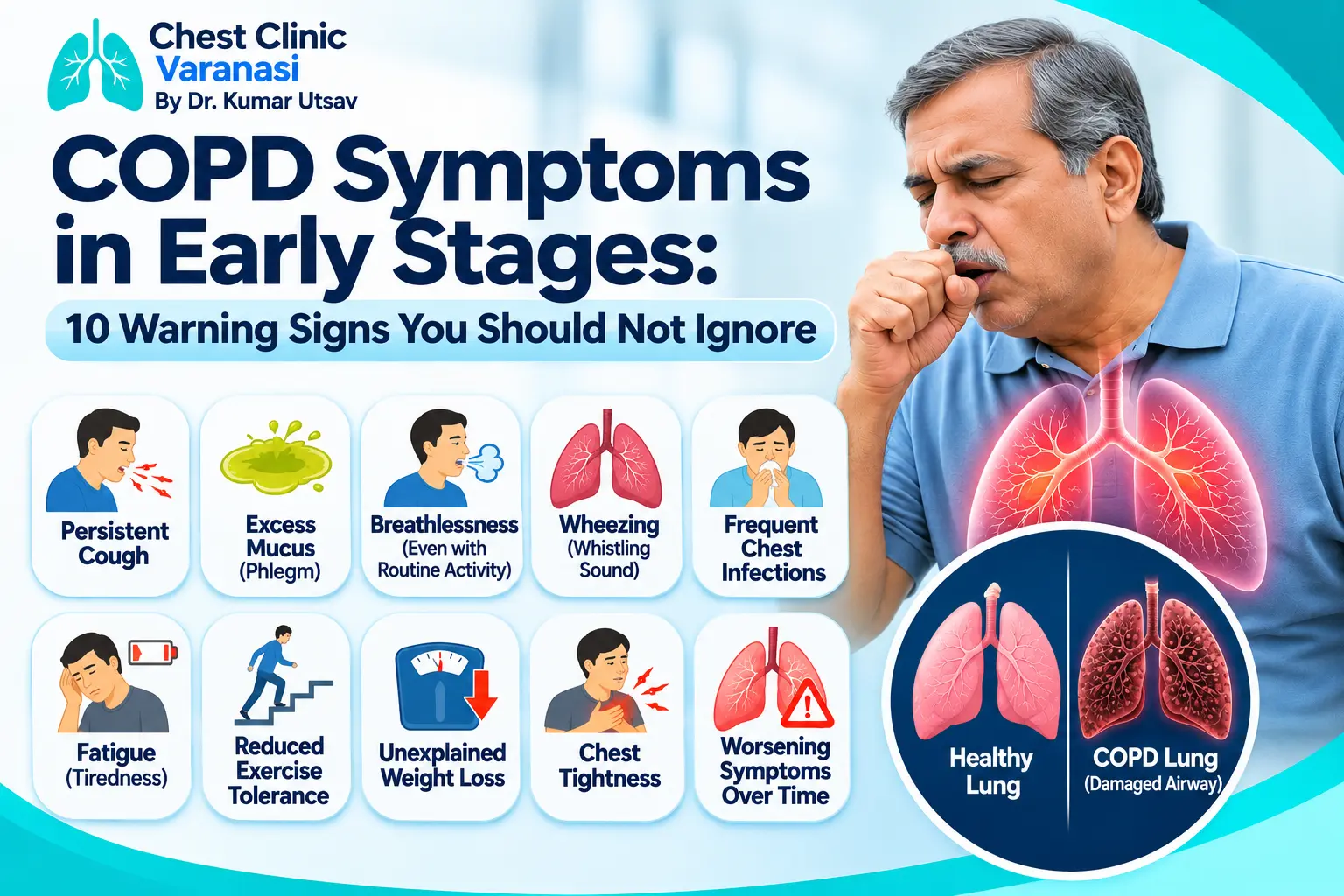
10 Early Symptoms and Warning Signs of COPD
The following symptoms do not automatically mean that a person has COPD. Several respiratory conditions can cause similar symptoms. However, persistent or recurring symptoms should be evaluated by a qualified healthcare professional.
1. Persistent Cough
A cough that continues for weeks or repeatedly returns can be an important respiratory warning sign, especially when it is associated with mucus or breathlessness.
2. Excess Mucus
Regular production of phlegm or mucus, particularly over a long period, should not simply be ignored.
3. Breathlessness
Shortness of breath during walking, climbing stairs or routine physical activity can occur in people with COPD.
4. Wheezing
A whistling or wheezing sound while breathing may occur when airflow through the airways is restricted.
5. Frequent Chest Infections
Repeated respiratory infections or prolonged recovery from chest infections may warrant further respiratory assessment.
6. Persistent Fatigue
Breathing difficulties can make routine physical activities more tiring for some people.
7. Reduced Exercise Tolerance
Finding it increasingly difficult to walk, climb stairs or perform activities that were previously manageable can be a sign that respiratory function needs assessment.
8. Unexplained Weight Loss
Unintentional weight loss can occur with advanced or significant chronic illness and should always be medically evaluated.
9. Chest Tightness
Some people with respiratory conditions experience chest tightness along with cough or breathing difficulty.
10. Symptoms That Gradually Worsen
A gradual decline in breathing ability, increasing breathlessness or worsening cough deserves medical evaluation.
1. Persistent Cough
A cough that lasts for a prolonged period should not always be attributed to a temporary cold.
Persistent cough can have many causes, including asthma, respiratory infections, smoking-related airway disease, allergies and other lung conditions.
If a cough continues, keeps returning or is accompanied by mucus and breathlessness, a respiratory assessment may be appropriate.
2. Excess Mucus or Phlegm
Some people with chronic airway conditions regularly produce mucus or phlegm.
Pay attention to changes in the amount, colour or persistence of mucus, particularly when other respiratory symptoms are present.
Persistent mucus production should be discussed with a doctor rather than self-treated indefinitely.
3. Breathlessness During Routine Activity
One of the important symptoms associated with COPD is breathlessness.
It may initially become noticeable during activities such as walking quickly, climbing stairs or exercising.
Some people gradually reduce their physical activity to avoid feeling breathless. This can make the underlying problem less obvious.
Do Not Ignore a Gradual Change
If activities that were previously comfortable are becoming increasingly difficult because of breathing problems, arrange a medical assessment.
4. Wheezing
Wheezing is a whistling sound that can occur when air moves through narrowed or obstructed airways.
Wheezing can occur with several respiratory conditions, including asthma and COPD. It should therefore not be used alone to diagnose COPD.
5. Frequent Chest Infections
Repeated episodes of bronchitis or other chest infections may be associated with underlying respiratory problems.
If you frequently develop chest infections or take longer than expected to recover from respiratory illnesses, discuss the pattern with a doctor.
6. Fatigue and Tiredness
Chronic breathing difficulties can make everyday physical activities more demanding.
As a result, some people may experience increased tiredness or reduced stamina.
Fatigue has many possible causes, so it should always be considered together with other symptoms and medical history.
7. Reduced Exercise Tolerance
A noticeable decline in exercise tolerance can be an important reason to have your respiratory health assessed.
For example, you may find that you need to stop more often while walking, become unusually breathless on stairs or cannot complete activities that were previously comfortable.
8. Unexplained Weight Loss
Unintentional weight loss is not specific to COPD and can have many causes.
However, unexplained weight loss together with significant breathing symptoms should be medically evaluated.
9. Chest Tightness
Chest tightness can occur with several respiratory conditions. It may be accompanied by cough, wheezing or breathlessness.
Because chest discomfort can have many possible causes, new or severe chest symptoms should receive appropriate medical assessment.
10. Symptoms That Gradually Get Worse
One of the most important things to notice is a gradual change over time.
If coughing becomes more frequent, walking becomes harder, breathlessness increases or respiratory infections become more common, it is worth discussing these changes with a doctor.
Do Not Wait for Severe Symptoms
Early respiratory symptoms can be subtle. Getting an appropriate evaluation can help identify the cause of symptoms and determine whether lung function testing is needed.
COPD vs Asthma: Are They the Same?
COPD and asthma are different respiratory conditions, although some symptoms can overlap.
Both can cause cough, wheezing and breathing difficulty, but their patterns, causes and treatment approaches can differ.
A doctor may consider factors such as age, symptom pattern, medical history, smoking or exposure history and lung function testing when evaluating a patient.
How Is COPD Diagnosed?
COPD cannot be diagnosed reliably from symptoms alone. A doctor may review your medical history, symptoms, smoking or exposure history and perform a physical examination.
Lung function testing, particularly spirometry, can be an important part of evaluating persistent airflow limitation.
Pulmonary Function Testing
If your doctor recommends lung function testing, follow the specific preparation and testing instructions provided by the clinic.
Learn About Pulmonary Function TestingWho May Be at Higher Risk of COPD?
COPD risk can be influenced by long-term exposure to substances that irritate or damage the lungs.
- Current or previous tobacco smoking
- Long-term exposure to secondhand smoke
- Occupational dust or chemical exposure
- Long-term exposure to indoor or outdoor air pollution
- Certain early-life or genetic factors
Having a risk factor does not automatically mean that a person has COPD. Persistent respiratory symptoms should be assessed professionally.
When Should You See a COPD Doctor?
Consider a respiratory consultation if you have persistent cough, recurring mucus, unexplained breathlessness, wheezing, repeated chest infections or a gradual decline in exercise capacity.
Seek Urgent Medical Attention If:
- Breathing difficulty becomes severe or rapidly worsens.
- You are unable to speak normally because of breathlessness.
- You develop severe chest pain.
- Your lips or face appear bluish.
- You feel severely weak, confused or faint.
COPD Doctor in Varanasi
If you are searching for a COPD doctor in Varanasi, a respiratory specialist can evaluate persistent cough, mucus production, breathlessness, wheezing and other symptoms that may indicate an underlying lung condition.
Dr. Kumar Utsav at Chest Clinic Varanasi provides respiratory consultation for patients experiencing breathing problems and other chest-related symptoms.
During your appointment, share your symptom history, previous respiratory reports, medication details and any history of smoking or occupational exposure.
Need Respiratory Evaluation in Varanasi?
Persistent cough and breathlessness should not simply be dismissed as ageing or low fitness. Proper evaluation can help identify the cause.
Book AppointmentRelated Respiratory Services
Frequently Asked Questions
What are the early symptoms of COPD?
Early symptoms may include persistent cough, excess mucus, breathlessness during activity, wheezing, fatigue and repeated respiratory infections.
Can a persistent cough be a sign of COPD?
A persistent cough can occur with COPD, but it can also be caused by many other conditions. Persistent cough should be evaluated rather than assumed to be COPD.
Is breathlessness an early sign of COPD?
Breathlessness, particularly during physical activity, can be associated with COPD. Increasing breathlessness should be assessed by a healthcare professional.
Can COPD cause wheezing?
Yes, wheezing can occur with COPD, although it is also common in other respiratory conditions such as asthma.
How is COPD diagnosed?
A doctor may consider medical history, symptoms, examination and lung function testing such as spirometry when evaluating possible COPD.
Can COPD be detected with a lung function test?
Lung function testing can provide important information about airflow and may be part of the evaluation for COPD.
When should I see a COPD doctor?
Persistent cough, recurring mucus, breathlessness, wheezing, frequent chest infections or declining exercise tolerance are reasons to consider a respiratory consultation.
Where can I consult a COPD doctor in Varanasi?
Patients in Varanasi can consult Dr. Kumar Utsav at Chest Clinic Varanasi for respiratory evaluation and assessment of persistent breathing symptoms.
Conclusion
COPD symptoms can develop gradually, which makes early warning signs easy to overlook. Persistent cough, excess mucus, breathlessness, wheezing, fatigue, frequent chest infections and reduced exercise tolerance should not be ignored when they persist or worsen.
Symptoms alone cannot confirm COPD. A qualified respiratory doctor can assess your history and symptoms and decide whether lung function testing or other investigations are appropriate.
If you are experiencing persistent cough or breathlessness, especially with a history of smoking or long-term exposure to respiratory irritants, consider getting your symptoms evaluated.
For patients searching for a COPD doctor in Varanasi, COPD treatment in Varanasi or information about COPD symptoms, Chest Clinic Varanasi provides respiratory consultation.