
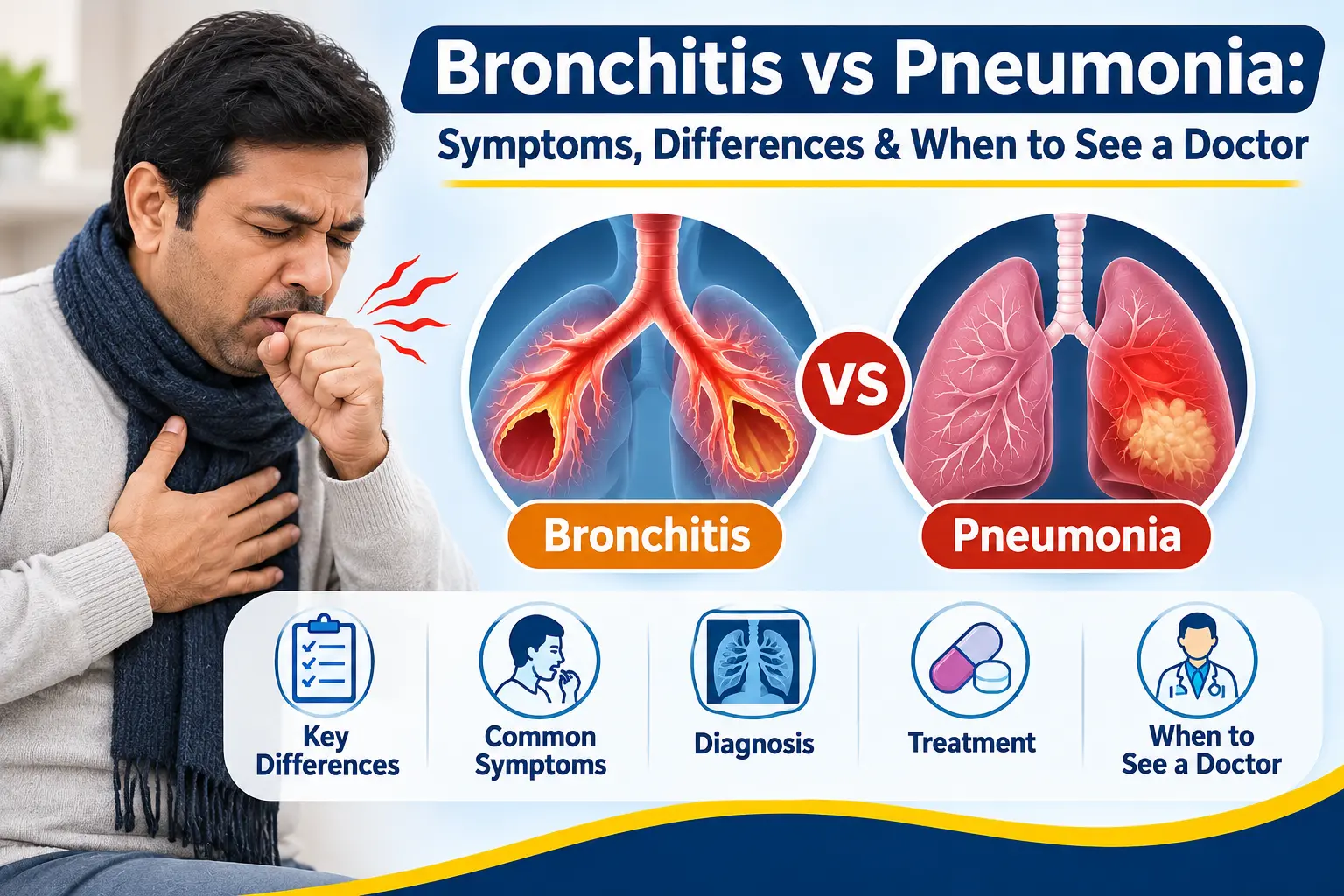
Bronchitis and pneumonia can both cause cough, phlegm, fever and breathing discomfort, which can make it difficult to tell them apart based on symptoms alone.
However, they affect different parts of the respiratory system and can vary considerably in severity. Understanding the difference between bronchitis and pneumonia can help you recognise when professional medical evaluation may be needed.
If a cough or breathing problem is persistent or worsening, it is better to understand the possible cause rather than relying only on self-treatment.
- What Is Bronchitis?
- What Is Pneumonia?
- Bronchitis vs Pneumonia: Key Differences
- Common Symptoms of Bronchitis
- Common Symptoms of Pneumonia
- Bronchitis Cough vs Pneumonia Cough
- Can Bronchitis Turn Into Pneumonia?
- When Is a Chest Infection Serious?
- How Are Bronchitis and Pneumonia Diagnosed?
- Treatment of Bronchitis vs Pneumonia
- When Should You See a Chest Specialist?
- Frequently Asked Questions
What Is Bronchitis?
Bronchitis occurs when the lining of the bronchial tubes becomes inflamed. The bronchi are the airways that carry air into and out of the lungs.
Bronchitis commonly causes coughing and may also produce mucus. The symptoms and duration can vary depending on the underlying cause.
Acute bronchitis is often associated with respiratory infections and may improve over time. Persistent or recurrent bronchitis-like symptoms may require further evaluation to understand the underlying cause.
Important Point
A cough does not automatically mean that a person has bronchitis. Cough can occur with many respiratory conditions, including asthma, pneumonia and other lung problems.
What Is Pneumonia?
Pneumonia is an infection or inflammation affecting the lung tissue. It can have different causes, including bacterial, viral and other infectious causes.
Pneumonia can cause symptoms such as cough, fever, chest discomfort and breathing difficulty. The severity can vary depending on the cause and the individual's overall health.
Chest Clinic Varanasi already has a dedicated guide covering pneumonia in adults, including symptoms, causes, diagnosis and treatment .
Bronchitis vs Pneumonia: Key Differences
Although both conditions can involve cough and respiratory symptoms, there are important differences.
| Bronchitis | Pneumonia |
|---|---|
| Mainly involves inflammation of the bronchial airways. | Involves infection or inflammation affecting lung tissue. |
| Cough is often a prominent symptom. | Cough may occur along with fever, chest discomfort and breathing difficulty. |
| Symptoms can vary depending on the cause. | Severity can vary significantly depending on the cause and patient's health. |
| Often managed based on symptoms and underlying cause. | Requires appropriate medical assessment to determine cause and severity. |
These differences are general. Symptoms can overlap, so a doctor may need to assess the patient before determining the underlying condition.
Common Symptoms of Bronchitis
Possible symptoms of bronchitis can include:
- Persistent or frequent cough
- Mucus production
- Chest discomfort
- Wheezing in some people
- Tiredness
- Mild fever in some cases
The presence and severity of these symptoms can vary depending on the underlying cause.
Common Symptoms of Pneumonia
Pneumonia can cause a range of symptoms, including:
- Cough
- Fever
- Chills
- Chest discomfort
- Breathing difficulty
- Tiredness or weakness
- Mucus production in some cases
Symptoms can vary considerably between individuals. Older adults and people with certain health conditions may sometimes have less typical symptoms.
Bronchitis Cough vs Pneumonia Cough
Both bronchitis and pneumonia can cause coughing, which is why the cough alone cannot reliably distinguish between the two.
Bronchitis may produce a persistent cough with or without mucus. Pneumonia can also cause cough, but may occur together with fever, chest discomfort, weakness or breathing difficulty.
Do Not Diagnose Yourself From Cough Alone
The type of cough, mucus colour or duration alone cannot definitively establish whether someone has bronchitis or pneumonia. A proper clinical assessment may be required.
Can Bronchitis Turn Into Pneumonia?
Bronchitis and pneumonia are different conditions. A person with a respiratory illness can sometimes subsequently develop pneumonia, but this does not mean that every case of bronchitis will become pneumonia.
If symptoms that initially seem mild become worse, new fever develops, breathing becomes more difficult or chest discomfort increases, medical evaluation may be appropriate.
When Is a Chest Infection Serious?
Respiratory infections can range from mild illnesses to conditions requiring urgent medical attention.
Seek Prompt Medical Attention If You Experience:
- Significant or worsening breathing difficulty
- Persistent or high fever
- Chest pain or significant chest discomfort
- Rapid worsening of respiratory symptoms
- Severe weakness or unusual confusion
- Symptoms that are not improving as expected
Severe or rapidly worsening breathing difficulty should be treated as an urgent medical concern.
How Are Bronchitis and Pneumonia Diagnosed?
Diagnosis begins with understanding the patient's symptoms, medical history and clinical findings.
A doctor may consider:
- Duration and pattern of the cough
- Presence of fever
- Breathing difficulty
- Chest discomfort
- Mucus production
- Previous respiratory conditions
- Recent respiratory infections
Depending on the clinical situation, a doctor may recommend additional investigations such as chest imaging or laboratory testing.
Pulmonary function testing may also be useful in selected patients when assessment of lung function is clinically appropriate. Learn more about the Pulmonary Function Test in Varanasi .
Treatment: Bronchitis vs Pneumonia
Treatment depends on the underlying cause and severity.
Bronchitis Treatment
Management depends on the cause. Some cases may improve with supportive care, while persistent or recurrent symptoms may require medical evaluation.
Pneumonia Treatment
Pneumonia treatment depends on the suspected cause, severity and the patient's clinical condition. A doctor determines the appropriate treatment after assessment.
Do Not Self-Medicate With Antibiotics
Antibiotics are not appropriate for every cough or respiratory infection. The appropriate treatment depends on the underlying cause and should be determined by a qualified healthcare professional.
When Should You See a Chest Specialist?
Consider consulting a chest specialist when cough, fever, breathing difficulty or other respiratory symptoms are persistent, recurrent or worsening.
A chest specialist can review the symptoms, medical history and clinical findings and determine whether further respiratory evaluation is appropriate.
You can learn more about Chest Specialist Consultation in Varanasi and when specialist respiratory evaluation may be appropriate.
For broader respiratory concerns, you can also explore the clinic's Respiratory Care services .
Persistent Cough, Fever or Breathing Difficulty?
If respiratory symptoms are persistent, recurring or getting worse, appropriate medical evaluation can help determine the cause and next step.
Book AppointmentFrequently Asked Questions
What is the difference between bronchitis and pneumonia?
Bronchitis mainly involves inflammation of the bronchial airways, while pneumonia affects the lung tissue. However, symptoms can overlap and medical evaluation may be needed.
Is bronchitis worse than pneumonia?
Neither condition should be judged by the name alone. Severity depends on the underlying cause, symptoms, clinical findings and the person's overall health.
Can bronchitis turn into pneumonia?
A respiratory illness can sometimes be followed by pneumonia, but not every case of bronchitis develops into pneumonia.
What symptoms are common in pneumonia?
Pneumonia may cause cough, fever, chills, chest discomfort, breathing difficulty, tiredness and other symptoms. The exact pattern can vary between individuals.
When should I see a doctor for bronchitis or pneumonia?
Consider medical evaluation when cough, fever, breathing difficulty, chest discomfort or other respiratory symptoms persist, worsen or interfere with normal activities.
Conclusion
Bronchitis and pneumonia can both cause cough and other respiratory symptoms, but they are different conditions.
Because symptoms can overlap, it is not always possible to tell the difference based only on the cough or mucus.
If symptoms are persistent, worsening or associated with significant breathing difficulty, fever or chest discomfort, appropriate medical evaluation can help determine the cause.
For respiratory concerns in Varanasi, you can contact Chest Clinic Varanasi for an appropriate consultation.