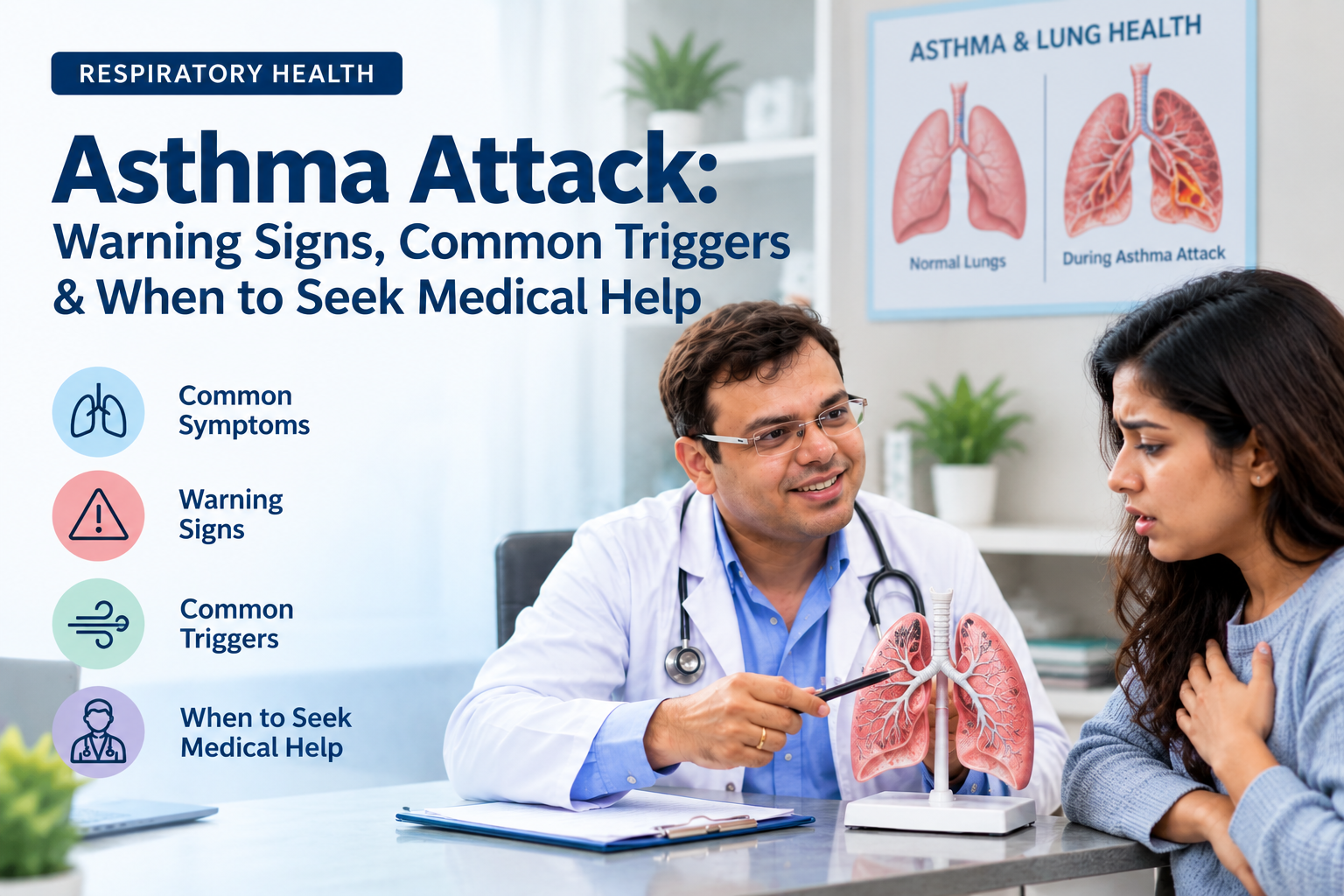
Asthma Attack: Warning Signs, Common Triggers & When to Seek Medical Help
Asthma is a condition that can affect the airways and make breathing difficult. Symptoms may vary from person to person and can sometimes become worse suddenly.
An asthma attack can cause increased coughing, wheezing, chest tightness or difficulty breathing. Recognizing warning signs and knowing when to seek medical attention can be important for people living with asthma.
Understanding common triggers and following an individualized asthma management plan can help patients manage their condition more effectively.
What Is an Asthma Attack?
An asthma attack occurs when the airways become more narrowed and inflamed, making it harder for air to move through the lungs.
During an episode, a person may experience symptoms such as coughing, wheezing, chest tightness or shortness of breath.
The severity of symptoms can vary, and a severe attack may require urgent medical attention.
Common Warning Signs of an Asthma Attack
Some people notice changes in their symptoms before breathing becomes significantly difficult.
- Increasing cough
- Wheezing
- Chest tightness
- Shortness of breath
- Difficulty performing normal activities
- Symptoms becoming worse at night
The pattern of symptoms can be different for each patient. Patients should discuss recurring symptoms with their doctor.
Common Asthma Triggers
Asthma symptoms can sometimes worsen after exposure to particular triggers.
Common triggers may include:
- Dust and dust mites
- Smoke and tobacco exposure
- Air pollution
- Pollen
- Strong smells and chemical irritants
- Respiratory infections
- Cold air
- Physical activity in some individuals
Why Can Asthma Symptoms Suddenly Become Worse?
Asthma symptoms may become worse when the airways are exposed to a trigger or when the underlying condition is not adequately controlled.
Respiratory infections, allergens, smoke, pollution and other irritants can contribute to worsening symptoms in some patients.
If asthma symptoms are becoming more frequent or severe, medical review is important.
You can learn more about Respiratory Care and the importance of appropriate evaluation for ongoing breathing problems.
What Should You Do During an Asthma Attack?
If you have been diagnosed with asthma, follow the personal asthma action plan provided by your healthcare professional.
Use prescribed rescue medication according to the instructions given by your doctor.
Try to remain calm and avoid known triggers where possible.
If symptoms are severe, worsening or not responding to the prescribed emergency treatment, seek urgent medical attention.
When Is an Asthma Attack an Emergency?
Severe breathing difficulty should never be ignored.
Seek urgent medical help if a person has:
- Severe difficulty breathing
- Difficulty speaking because of breathlessness
- Rapidly worsening symptoms
- Severe chest tightness
- Bluish or grey lips or face
- Extreme weakness or confusion
- Little or no improvement after prescribed emergency medication
Severe breathing difficulty can be a medical emergency. Do not delay seeking urgent care when symptoms are severe.
How Is Asthma Diagnosed?
Asthma diagnosis is based on symptoms, medical history, physical examination and, when appropriate, lung function testing.
A doctor may ask about the frequency and pattern of coughing, wheezing, breathlessness and possible triggers.
Lung function testing can provide useful information when evaluating breathing symptoms.
Learn more about Pulmonary Function Testing and how lung function may be assessed.
What Tests May Be Used for Asthma?
Depending on the patient's symptoms and clinical history, a healthcare professional may recommend pulmonary function testing or other investigations.
The purpose of testing is to help understand how the lungs are functioning and whether the patient's symptoms may be related to asthma or another respiratory condition.
Long-Term Asthma Management
Asthma management is not limited to treating symptoms during an attack.
Long-term management may involve regular medical review, prescribed controller medicines when appropriate, identifying triggers and following an individualized asthma action plan.
Patients should use their medications exactly as advised by their healthcare professional and should not stop prescribed treatment without medical guidance.
How Can You Reduce Asthma Triggers?
Reducing exposure to known triggers may help some patients manage asthma symptoms.
- Avoid tobacco smoke.
- Reduce exposure to dust where possible.
- Keep indoor environments clean.
- Identify personal allergy triggers.
- Avoid strong chemical fumes and irritants.
- Follow the treatment plan provided by your doctor.
- Attend regular medical reviews when recommended.
Can Cold Weather Trigger Asthma Symptoms?
Cold air can trigger breathing symptoms in some people with asthma.
If cold weather repeatedly causes coughing, wheezing or breathlessness, discuss these symptoms with your healthcare professional.
Can Respiratory Infections Trigger Asthma?
Respiratory infections can worsen asthma symptoms in some people.
Increased coughing, wheezing or breathlessness during or after an infection should be discussed with a doctor, particularly if symptoms are severe or persistent.
When Should You See an Asthma Specialist?
Medical evaluation may be helpful if asthma symptoms are frequent, worsening or interfering with everyday activities.
You should also discuss your symptoms with a specialist if you frequently need emergency medication or experience repeated asthma attacks.
For patients looking for an Asthma Specialist in Varanasi , appropriate evaluation can help determine the best approach to managing respiratory symptoms.
Learn more about Asthma Care in Varanasi and respiratory care services.
Asthma Treatment in Varanasi
Patients experiencing recurring asthma symptoms should receive an appropriate medical assessment rather than relying only on temporary symptom relief.
Asthma treatment depends on the patient's symptoms, severity, triggers, medical history and response to treatment.
A chest and respiratory specialist can help evaluate breathing symptoms and recommend an appropriate management plan.
Frequently Asked Questions
What are the common symptoms of an asthma attack?
Common symptoms can include coughing, wheezing, chest tightness and shortness of breath. Symptoms can vary in severity from person to person.
What can trigger an asthma attack?
Possible triggers include dust, smoke, air pollution, pollen, respiratory infections, cold air and other individual triggers.
What should I do during an asthma attack?
Follow the asthma action plan provided by your doctor and use prescribed emergency medication as instructed. Seek urgent medical attention if symptoms are severe or worsening.
Can asthma be completely cured?
Asthma is a long-term respiratory condition that can often be managed with appropriate treatment and monitoring. Management should be individualized for each patient.
Can asthma cause coughing at night?
Yes. Some people with asthma experience coughing or worsening respiratory symptoms at night.
When should I see an asthma specialist?
Consult a healthcare professional if symptoms are recurring, worsening, affecting daily activities or requiring frequent emergency medication.
Conclusion
Asthma symptoms can vary from person to person, and an asthma attack can sometimes develop quickly.
Understanding personal triggers, recognizing warning signs and following a prescribed asthma management plan can help patients manage their condition.
If you experience frequent asthma symptoms, repeated attacks or worsening breathing difficulty, consult a qualified chest or respiratory specialist for appropriate evaluation.
Related Health Resources
Patients can also explore additional respiratory health information and specialist services through Chest Clinic Varanasi.
Concerned About Asthma Symptoms?
Get appropriate respiratory evaluation and guidance for asthma and breathing-related concerns.
Book Consultation