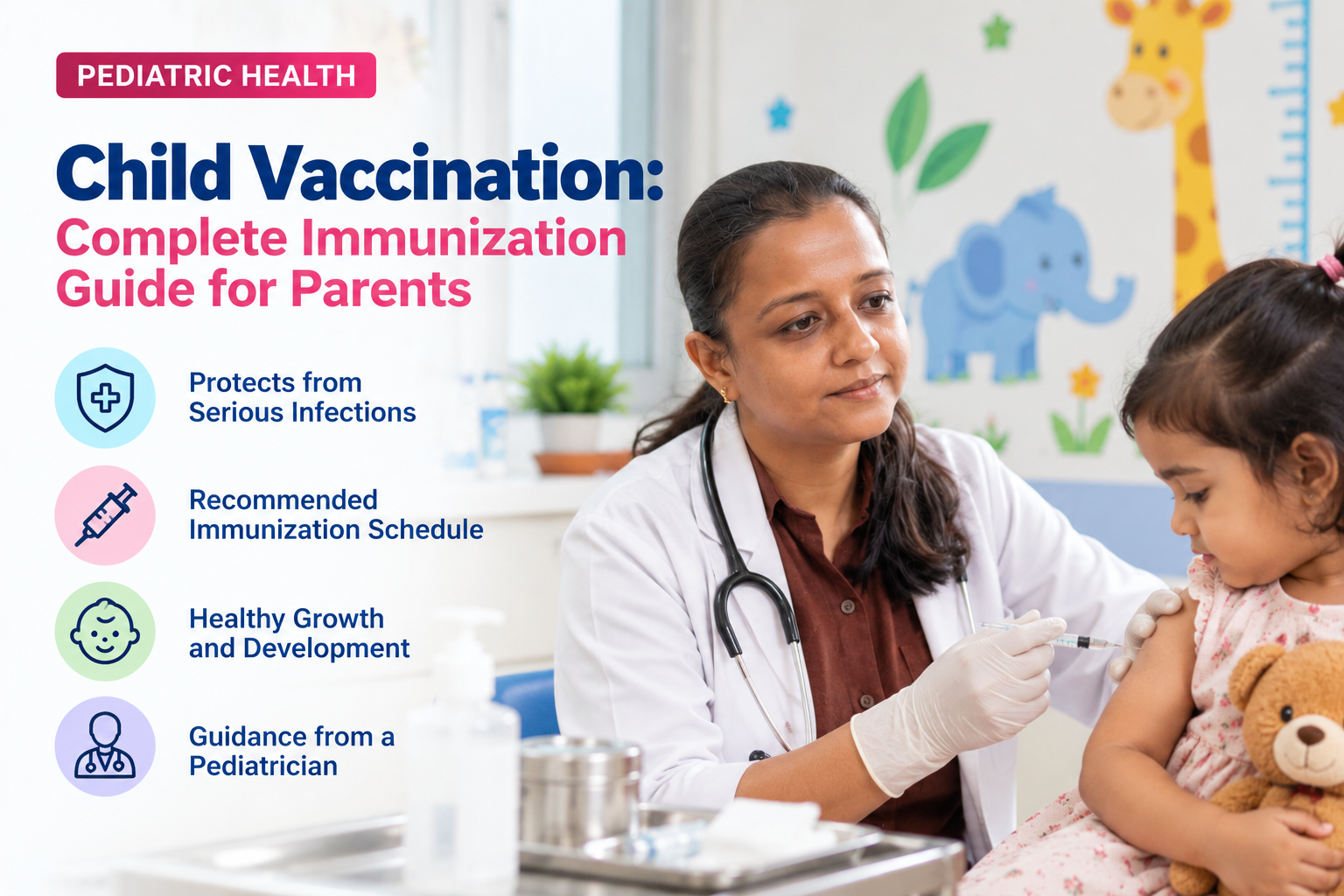
Parents often have questions about childhood vaccination, including which vaccines children need, when they should be given, what happens if a dose is missed and what side effects may occur.
Understanding the importance of immunization and maintaining an appropriate vaccination schedule can help parents make informed healthcare decisions for their children.
What Is Child Vaccination?
Child vaccination involves giving vaccines at recommended stages of childhood to help protect children from specific infectious diseases.
Vaccines work by helping the immune system develop protection against particular infections.
Vaccination recommendations can vary depending on the child's age, health history and the immunization schedule being followed.
Why Is Vaccination Important for Children?
Children are exposed to many infections as they grow. Vaccination helps reduce the risk of certain vaccine-preventable diseases and their complications.
Immunization also contributes to broader community protection by reducing the spread of certain infections.
Parents should discuss vaccination requirements with their pediatrician and follow the recommended immunization schedule.
How Do Vaccines Protect Children?
Vaccines help the immune system recognize specific disease-causing organisms or components of them.
After vaccination, the immune system can develop an immune response that may help the body respond more effectively if it encounters the infection in the future.
Important Vaccines During Childhood
Childhood immunization schedules include vaccines recommended at different ages.
Depending on the vaccination schedule, children may receive vaccines that protect against diseases such as tuberculosis, polio, diphtheria, pertussis, tetanus, hepatitis B, measles, mumps, rubella and other vaccine-preventable infections.
Important: The exact vaccines and timing should be confirmed with the child's pediatrician according to the applicable immunization schedule.
Understanding the Childhood Immunization Schedule
Vaccination schedules are designed to provide protection at appropriate stages of childhood.
The timing of vaccines can depend on the child's age, previous vaccination history and specific healthcare recommendations.
Parents should keep a record of every vaccination and bring the record to pediatric appointments.
Vaccines for Babies and Young Children
Babies and young children receive several important vaccinations during the early years of life.
Because early childhood is an important period for preventive healthcare, parents should discuss the recommended vaccination schedule with their pediatrician and avoid unnecessary delays.
If you are unsure whether your baby's vaccinations are up to date, a pediatric consultation can help review the child's immunization record.
Parents can also learn more about Immunization in Children and preventive pediatric care.
What If a Vaccine Is Missed?
Sometimes a child may miss a scheduled vaccination because of illness, travel, changes in routine or other circumstances.
Parents should not assume that vaccination can no longer be completed simply because a dose was missed.
Contact your pediatrician and provide the child's vaccination record so the appropriate next step can be determined.
Common Side Effects After Vaccination
Some children may experience mild and temporary reactions after vaccination.
Depending on the vaccine, common reactions may include soreness or redness at the injection site, mild fever, tiredness or temporary irritability.
Most mild reactions settle on their own. Parents should follow the advice provided by their healthcare professional regarding post-vaccination care.
When Should Parents Contact a Pediatrician?
Parents should seek medical advice if they are worried about a child's reaction after vaccination or if the child develops concerning or unusual symptoms.
Urgent medical evaluation may be required if a child develops severe symptoms such as significant breathing difficulty, severe swelling, unusual drowsiness, persistent vomiting or other concerning symptoms.
If you are uncertain whether a reaction is normal, contact your child's pediatrician for appropriate guidance.
Vaccination During Fever or Illness
Whether a child should receive a scheduled vaccine while experiencing an illness depends on the child's symptoms and overall condition.
Parents should inform the pediatrician about any current illness, fever, medications or previous reactions before vaccination.
The pediatrician can then determine whether vaccination should proceed or be postponed.
Keeping Your Child's Vaccination Record Updated
Maintaining an accurate vaccination record is useful for parents, schools, travel requirements and future healthcare visits.
Parents should keep vaccination records safely and update them after every vaccination.
Child Vaccination in Varanasi
Parents looking for Child Vaccination in Varanasi should discuss their child's vaccination history and upcoming immunization needs with a qualified pediatrician.
A pediatric consultation can help parents understand the appropriate vaccination schedule, review previous doses and address questions about vaccine reactions or missed vaccinations.
You can also learn more about Pediatrician in Varanasi and comprehensive child healthcare.
Frequently Asked Questions
Why are vaccines important for children?
What should I do if my child misses a vaccine?
Are mild reactions after vaccination normal?
Can a child get vaccinated while having a fever?
How should I maintain my child's vaccination record?
Where can I get child vaccination in Varanasi?
Conclusion
Child vaccination is an important part of preventive healthcare. Keeping vaccinations up to date can help protect children against several vaccine-preventable diseases.
Parents should maintain an updated vaccination record, follow the recommended immunization schedule and discuss any concerns with their pediatrician.
If you have questions about your child's vaccinations, missed doses or post-vaccination symptoms, consult a qualified pediatrician for personalized guidance.
Related Health Resources
Parents can also explore additional pediatric healthcare information and specialist services through Dr. Anubha Jain.
Need Guidance About Your Child's Vaccination?
Consult a pediatrician for vaccination schedules, missed doses and other child healthcare concerns.
Book an Appointment